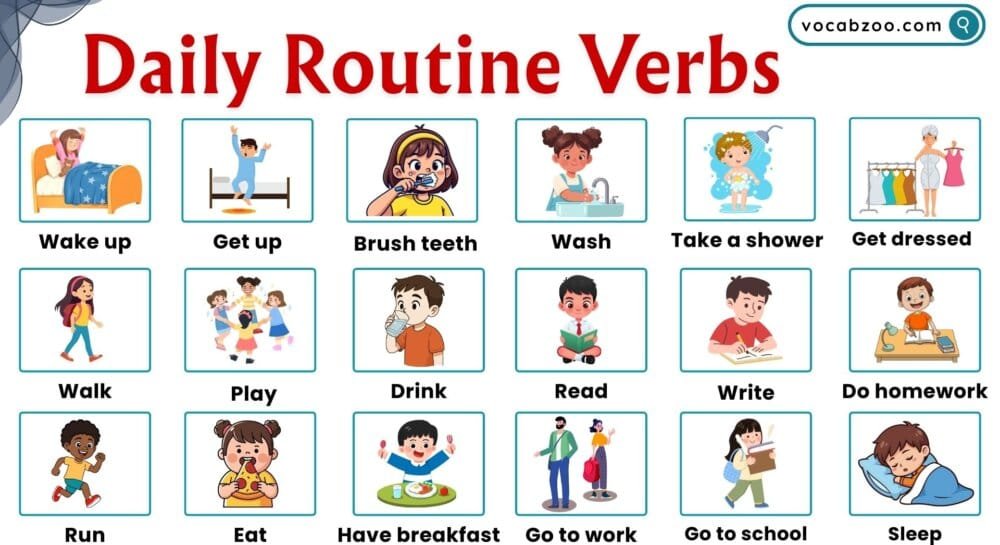
Knowing the words for everyday actions helps you talk about your life in English more confidently. In this blog post, you will learn Daily Routine Verbs in English with pictures to help you recognize and remember each action easily. These daily routine verbs describe common activities like wake up, eat, study, and sleep. When you use them correctly, your speaking becomes more confident, your writing clearer, and your reading and listening skills stronger. Keep reading to learn practical verbs that will make your English more useful in daily life and expand your vocabulary.
What Are Daily Routine Verbs?
Daily routine verbs are action words used to describe activities we do regularly, usually every day. These verbs talk about habits, schedules, and repeated actions. We often use them with time words like every day, in the morning, at night, after work.
Examples:
- I wake up early.
- She goes to work by bus.
- They eat dinner together.
Why Daily Routine Verbs Are Important
Daily routine verbs are important because they help learners:
- Talk about daily life clearly
- Make simple present tense sentences
- Improve speaking and writing skills
- Understand basic conversations easily
Common Daily Routine Verbs in English with Pictures
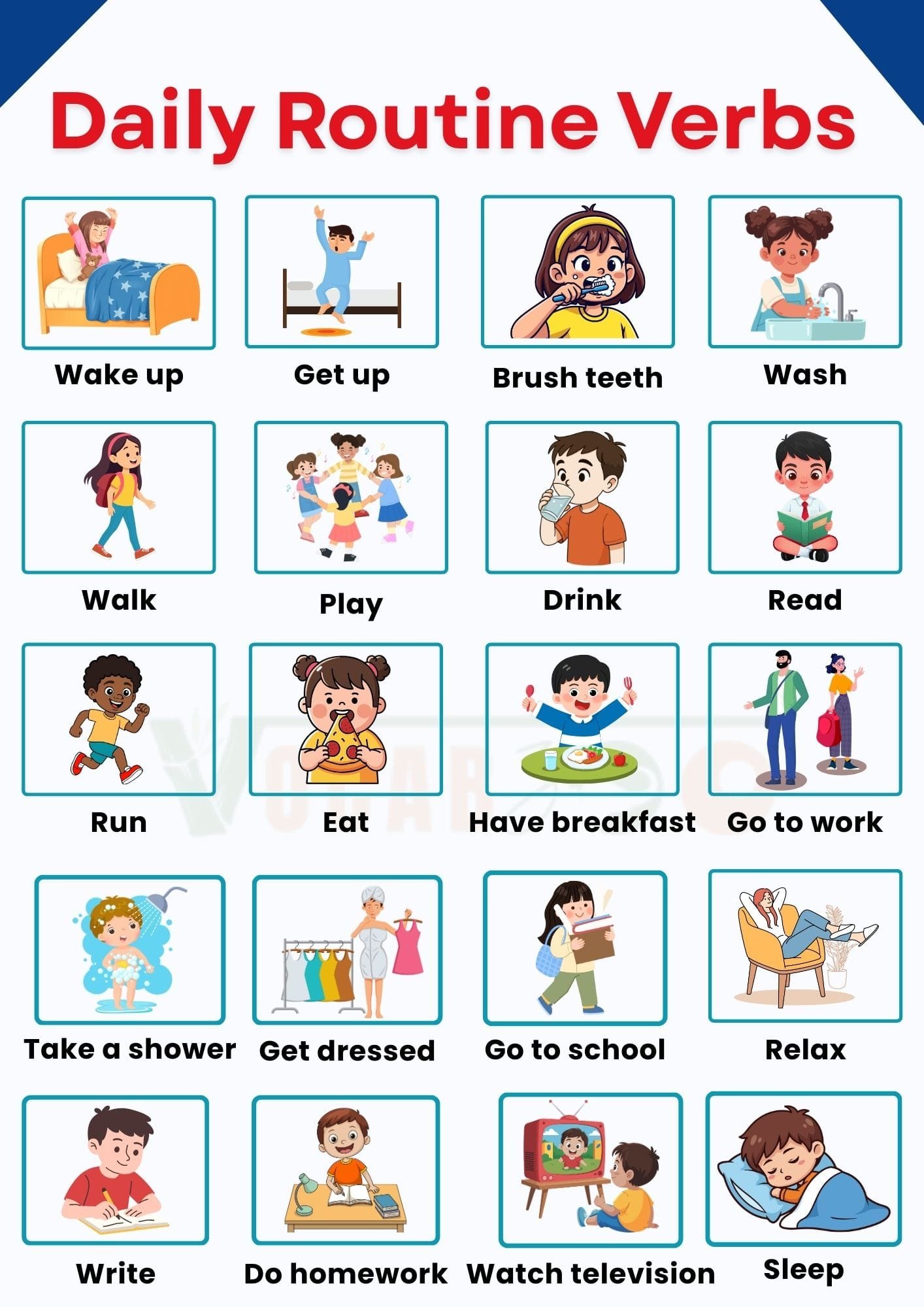
Below are some of the most common and important daily routine verbs. These verbs are shown with pictures.
Wake up
Stop sleeping and open your eyes in the morning

Get up
Leave the bed after waking up

Brush teeth
Clean teeth using a toothbrush and toothpaste
Take a shower
Wash your body with water

Get dressed
Put on clothes

Have breakfast
Eat the first meal of the day

Go to work
Travel to your workplace

Go to school
Travel to school for learning

Have lunch
Eat the midday meal

Do homework
Complete school work at home

Have dinner
Eat the evening meal
Relax
Rest the body and mind

Go to bed
Lie down to sleep

Sleep
Rest your body during the night

Types of Daily Routine Verbs with Meanings
Morning Routine Verbs
Morning routine verbs describe actions done after waking up.
- Wake up: stop sleeping and become conscious
- Get up: stand up from bed
- Make the bed: arrange sheets and blankets neatly
- Brush teeth: clean teeth to keep them healthy
- Wash face: clean the face with water
- Take a shower: clean the body before starting the day
- Get dressed: wear clothes for the day
- Have breakfast: eat a healthy morning meal
Daytime Routine Verbs
These verbs describe actions done during the day.
- Go to work: travel to your job place
- Go to school: attend classes and lessons
- Study: learn new information or skills
- Work: do your job or tasks
- Attend meetings: join work or school discussions
- Have lunch: eat food in the afternoon
- Take a break: rest for a short time
Evening Routine Verbs
Evening routine verbs describe actions done after work or school.
- Return home: come back to your house
- Change clothes: wear comfortable clothes
- Cook dinner: prepare evening food
- Have dinner: eat the evening meal
- Watch television: enjoy shows or news
- Spend time with family: talk or relax together
- Relax: rest after a busy day
Night Routine Verbs
Night routine verbs describe actions done before sleeping.
- Finish work: complete daily tasks
- Prepare for bed: get ready to sleep
- Brush teeth: clean teeth before sleeping
- Read: read a book or article
- Go to bed: lie down to sleep
- Sleep: rest body and mind overnight
Daily Routine Verbs Used in Different Contexts
Daily routine verbs are used in many English situations.
Talking about habits:
I wake up early every day.
Talking about schedules:
She starts work at nine o’clock.
Talking about past routines:
He studied at night last year.
Talking about future plans:
I will go to bed early tonight.
These verbs mostly appear in the simple present tense, but they can also be used in past and future sentences.
Conclusion
Daily routine verbs are essential English words for daily communication. They help learners describe habits, actions, and daily life in a clear way. By learning and practising these verbs with pictures and examples, English becomes easier to understand and use every day.
FAQs about Daily Routine Verbs
What are daily routine verbs in English?
Daily routine verbs are action words that describe regular activities we do every day, like wake up, eat, study, work, and sleep.
Which verbs are used in a morning routine?
Common morning verbs include wake up, get up, brush teeth, wash face, take a shower, get dressed, and have breakfast.
How do you use daily routine verbs in a sentence?
You can use them in simple sentences like: “I wake up at 7 a.m.” or “She goes to school every day.”
What are some daytime routine verbs?
Daytime verbs include go to work, go to school, study, attend meetings, have lunch, and take a break.
Which verbs describe evening activities?
Evening verbs include return home, change clothes, cook dinner, have dinner, relax, and watch television.
How can I talk about night routines using verbs?
Use verbs like prepare for bed, brush teeth, read, go to bed, and sleep to describe your night routine.
Can daily routine verbs be used in different tenses?
Yes, they are mostly in simple present tense, but you can also use them in past or future, for example: “He studied last night” or “I will go to bed early tomorrow.”
Read More:
- Cleaning Verbs in English with Their Pictures
- 200+ Irregular Verbs List in English with PDF
- Travel Verbs in English with Meanings and Pictures