Many English learners want to grow their word power and understand advanced texts. In this blog post, you will learn 30 Difficult Words with meanings in English that are often used in books, exams, and formal communication. These words are part of higher-level vocabulary that helps you express ideas more accurately. When you understand and use such words correctly, your speaking becomes more confident and your writing becomes more effective. Learning challenging terms also improves your reading and listening skills. Keep reading to learn new words that will help you expand your vocabulary and communicate with greater confidence.
What Are Difficult Words?
Difficult words are words that are hard to understand or remember. They are often used in books, formal writing, or professional conversations. These words are not commonly used in daily speech, but knowing them makes your English more advanced and impressive.
For example:
- “Obfuscate” means to make something unclear or confusing.
- “Ephemeral” means lasting for a very short time.
List of Difficult Words with Sentences
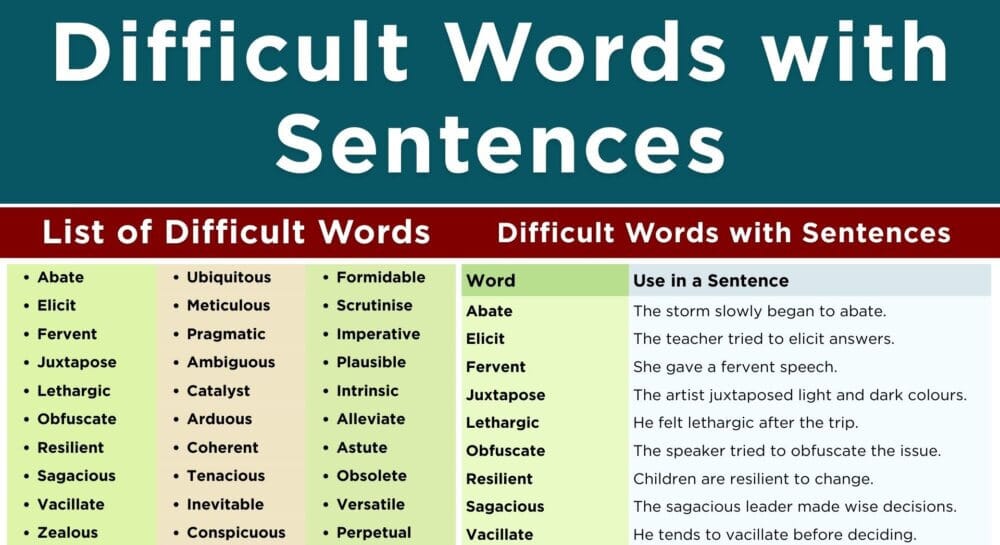
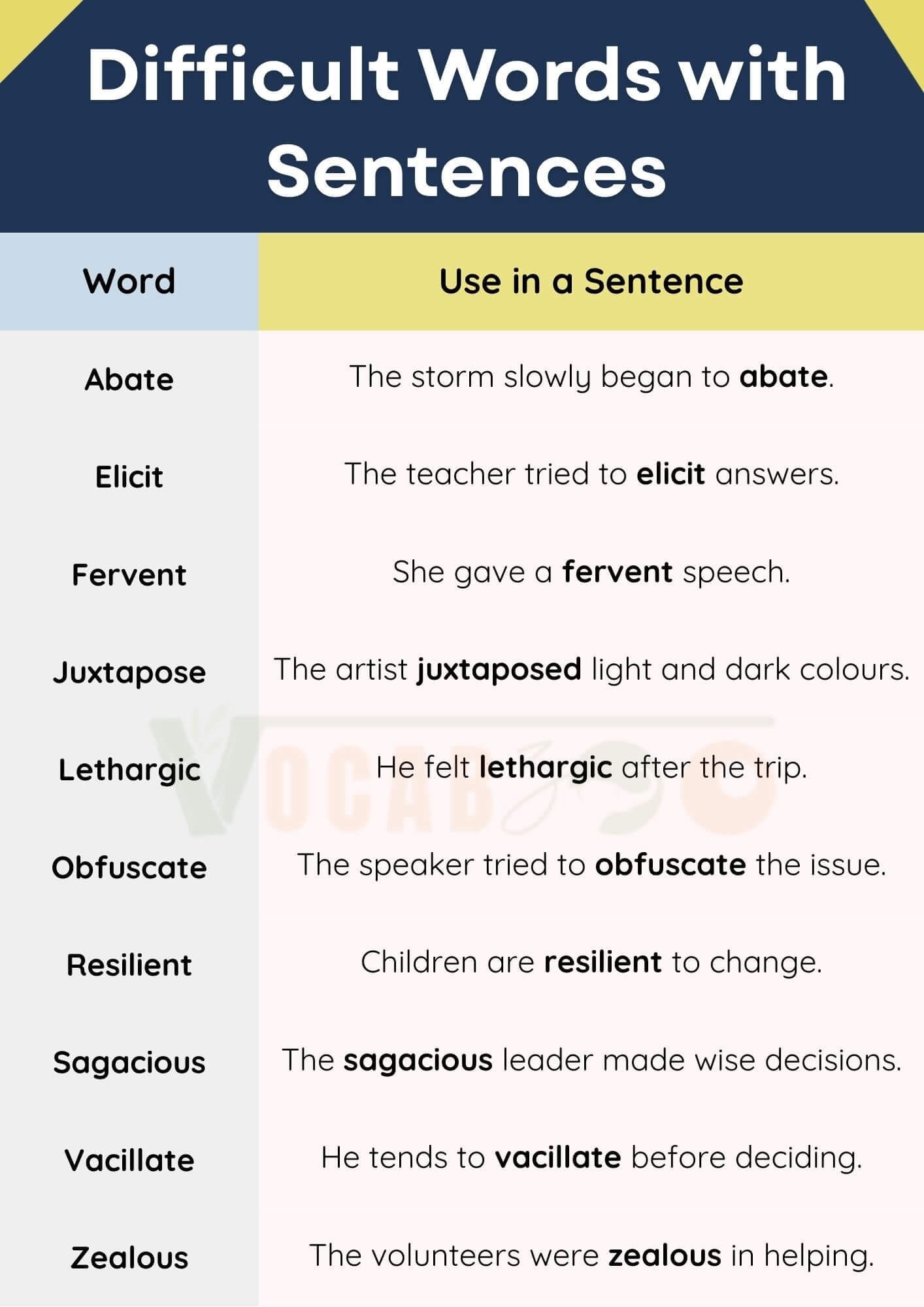
| Word | Use in a Sentence |
|---|---|
| Abate | The storm finally began to abate after several hours. |
| Elicit | The teacher tried to elicit answers from the students. |
| Fervent | She gave a fervent speech about climate change. |
| Juxtapose | The artist likes to juxtapose bright colours with dark shades. |
| Lethargic | After the long journey, he felt extremely lethargic. |
| Obfuscate | The politician tried to obfuscate the issue during the debate. |
| Resilient | Children can be very resilient in adapting to new schools. |
| Sagacious | The sagacious leader made decisions that saved the company. |
| Vacillate | He tends to vacillate when making important choices. |
| Zealous | The volunteers were zealous in helping the disaster victims. |
30 Difficult Words with Types and Meanings
Advanced Vocabulary
These words are used in formal writing, exams, and professional situations.
- Abate: to reduce or lessen something
- Benevolent: kind and generous
- Cacophony: a loud and unpleasant sound
- Debilitate: to make weak or powerless
- Elicit: to draw out or get a response
- Fervent: showing strong feelings
- Garrulous: talkative, often too much
- Harangue: a long, angry speech
- Impetuous: acting quickly without thinking
- Juxtapose: to place things close together for comparison
Abstract Concepts
Words that express ideas or feelings which are hard to explain in short words.
- Lethargic: feeling tired or lacking energy
- Munificent: very generous
- Nefarious: very wicked or evil
- Obfuscate: to make something unclear
- Penchant: a strong liking for something
- Quintessential: the perfect example of something
- Resilient: able to recover quickly from difficulties
- Sagacious: wise or showing good judgment
- Trepidation: fear or worry about something
- Ubiquitous: present everywhere at the same time
Rare Words
Words that are not commonly used in everyday conversation but are useful for reading books or understanding literature.
- Vacillate: to keep changing your mind
- Wistful: having a feeling of longing
- Xenophobia: fear or dislike of foreigners
- Yearn: to deeply desire something
- Zealous: very enthusiastic or passionate
- Acrimonious: angry and bitter
- Bucolic: related to the countryside
- Callous: insensitive or cruel
- Defunct: no longer existing or working
- Ebullient: full of energy and enthusiasm
Tips to Remember Difficult Words
- Use Flashcards – Write the word on one side and meaning on the other.
- Practice in Sentences – Make simple sentences using new words.
- Read Books and Articles – You will see difficult words in real context.
- Repeat Daily – Regular practice helps you remember words faster.
- Group Words by Type – Learning similar words together makes it easier.
Conclusion
Learning difficult words in English can improve your vocabulary, reading, and writing skills. By understanding these 30 words and their meanings, you can make your English more advanced and confident. Practice them daily and use them in your writing and speaking to remember them better.
FAQs about Difficult Words in English
What are difficult words in English?
Difficult words in English are words that are hard to understand or remember, often used in books, formal writing, or professional speech. They help improve vocabulary and communication skills.
What are the 30 difficult words?
Some of the 30 difficult words include Abate, Benevolent, Cacophony, Debilitate, Elicit, Fervent, Garrulous, Harangue, Impetuous, Juxtapose, Lethargic, Munificent, Nefarious, Obfuscate, Penchant, Quintessential, Resilient, Sagacious, Trepidation, Ubiquitous, Vacillate, Wistful, Xenophobia, Yearn, Zealous, Acrimonious, Bucolic, Callous, Defunct, Ebullient.
Can you give some examples of difficult words with deep meaning?
Words like Obfuscate, Sagacious, Trepidation, Quintessential, Nefarious are examples. They express complex ideas, feelings, or advanced concepts in a precise way.
How can I remember difficult words easily?
You can remember difficult words by using flashcards, practicing in sentences, reading regularly, and repeating daily. Grouping words by type also makes learning faster.
Which difficult words are used in daily English?
Words like Elicit, Resilient, Fervent, Zealous, and Vacillate are often used in formal conversations, essays, or professional writing.
Read More
- 50 Difficult Words in English to Pronounce
- 100 Daily Use Vocabulary Words with Sentences
- 100+ New English Words with Meanings and PDF