Animals make different sounds, and learning them makes English more fun and expressive. In this blog post, you will explore 50+ zoo animals and their sounds in English with pictures. Knowing these sounds improves your vocabulary, listening, and speaking skills, and helps you describe animals more accurately. By seeing the pictures and learning the sounds, you can remember them easily and enjoy discovering the exciting world of zoo animals.
What Are Zoo Animals?
Zoo animals are creatures kept in zoos for people to see and learn about them. Zoos help protect animals and teach visitors about wildlife. Zoo animals can be big or small and include mammals, birds, reptiles, and amphibians.
Why Learn Zoo Animal Sounds?
Knowing the sounds of animals is useful for:
- Understanding English words better.
- Recognising animals in stories or cartoons.
- Speaking about animals correctly in daily life.
- Making learning fun for children.
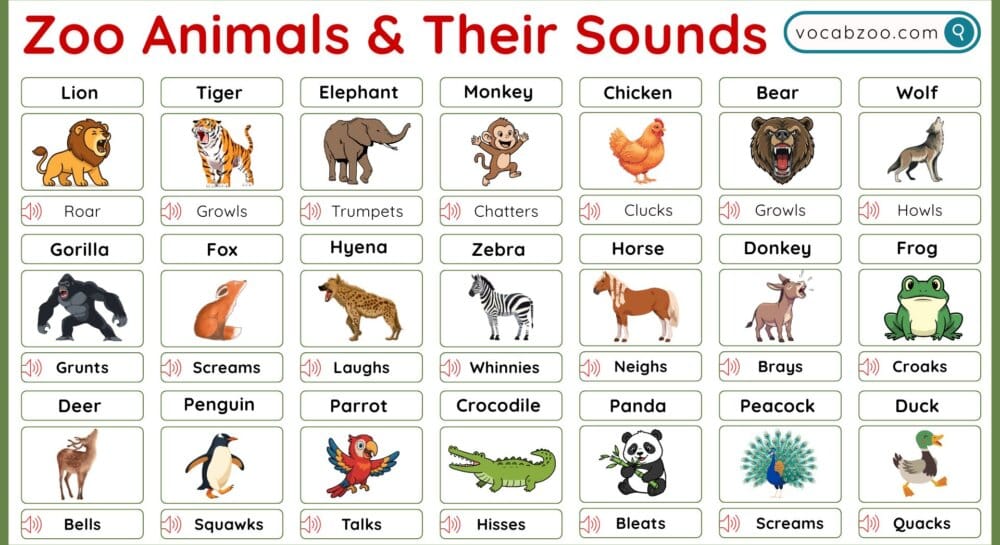
Zoo Animals and Their Sounds
Read More: List of All Animals and Their Home with Pictures
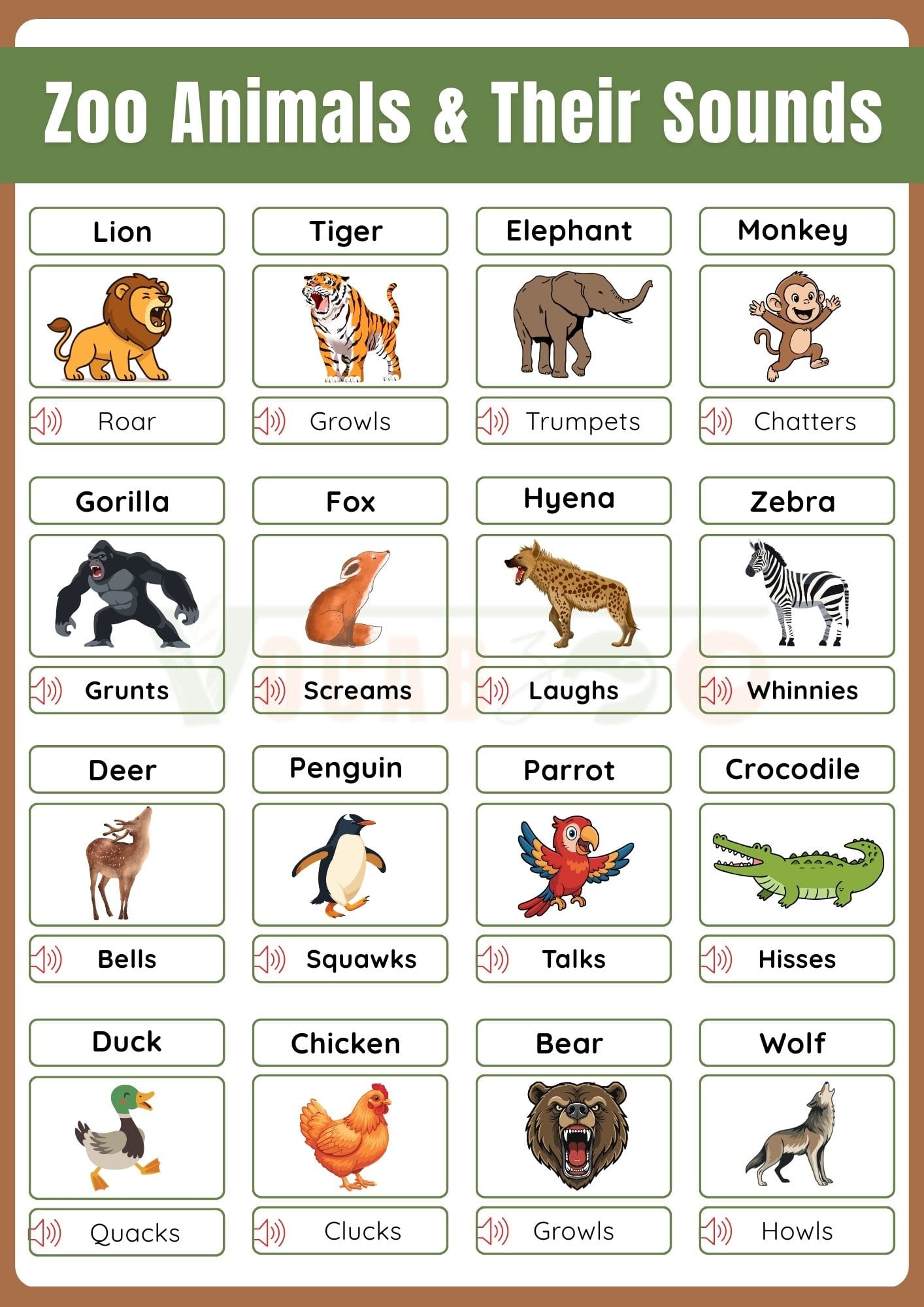
Here is a simple guide to zoo animals and the sounds they make.
Mammals found in the Zoo and Their Noises
Lion: Roar
A loud, powerful sound to show strength and communicate with other lions.
Tiger: Growl
A low, threatening sound used to warn others or show anger.
Elephant: Trumpet
A loud, high-pitched sound for excitement, warning, or communication.
Monkey: Chatter / Scream
High-pitched noises used to interact with other monkeys.
Bear: Growl / Grunt
Deep sounds used for warning, alerting, or communicating with others.
Wolf: Howl
Long, loud calls used to communicate over distances or signal the pack.
Giraffe: Hum / Snort / Grunt
Soft sounds that are usually quiet but used to communicate with the herd.
Zebra: Bray / Neigh / Snort
Noisy calls used for herd communication and alerting others.
Kangaroo: Grunt / Click
Low sounds used for communication within the group.
Hippopotamus: Grunt / Bellow
Loud noises often made in water to signal presence or communication.
Deer: Bleat / Call
Gentle sounds used to alert others or communicate with the herd.
Dog: Bark / Howl
Sounds used to get attention, warn others, or communicate.
Cat: Meow / Purr
Used to communicate with humans or other cats.
Rhinoceros: Grunt / Snort
Loud sounds showing dominance or alerting others.
Otter: Squeak / Chatter
High-pitched noises for communication and alerting others.
Seal: Bark / Honk
Sounds used for interaction and communication in groups.
Leopard: Growl / Snarl
Threatening sounds for warning or communication.
Birds found in the Zoo with Their Sounds
Parrot: Squawk
Loud, harsh sounds often used to communicate and imitate humans.
Crow: Caw
Rough, repeating calls used for communication.
Owl: Hoot
Nighttime calls used to signal presence or communicate.
Peacock: Screech
Loud sounds used during display or for communication.
Flamingo: Honk
Group communication sounds.
Eagle: Screech
High-pitched call often made while flying or signaling.
Penguin: Bray / Trumpet
Sounds used for communicating with the group.
Swan: Hiss / Trumpet
Soft to loud sounds depending on threat or interaction.
Parakeet: Chirp / Squeak
Short, high-pitched notes used for communication.
Reptiles and Amphibians in a Zoo with Their Sounds
Snake: Hiss
Warning or defensive sound to deter threats.
Crocodile: Bellow
Loud sounds used to mark territory or during mating.
Frog: Croak
Communication with other frogs, especially during mating.
Tortoise: Hiss / Grunt
Rare sounds for alert or defense.
Lizard: Click / Squeak
Small noises used for communication or alerting.
Other Common Zoo Animals
Meerkat: Chirp / Squeak
Used to communicate with the group and signal danger.
Raccoon: Chitter / Growl / Screech
Noises for interaction and warning.
Hyena: Laugh-like Sound
Signals excitement, submission, or warning within a group.
Bison: Grunt / Snort
Communicates dominance, warning, or alerting the herd.
Chimpanzee: Screams / Hoots / Grunts
Communication for social interactions and group alerts.
How to Remember Animal Sounds Easily
- Listen and repeat: Imitate the sounds while saying the animal name.
- Use flashcards: Draw animals and write their sounds.
- Sing songs: Animal songs help memory.
- Watch videos: Real zoo videos show animals and their sounds.
Fun Tips to Practice Zoo Animals and Sounds
- Play guess the sound games with friends or family.
- Make a zoo diary: Write down animals you learn each day.
- Record your voice imitating sounds to remember better.
- Read children’s books about animals to match pictures with sounds.
Learning zoo animals and their sounds is simple and fun. It improves English vocabulary and helps remember animals quickly. By using tables, examples, and practice, learners can recognise animals and speak about them confidently.
FAQs about Zoo Animals and Their Sounds
Do zebras make sounds, and what are they?
Zebras bray, snort, and whinny to communicate with other zebras.
What sound does a lion make in the zoo?
A lion makes a roar to show strength or communicate with other lions.
What sound is made by a bear in a zoo?
A bear often growls to show anger or protect itself.
Do snakes and frogs make sounds in a zoo?
Yes, snakes hiss and frogs croak to alert others or communicate.
What noise does a tiger make in the zoo?
A tiger usually growls to show warning or express feelings.
Are there quiet zoo animals that make little or no sound?
Yes, giraffes are usually quiet and hum softly, while some zebras whinny lightly.
How do parrots speak or make sounds in a zoo?
Parrots squawk loudly and sometimes imitate human sounds.
Read More: