In this blog post, you will learn 100+ Education Job Interview Questions and Answers in English. Knowing these questions helps you prepare effectively for interviews and speak confidently about your skills and experience. Each question comes with a clear answer, making it easier to understand how to respond professionally in real-life situations. By exploring these examples, you can improve your communication skills and feel more confident during education job interviews.
What is an Education Job Interview?
An education job interview is a meeting between a school or organisation and a person applying for a teaching or educational role. The main goal is to check the applicant’s skills, knowledge, and communication abilities.
Example:
“I enjoy helping students learn new things and grow in confidence.”
Common Education Job Positions
| Job Title | Description |
|---|---|
| Teacher | Plans and delivers lessons for students. |
| Teaching Assistant | Supports the teacher and helps students during class. |
| Lecturer | Teaches at college or university level. |
| School Counsellor | Guides students in their personal and academic growth. |
| Curriculum Designer | Creates study materials and lesson plans. |
| Head Teacher / Principal | Manages school operations and staff. |
Common Education Job Interview Questions and Answers
| Question | Easy Answer Example |
|---|---|
| Tell me about yourself. | “I’m a passionate teacher who loves helping students achieve their goals.” |
| Why did you choose teaching as a career? | “Because I enjoy sharing knowledge and making a difference in students’ lives.” |
| How do you handle a difficult student? | “I stay calm, listen carefully, and try to understand the reason behind the behaviour.” |
| What makes you a good teacher? | “I plan lessons carefully and make learning interesting for every student.” |
| How do you use technology in the classroom? | “I use digital tools and videos to make lessons more interactive and engaging.” |
| What are your teaching strengths? | “Strong communication, patience, and creative lesson planning.” |
| How do you motivate your students? | “By praising good effort and giving simple challenges that build confidence.” |
Top 5 Types of Education Job Interview Questions and Answers
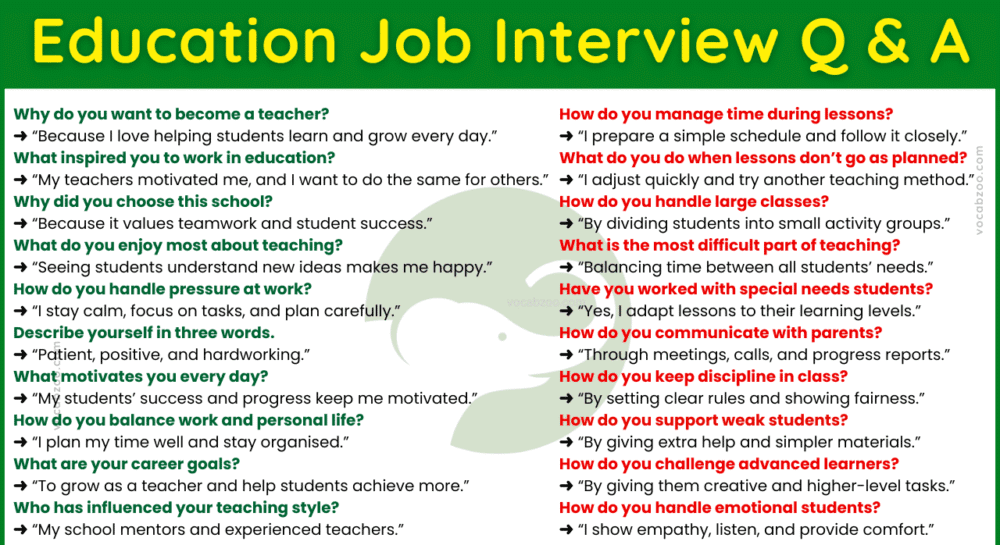
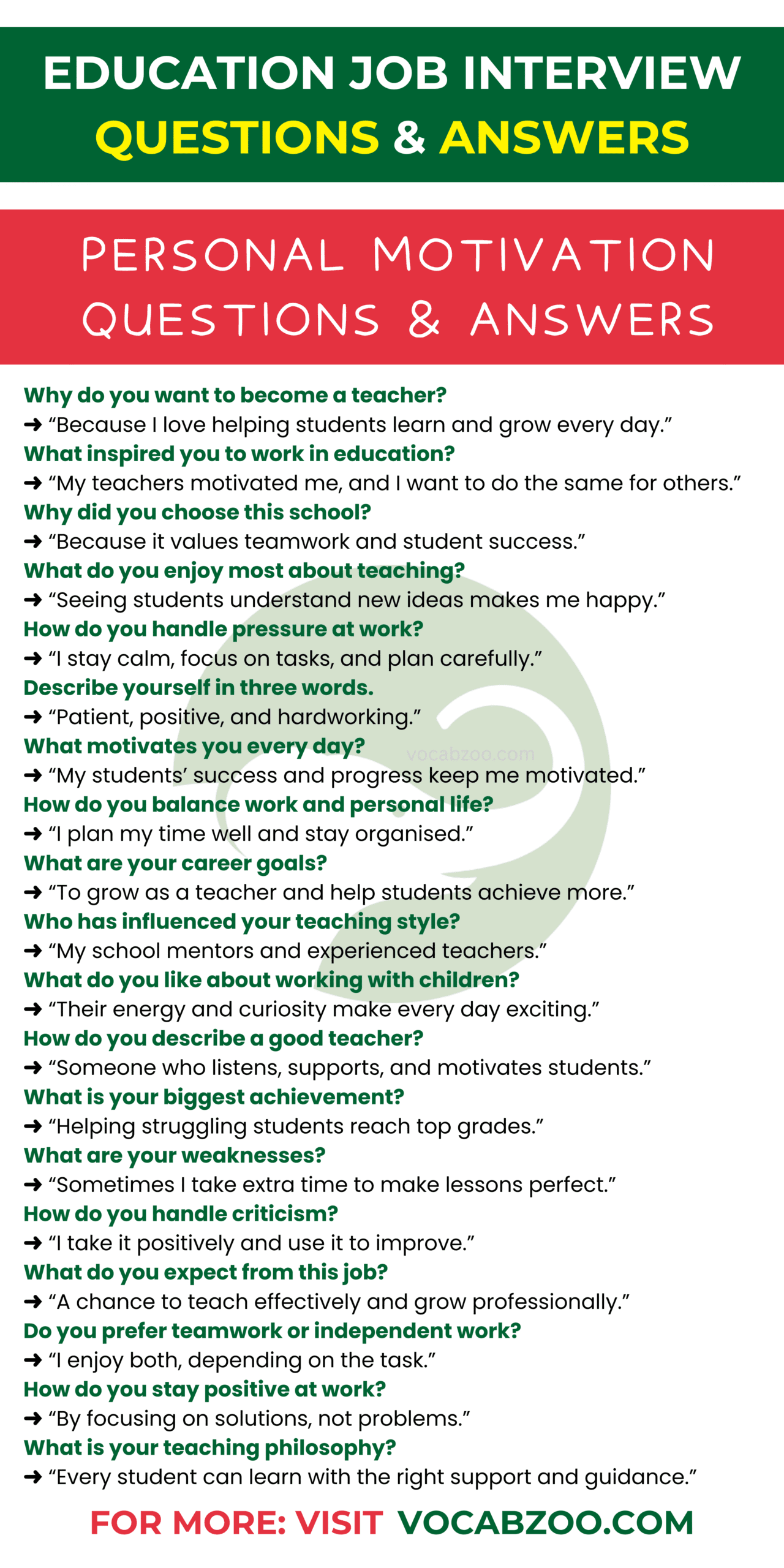
1. Personal Motivation Questions and Answers
Question ➜ Why do you want to become a teacher?
Answer ➜ “Because I love helping students learn and grow every day.”
Question ➜ What inspired you to work in education?
Answer ➜ “My teachers motivated me, and I want to do the same for others.”
Question ➜ Why did you choose this school?
Answer ➜ “Because it values teamwork and student success.”
Question ➜ What do you enjoy most about teaching?
Answer ➜ “Seeing students understand new ideas makes me happy.”
Question ➜ How do you handle pressure at work?
Answer ➜ “I stay calm, focus on tasks, and plan carefully.”
Question ➜ Describe yourself in three words.
Answer ➜ “Patient, positive, and hardworking.”
Question ➜ Why should we hire you?
Answer ➜ “Because I bring dedication, creativity, and strong classroom management.”
Question ➜ What motivates you every day?
Answer ➜ “My students’ success and progress keep me motivated.”
Question ➜ How do you balance work and personal life?
Answer ➜ “I plan my time well and stay organised.”
Question ➜ What are your career goals?
Answer ➜ “To grow as a teacher and help students achieve more.”
Question ➜ Who has influenced your teaching style?
Answer ➜ “My school mentors and experienced teachers.”
Question ➜ What do you like about working with children?
Answer ➜ “Their energy and curiosity make every day exciting.”
Question ➜ How do you describe a good teacher?
Answer ➜ “Someone who listens, supports, and motivates students.”
Question ➜ What is your biggest achievement?
Answer ➜ “Helping struggling students reach top grades.”
Question ➜ What are your weaknesses?
Answer ➜ “Sometimes I take extra time to make lessons perfect.”
Question ➜ How do you handle criticism?
Answer ➜ “I take it positively and use it to improve.”
Question ➜ What do you expect from this job?
Answer ➜ “A chance to teach effectively and grow professionally.”
Question ➜ Do you prefer teamwork or independent work?
Answer ➜ “I enjoy both, depending on the task.”
Question ➜ How do you stay positive at work?
Answer ➜ “By focusing on solutions, not problems.”
Question ➜ What is your teaching philosophy?
Answer ➜ “Every student can learn with the right support and guidance.”
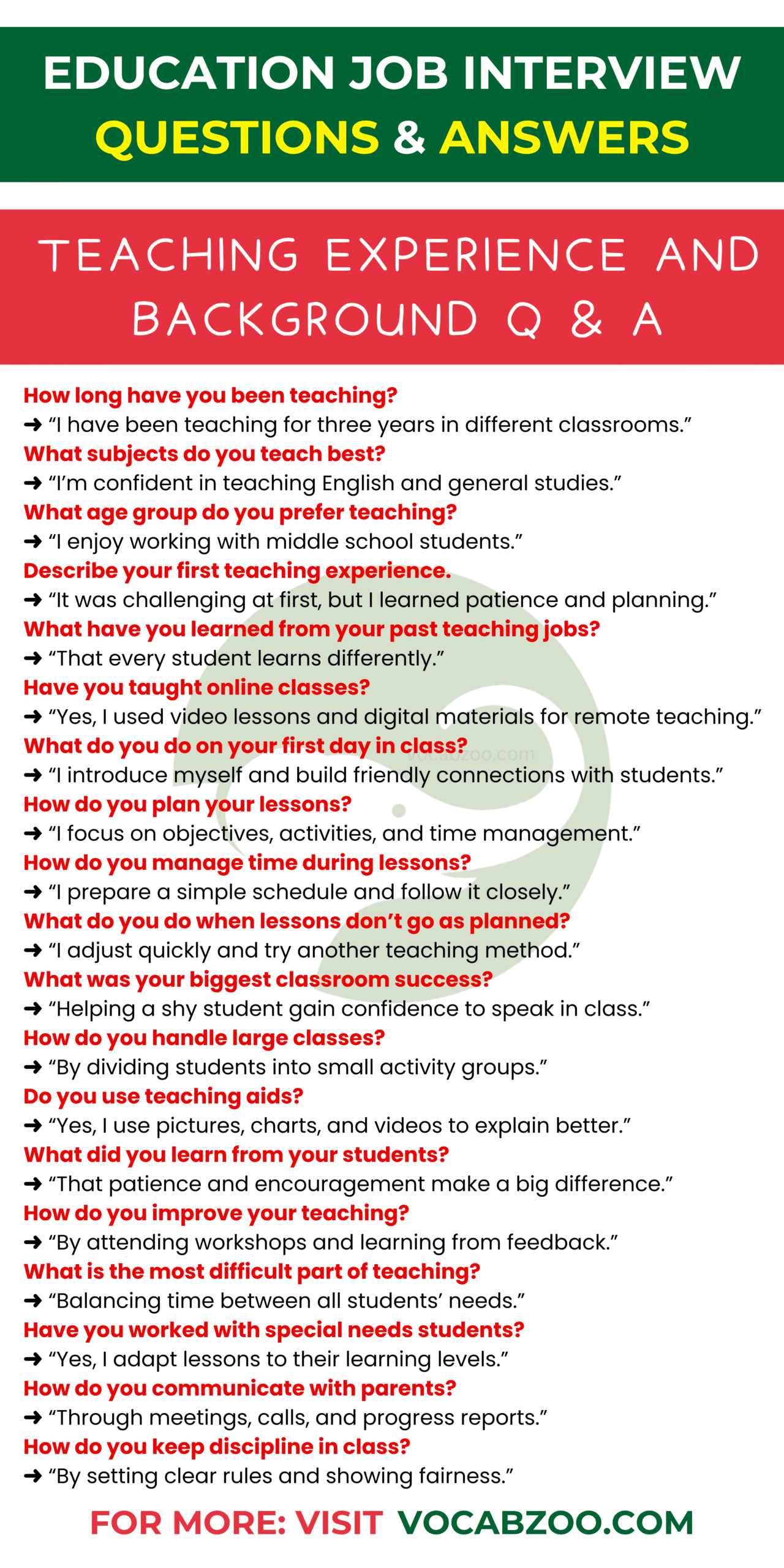
2. Teaching Experience and Background Questions and Answers
Question ➜ How long have you been teaching?
Answer ➜ “I have been teaching for three years in different classrooms.”
Question ➜ What subjects do you teach best?
Answer ➜ “I’m confident in teaching English and general studies.”
Question ➜ What age group do you prefer teaching?
Answer ➜ “I enjoy working with middle school students.”
Question ➜ Describe your first teaching experience.
Answer ➜ “It was challenging at first, but I learned patience and planning.”
Question ➜ What have you learned from your past teaching jobs?
Answer ➜ “That every student learns differently.”
Question ➜ Have you taught online classes?
Answer ➜ “Yes, I used video lessons and digital materials for remote teaching.”
Question ➜ What do you do on your first day in class?
Answer ➜ “I introduce myself and build friendly connections with students.”
Question ➜ How do you plan your lessons?
Answer ➜ “I focus on objectives, activities, and time management.”
Question ➜ How do you manage time during lessons?
Answer ➜ “I prepare a simple schedule and follow it closely.”
Question ➜ What do you do when lessons don’t go as planned?
Answer ➜ “I adjust quickly and try another teaching method.”
Question ➜ What was your biggest classroom success?
Answer ➜ “Helping a shy student gain confidence to speak in class.”
Question ➜ How do you handle large classes?
Answer ➜ “By dividing students into small activity groups.”
Question ➜ Do you use teaching aids?
Answer ➜ “Yes, I use pictures, charts, and videos to explain better.”
Question ➜ What did you learn from your students?
Answer ➜ “That patience and encouragement make a big difference.”
Question ➜ How do you improve your teaching?
Answer ➜ “By attending workshops and learning from feedback.”
Question ➜ What is the most difficult part of teaching?
Answer ➜ “Balancing time between all students’ needs.”
Question ➜ Have you worked with special needs students?
Answer ➜ “Yes, I adapt lessons to their learning levels.”
Question ➜ How do you communicate with parents?
Answer ➜ “Through meetings, calls, and progress reports.”
Question ➜ How do you keep discipline in class?
Answer ➜ “By setting clear rules and showing fairness.”
Question ➜ What do you do if a student refuses to follow rules?
Answer ➜ “I speak privately, explain calmly, and guide them back on track.”
3. Classroom Management and Behaviour Questions and Answers
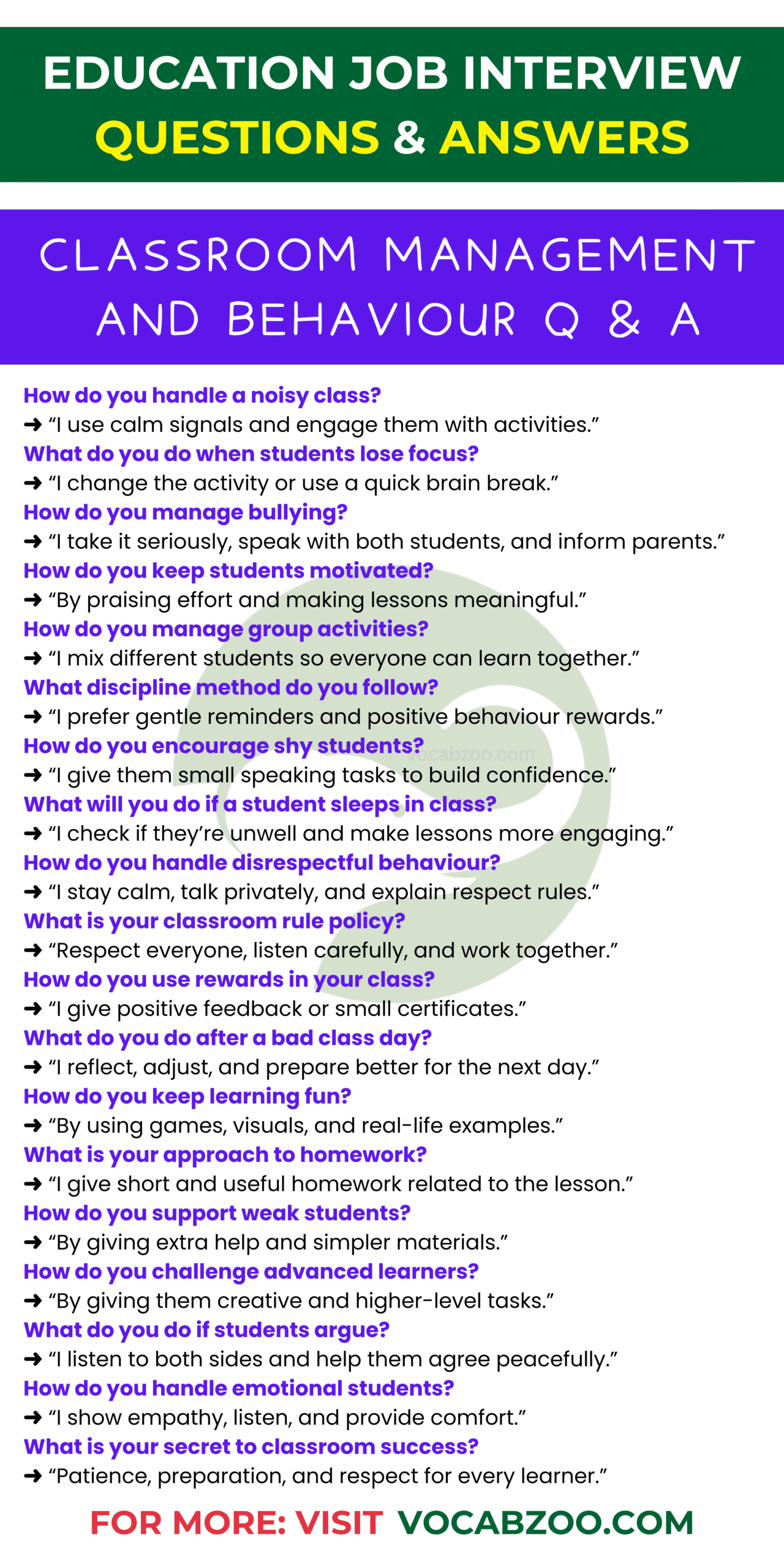
Question ➜ How do you handle a noisy class?
Answer ➜ “I use calm signals and engage them with activities.”
Question ➜ What do you do when students lose focus?
Answer ➜ “I change the activity or use a quick brain break.”
Question ➜ How do you manage bullying?
Answer ➜ “I take it seriously, speak with both students, and inform parents.”
Question ➜ How do you keep students motivated?
Answer ➜ “By praising effort and making lessons meaningful.”
Question ➜ How do you manage group activities?
Answer ➜ “I mix different students so everyone can learn together.”
Question ➜ How do you deal with a late student?
Answer ➜ “I ask for the reason politely and remind them about punctuality.”
Question ➜ What discipline method do you follow?
Answer ➜ “I prefer gentle reminders and positive behaviour rewards.”
Question ➜ How do you encourage shy students?
Answer ➜ “I give them small speaking tasks to build confidence.”
Question ➜ What will you do if a student sleeps in class?
Answer ➜ “I check if they’re unwell and make lessons more engaging.”
Question ➜ How do you handle disrespectful behaviour?
Answer ➜ “I stay calm, talk privately, and explain respect rules.”
Question ➜ What is your classroom rule policy?
Answer ➜ “Respect everyone, listen carefully, and work together.”
Question ➜ How do you use rewards in your class?
Answer ➜ “I give positive feedback or small certificates.”
Question ➜ What do you do after a bad class day?
Answer ➜ “I reflect, adjust, and prepare better for the next day.”
Question ➜ How do you keep learning fun?
Answer ➜ “By using games, visuals, and real-life examples.”
Question ➜ What is your approach to homework?
Answer ➜ “I give short and useful homework related to the lesson.”
Question ➜ How do you support weak students?
Answer ➜ “By giving extra help and simpler materials.”
Question ➜ How do you challenge advanced learners?
Answer ➜ “By giving them creative and higher-level tasks.”
Question ➜ What do you do if students argue?
Answer ➜ “I listen to both sides and help them agree peacefully.”
Question ➜ How do you handle emotional students?
Answer ➜ “I show empathy, listen, and provide comfort.”
Question ➜ What is your secret to classroom success?
Answer ➜ “Patience, preparation, and respect for every learner.”
4. Teamwork and School Collaboration Questions and Answers
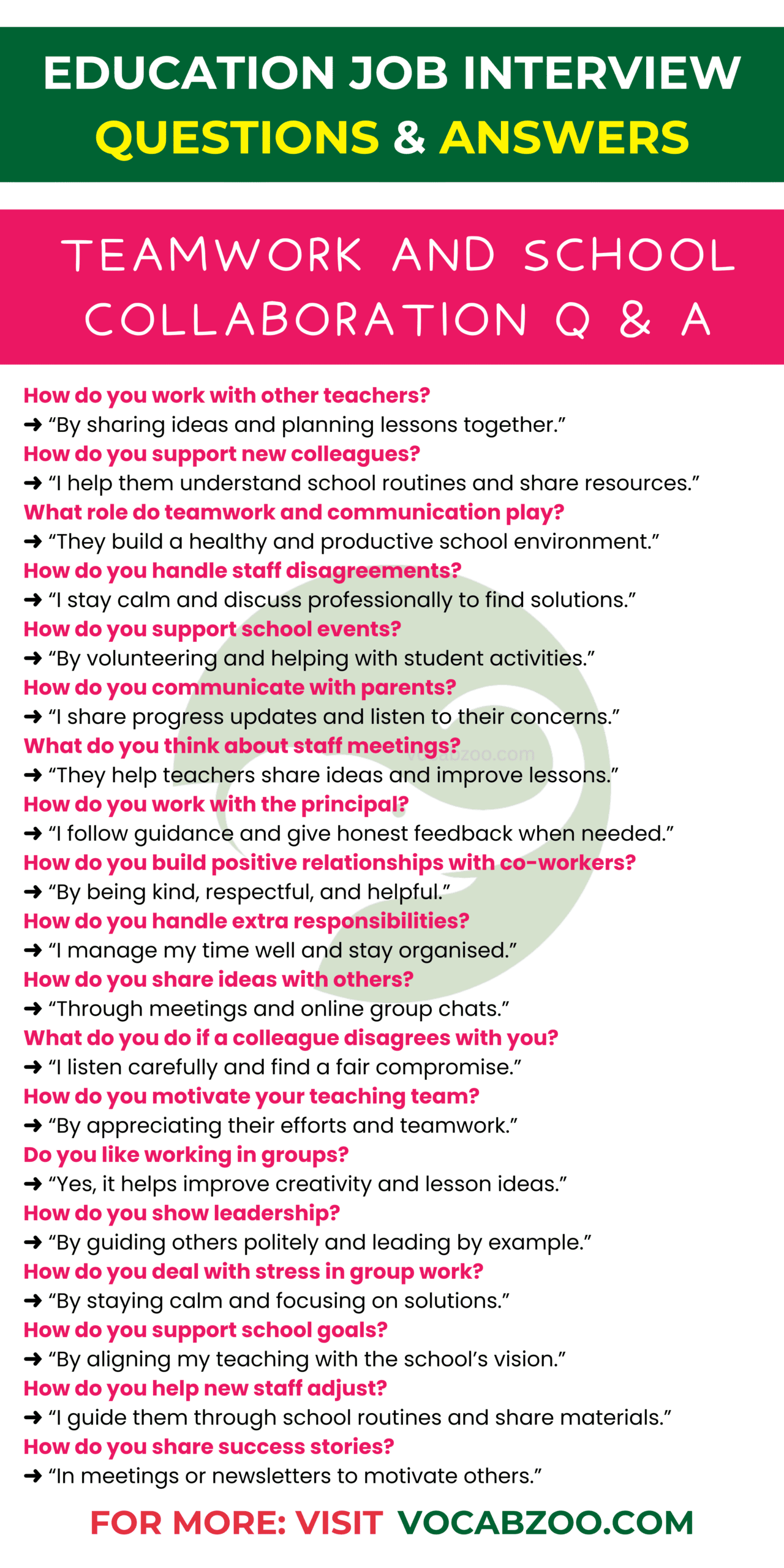
Question ➜ How do you work with other teachers?
Answer ➜ “By sharing ideas and planning lessons together.”
Question ➜ How do you support new colleagues?
Answer ➜ “I help them understand school routines and share resources.”
Question ➜ What role do teamwork and communication play?
Answer ➜ “They build a healthy and productive school environment.”
Question ➜ How do you handle staff disagreements?
Answer ➜ “I stay calm and discuss professionally to find solutions.”
Question ➜ How do you support school events?
Answer ➜ “By volunteering and helping with student activities.”
Question ➜ How do you communicate with parents?
Answer ➜ “I share progress updates and listen to their concerns.”
Question ➜ What do you think about staff meetings?
Answer ➜ “They help teachers share ideas and improve lessons.”
Question ➜ How do you work with the principal?
Answer ➜ “I follow guidance and give honest feedback when needed.”
Question ➜ How do you build positive relationships with co-workers?
Answer ➜ “By being kind, respectful, and helpful.”
Question ➜ How do you handle extra responsibilities?
Answer ➜ “I manage my time well and stay organised.”
Question ➜ How do you share ideas with others?
Answer ➜ “Through meetings and online group chats.”
Question ➜ What do you do if a colleague disagrees with you?
Answer ➜ “I listen carefully and find a fair compromise.”
Question ➜ How do you motivate your teaching team?
Answer ➜ “By appreciating their efforts and teamwork.”
Question ➜ Do you like working in groups?
Answer ➜ “Yes, it helps improve creativity and lesson ideas.”
Question ➜ How do you show leadership?
Answer ➜ “By guiding others politely and leading by example.”
Question ➜ How do you deal with stress in group work?
Answer ➜ “By staying calm and focusing on solutions.”
Question ➜ How do you support school goals?
Answer ➜ “By aligning my teaching with the school’s vision.”
Question ➜ How do you help new staff adjust?
Answer ➜ “I guide them through school routines and share materials.”
Question ➜ How do you share success stories?
Answer ➜ “In meetings or newsletters to motivate others.”
Question ➜ How do you manage classroom projects with others?
Answer ➜ “By dividing tasks and communicating regularly.”
5. Student Progress and Lesson Evaluation Questions and Answers
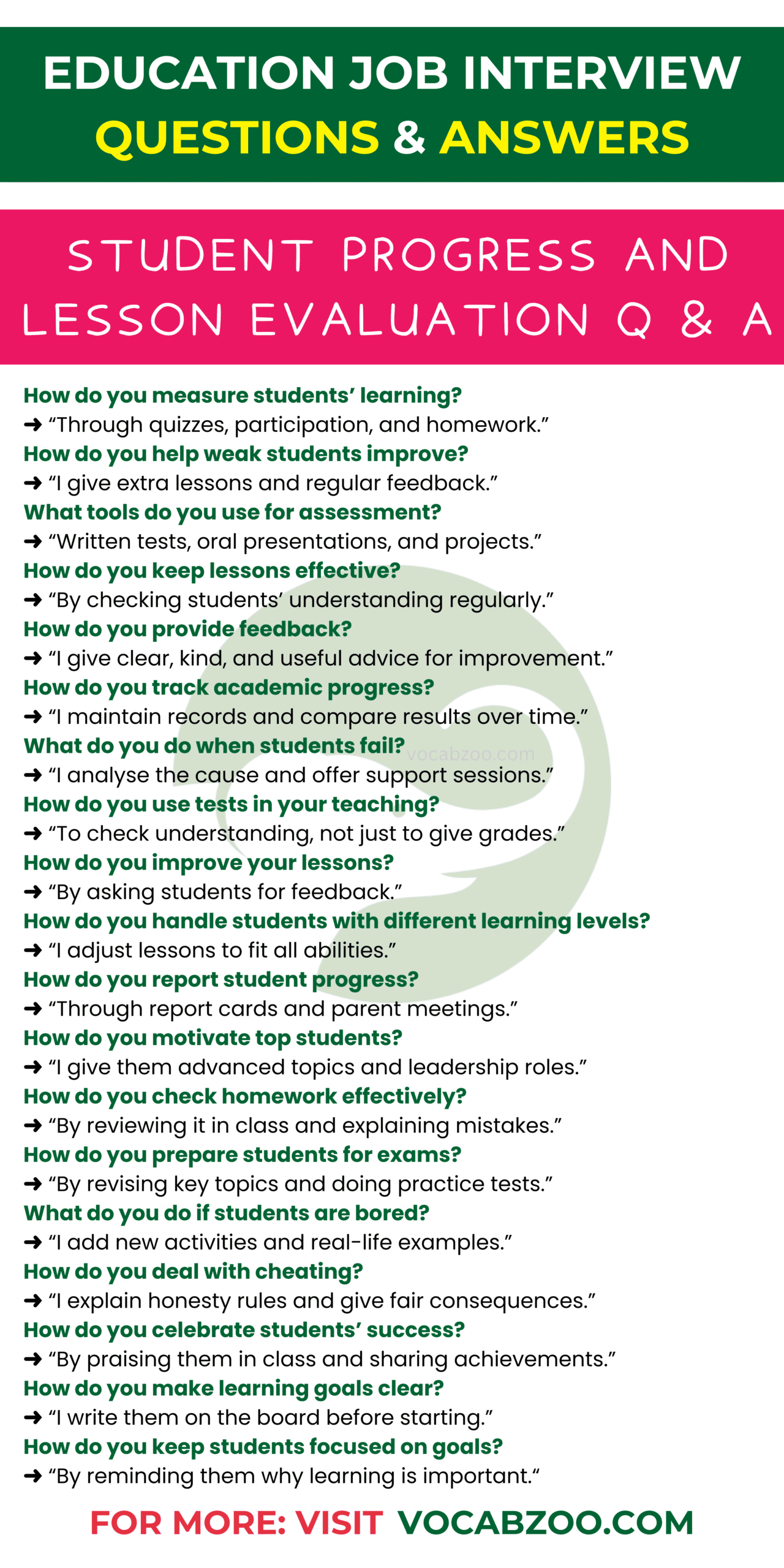
Question ➜ How do you measure students’ learning?
Answer ➜ “Through quizzes, participation, and homework.”
Question ➜ How do you help weak students improve?
Answer ➜ “I give extra lessons and regular feedback.”
Question ➜ What tools do you use for assessment?
Answer ➜ “Written tests, oral presentations, and projects.”
Question ➜ How do you keep lessons effective?
Answer ➜ “By checking students’ understanding regularly.”
Question ➜ How do you provide feedback?
Answer ➜ “I give clear, kind, and useful advice for improvement.”
Question ➜ How do you track academic progress?
Answer ➜ “I maintain records and compare results over time.”
Question ➜ What do you do when students fail?
Answer ➜ “I analyse the cause and offer support sessions.”
Question ➜ How do you use tests in your teaching?
Answer ➜ “To check understanding, not just to give grades.”
Question ➜ How do you improve your lessons?
Answer ➜ “By asking students for feedback.”
Question ➜ How do you handle students with different learning levels?
Answer ➜ “I adjust lessons to fit all abilities.”
Question ➜ How do you report student progress?
Answer ➜ “Through report cards and parent meetings.”
Question ➜ How do you motivate top students?
Answer ➜ “I give them advanced topics and leadership roles.”
Question ➜ How do you check homework effectively?
Answer ➜ “By reviewing it in class and explaining mistakes.”
Question ➜ How do you prepare students for exams?
Answer ➜ “By revising key topics and doing practice tests.”
Question ➜ What do you do if students are bored?
Answer ➜ “I add new activities and real-life examples.”
Question ➜ How do you deal with cheating?
Answer ➜ “I explain honesty rules and give fair consequences.”
Question ➜ How do you celebrate students’ success?
Answer ➜ “By praising them in class and sharing achievements.”
Question ➜ How do you make learning goals clear?
Answer ➜ “I write them on the board before starting.”
Question ➜ How do you keep students focused on goals?
Answer ➜ “By reminding them why learning is important.”
Question ➜ How do you evaluate your own teaching?
Answer ➜ “By reflecting after each lesson and improving daily.”
Closing Statement for an Interview
Example: “Thank you for the opportunity. I believe my skills, passion, and experience will help students learn effectively and contribute to your school’s success.”
Tips to Answer Education Interview Questions
✔ Be honest and clear — speak naturally and stay confident.
✔ Use short examples from your classroom or teaching experience.
✔ Show your passion for education and student success.
✔ Mention teamwork and how you support other teachers.
Key Qualities of a Good Teacher
| Quality | Explanation |
|---|---|
| Patience | Helps in managing classroom challenges calmly. |
| Creativity | Makes lessons more engaging and effective. |
| Communication | Builds better understanding between teacher and students. |
| Organisation | Helps plan and manage time effectively. |
| Empathy | Understands students’ feelings and learning needs. |
FAQs about Education Job Interview
What are common education job interview questions?
Common education job interview questions include:
– Why do you want to become a teacher?
– How do you handle a difficult student?
– What are your teaching strengths?
– How do you use technology in lessons?
– How do you motivate students to learn?
How do I prepare for a teacher interview?
To prepare for a teacher interview, review common questions, practise short and confident answers, and prepare examples from your classroom experience. Dress professionally, stay calm, and show your passion for teaching.
What is the best answer to “Why do you want this job?”
A strong answer is:
“Because I love teaching and want to help students reach their full potential in a supportive environment.”
This shows motivation, care, and understanding of the school’s goals.
How do you answer difficult interview questions in education?
Stay positive and honest. Use simple examples from your experience. Focus on how you solved a problem, supported students, or improved lessons. Avoid negative language and always end your answer on a positive note.
What skills are important in an education job interview?
The most valued skills in education interviews include:
communication, patience, teamwork, creativity, and organisation.
These skills show that you can manage a class, work well with others, and create a positive learning environment.
Read More