

Building a strong English vocabulary does not need to be difficult, boring, or time-consuming. Many learners believe they must memorize long word lists or read heavy books, but in reality, vocabulary grows best through simple, daily habits. With the right approach, you can learn new English words naturally, remember them longer, and use them confidently in real life.
This guide explains easy, practical, and proven ways to build English vocabulary. The language is simple, the methods are realistic, and everything is designed for learners who want fast and clear understanding.
How to Build English Vocabulary Easily
Vocabulary is the foundation of communication. Grammar helps you form sentences, but vocabulary gives meaning to your thoughts. Without enough words, it becomes difficult to:
- Express opinions clearly
- Understand conversations, movies, or articles
- Write emails, messages, or essays
- Feel confident while speaking
A strong vocabulary helps you think in English, not translate from your native language. This makes communication faster and more natural.

Start With the Right Mindset
Before learning new words, it’s important to change how you think about vocabulary.
- You do not need to learn thousands of words at once
- You do not need perfect memory
- You do not need expensive courses
What you need is consistency and smart learning. Learning a few useful words every day works better than learning many words once a week.

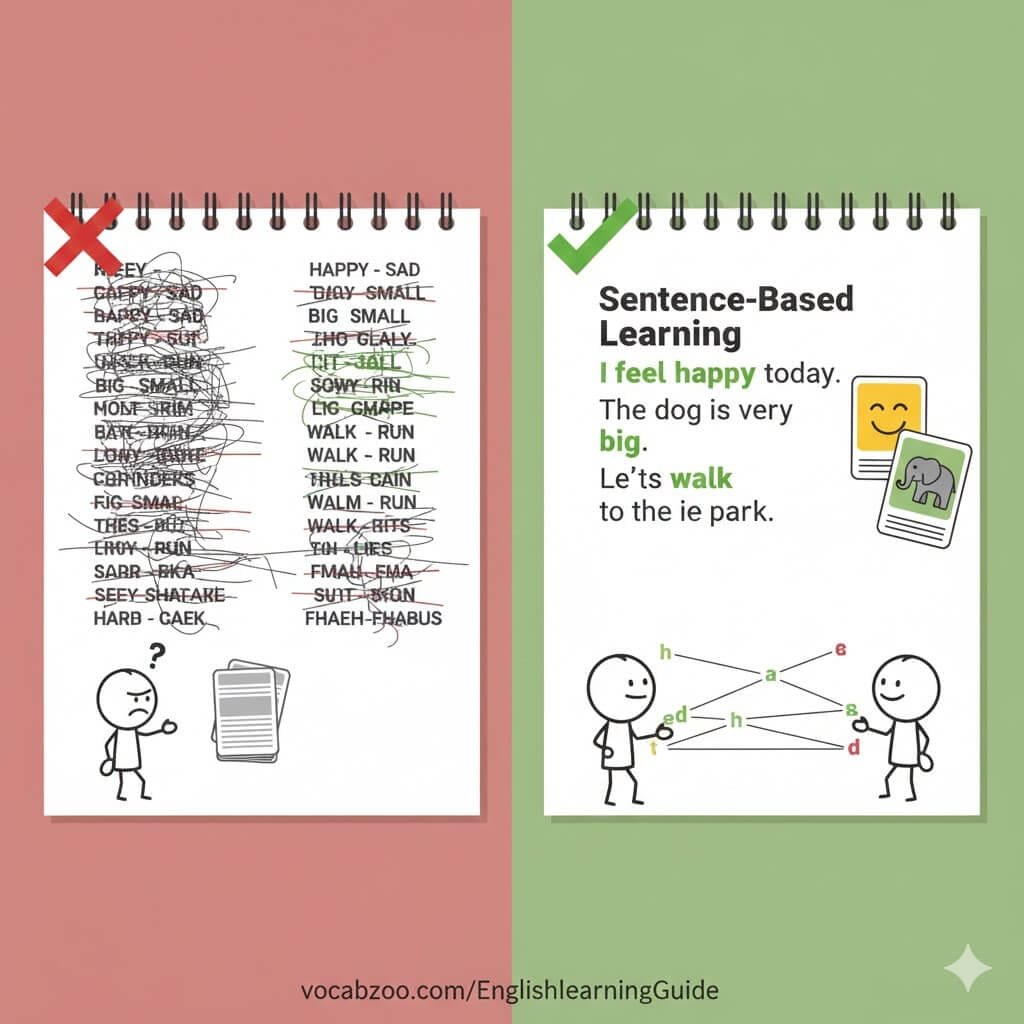
Learn Words in Context (Not Alone)
One of the biggest mistakes learners make is learning words alone, without sentences.
Why Context Matters
Words have different meanings depending on how they are used. When you learn a word inside a sentence, you understand:
- How to use it correctly
- When to use it
- The feeling or situation connected to it
Example:
- Instead of learning: “Comfort” = feeling of ease
- Learn it as: “This chair gives me great comfort.”
This makes the word easier to remember and use.

Read Simple English Every Day
Reading is one of the easiest and most natural ways to build vocabulary.
What You Should Read
Choose content that is:
- Easy to understand
- Interesting for you
- Short and clear
Good options include:
- Blogs and articles
- News written in simple English
- Short stories
- Instructions and guides
How to Read for Vocabulary
- Do not stop for every new word
- Guess the meaning from the sentence
- Check the dictionary only for important or repeated words
Seeing the same word many times helps your brain remember it naturally.

Listen to English Daily
Listening helps you learn how words sound and how they are used in real conversations.
Best Listening Sources
- Short videos
- Podcasts for learners
- Audiobooks with simple language
- TV shows with subtitles
Smart Listening Tips
- Listen first for general meaning
- Do not translate word by word
- Repeat useful words or phrases aloud
Listening improves pronunciation and helps you remember words faster.

Use New Words Immediately
If you don’t use a word, you will forget it. Using words is the fastest way to move them into long-term memory.
Easy Ways to Use New Words
- Say one sentence using the word
- Write a short note or message
- Think about your day using that word
Even one sentence is enough to make a big difference.

Speak Without Fear of Mistakes
Many learners know words but don’t use them because they fear mistakes. This fear slows vocabulary growth.
Remember:
- Mistakes are part of learning
- Perfect English is not required
- Clear communication is more important than accuracy
Speak slowly, use simple words, and focus on sharing your message.

Write to Strengthen Vocabulary
Writing helps you organize thoughts and use words correctly.
Simple Writing Ideas
- Write 3–5 sentences about your day
- Write a short paragraph using new words
- Rewrite a simple article in your own words
Writing does not need to be long. Short and regular writing is more effective.

Learn Word Groups, Not Single Words
Words are easier to remember when learned together.
Helpful Word Groups
- Word families: help, helpful, helpless
- Common pairs: make a decision, take a break
- Opposites: easy – difficult
This helps you use words more naturally and correctly.

Use Technology the Right Way
Apps and online tools can help if used wisely.
How to Use Apps Effectively
- Choose one or two apps only
- Review words regularly
- Focus on useful, daily-life words
Avoid learning too many words at once. Quality is better than quantity.

Review Words Regularly
Revision is key to remembering vocabulary.
Simple Review Methods
- Review words after one day
- Review again after one week
- Use words in new sentences
Repetition helps move words from short-term to long-term memory.

Avoid Common Vocabulary Mistakes
To learn faster, avoid these mistakes:
- Learning too many words at once
- Translating every word
- Ignoring pronunciation
- Not using new words
Focus on use, repetition, and understanding, not memorization.
Create a Simple Daily Vocabulary Routine
A routine keeps learning easy and stress-free.
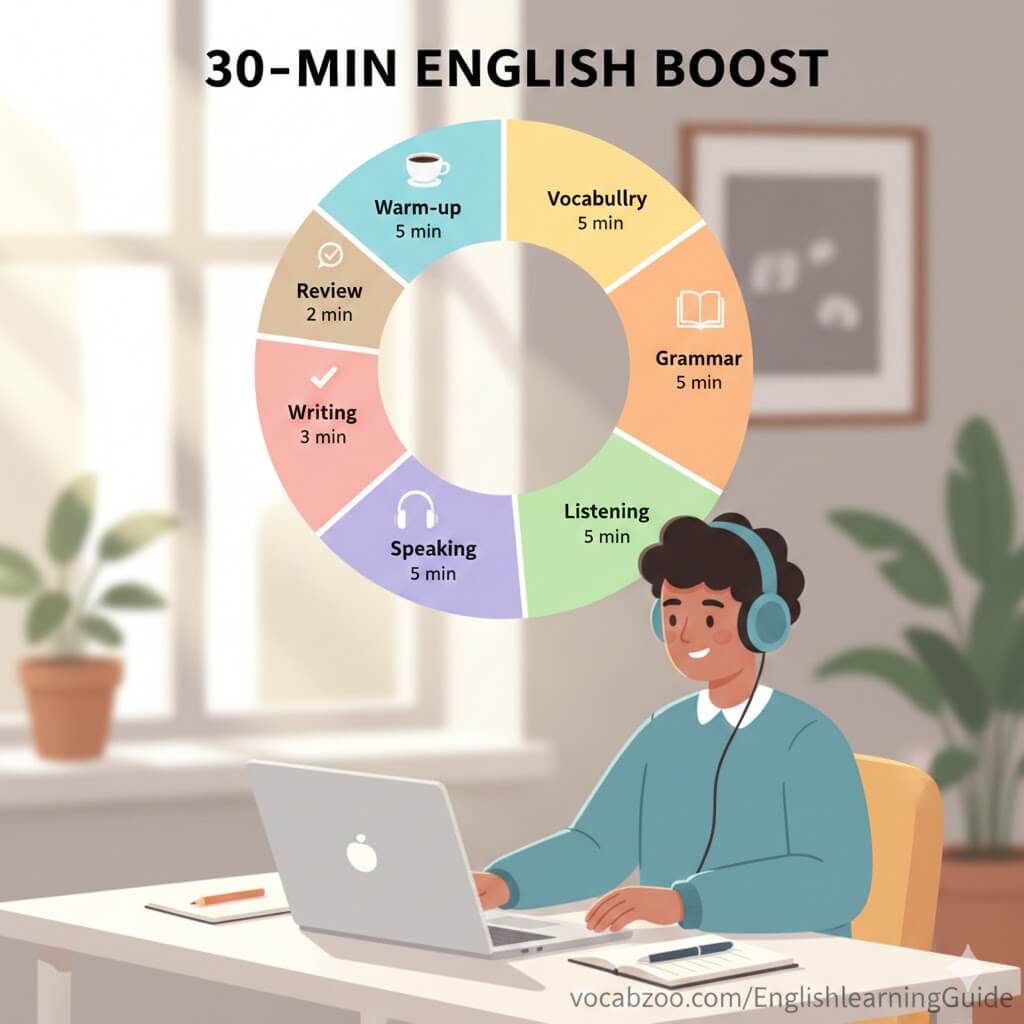
Example Daily Plan (15–20 minutes):
- Read for 5 minutes
- Learn 3–5 new words
- Use each word in one sentence
- Listen to English for 5 minutes
Small steps every day bring strong results.
Conclusion
Building English vocabulary easily is possible for everyone. You don’t need difficult methods or heavy study. By reading, listening, speaking, and using words daily, vocabulary grows naturally. Stay consistent, keep learning simple, and enjoy the process. Over time, English words will come to you automatically, and your confidence will grow with them.
Frequently Asked Questions
What is the best way to build English vocabulary easily?
The best way to build English vocabulary easily is to learn words through daily use. Read simple English, listen to real conversations, and use new words in short sentences. Learning vocabulary in context helps learners remember meanings, pronunciation, and correct usage naturally.
Why is building English vocabulary important for learners?
Building English vocabulary is important because it improves understanding, speaking, reading, and writing skills. A strong vocabulary allows learners to express ideas clearly and understand others without constant translation, making communication smoother and more confident in real-life situations.
How can beginners build English vocabulary fast and correctly?
Beginners can build English vocabulary fast by learning common, useful words and using them daily. Reading easy texts, listening to slow English, and repeating new words in sentences helps learners understand meaning and use words correctly without confusion.
Is reading helpful for improving English vocabulary?
Yes, reading is one of the most effective ways to improve English vocabulary. It exposes learners to words in real sentences, shows correct usage, and helps learners understand meaning through context, which makes vocabulary easier to remember and use naturally.
How many new words should I learn per day?
Learning 3 to 5 new English words per day is ideal. This number is easy to manage and allows enough time to understand, practice, and remember each word. Quality learning is more effective than trying to memorize many words at once.
Is it better to learn words alone or in sentences?
It is better to learn words in sentences. Sentences show how a word is used, its meaning, and its position in real communication. Learning words alone often leads to forgetting or using them incorrectly.
Can I build vocabulary without speaking English?
Yes, you can build vocabulary without speaking at first by reading, listening, and writing. However, speaking helps turn passive vocabulary into active vocabulary. Even simple self-speaking or short sentences can greatly improve word retention.
Do I need to use a dictionary every time?
No, you do not need to use a dictionary every time. First, try to understand the word from context. Use a dictionary only when the word is important or appears often. This method improves learning speed and comprehension.
How long does it take to improve vocabulary?
Vocabulary improvement depends on daily practice. With consistent reading, listening, and word usage, learners usually notice improvement within a few weeks. Long-term vocabulary growth happens gradually through regular exposure and repetition.
Explore More