


Making mistakes is part of learning English, but some errors can slow down your progress. In this article, you will learn about Common English Learning Mistakes to Avoid so you can improve faster and speak more confidently. Understanding these mistakes helps you strengthen your grammar, vocabulary, and pronunciation while improving reading, writing, and listening skills. When you recognize and correct errors early, your English becomes clearer and more accurate. Keep reading to learn practical tips that will help you master English more effectively.
Why Learners Struggle With English
English is used globally, but it is not always taught in a natural way. Many learners focus too much on rules and too little on real communication. Others are afraid of making mistakes, so they avoid speaking.
Common reasons learners struggle include:
- Learning English only from books
- Memorizing rules without practice
- Fear of speaking in public
- Lack of daily exposure to real English
- Trying to be perfect instead of being clear
Understanding these problems is the first step to fixing them.
Common English Learning Mistakes to Avoid
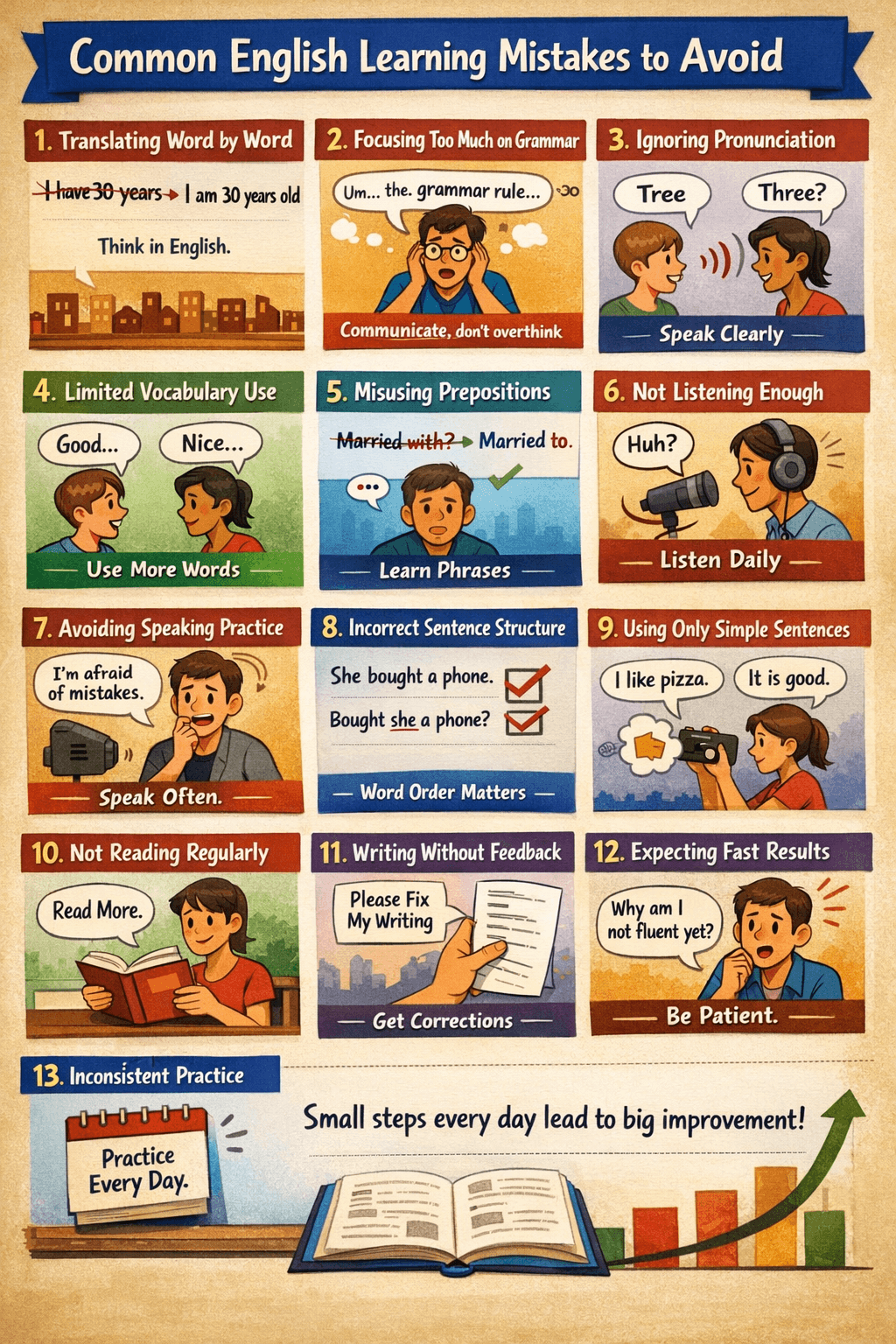
English Learning Mistakes
Mistake 1: Translating Word by Word
One of the most common mistakes is translating sentences directly from your native language into English. This often creates sentences that sound strange or unclear.
Why this is a problem:
- Languages have different sentence structures
- Idioms and expressions do not translate well
- It slows down speaking
Example:
- Incorrect: I have 30 years
- Correct: I am 30 years old
How to fix it:
- Learn complete phrases, not single words
- Think in English using simple sentences
- Practice daily expressions used in real life

Mistake 2: Focusing Too Much on Grammar
Grammar is important, but too much focus on grammar can stop you from speaking naturally. Many learners think about rules while speaking, which causes long pauses and stress.
Common problems:
- Fear of making grammar mistakes
- Speaking very slowly
- Losing confidence
Better approach:
- Focus on clear communication, not perfection
- Learn grammar through examples
- Improve grammar gradually while speaking
Remember, native speakers also make grammar mistakes, but communication still works.

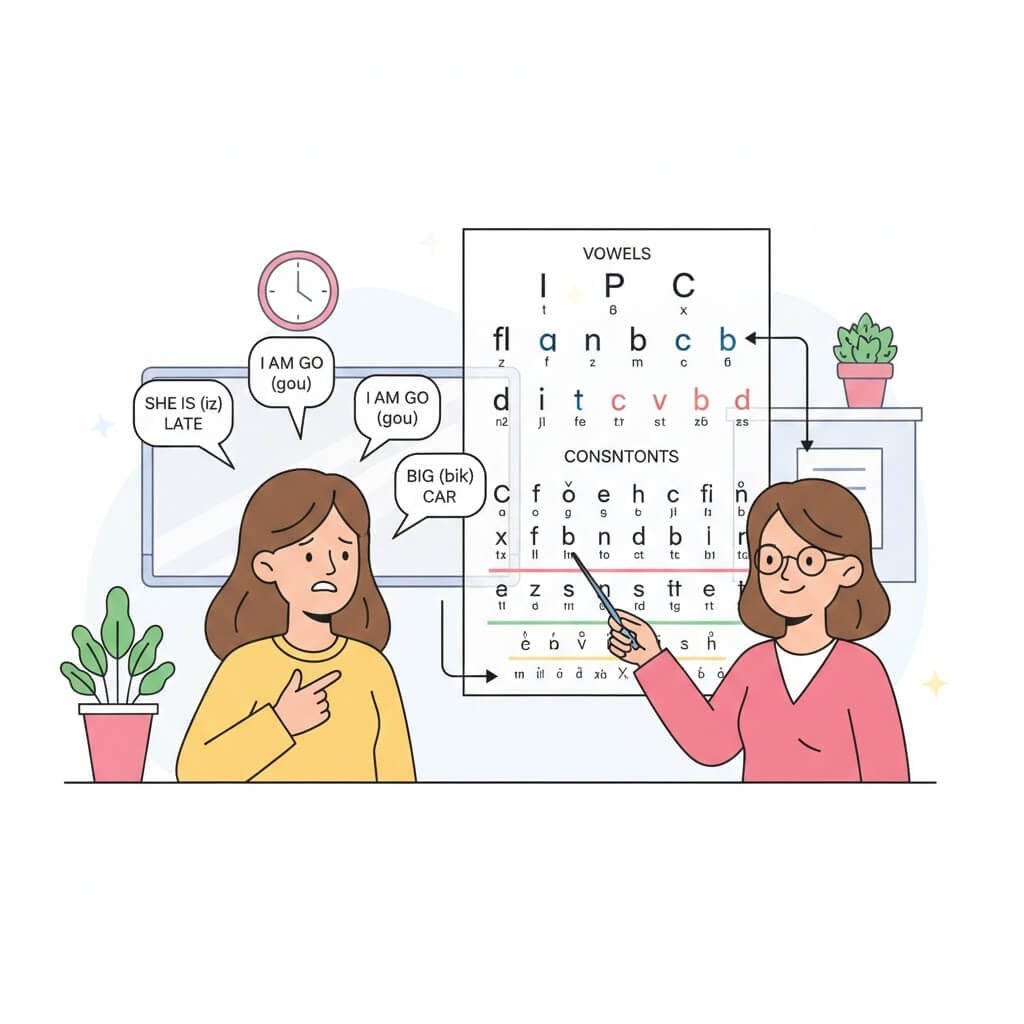
Mistake 3: Ignoring Pronunciation
Many learners know a lot of words but are hard to understand because of pronunciation issues. English pronunciation is not always logical, and stress plays a big role.
Why pronunciation matters:
- Poor pronunciation causes misunderstandings
- Correct stress helps listeners understand meaning
- Confidence improves with clear speech
Simple tips:
- Listen to real English (videos, podcasts)
- Repeat words and sentences out loud
- Learn common stress patterns
- Record your voice and compare
You do not need a perfect accent—clarity is the goal.
Mistake 4: Limited Vocabulary Use
Some learners know many words but only use a small number when speaking or writing. This makes English sound repetitive and basic.
Common issues:
- Using the same words again and again
- Not knowing how to use words in context
How to improve:
- Learn words in sentences
- Group words by topic (work, travel, daily life)
- Use new words in short sentences
- Read simple articles and notice word usage
Quality vocabulary use is better than quantity.

Mistake 5: Misusing Prepositions
Prepositions like in, on, at, for, and to are small but very important. Many learners find them confusing because usage often does not follow clear rules.
Common errors:
- Married with instead of married to
- Discuss about instead of discuss
How to learn prepositions:
- Learn them as part of phrases
- Notice how they are used in reading and listening
- Avoid translating prepositions from your language
With time and exposure, correct usage becomes natural.

Mistake 6: Not Listening Enough
Listening is a key skill, but many learners focus more on reading and writing. Without listening practice, understanding real conversations becomes difficult.
Problems caused by poor listening:
- Difficulty understanding accents
- Trouble following fast speech
- Limited vocabulary recognition
Improve listening by:
- Watching videos with clear speakers
- Listening to short audio daily
- Repeating what you hear
- Using subtitles first, then removing them
Listening trains your brain to recognize real English patterns.

Mistake 7: Avoiding Speaking Practice
Many learners understand English but avoid speaking. Fear of mistakes or embarrassment is the main reason.
Why this slows learning:
- Speaking builds confidence
- Mistakes help the brain learn
- Practice improves fluency
Easy ways to practice speaking:
- Talk to yourself in English
- Describe daily activities out loud
- Join online speaking groups
- Practice short conversations
Speaking is a skill—you improve by doing it.

Mistake 8: Incorrect Sentence Structure
English has a clear word order. When learners change this order, sentences can become confusing.
Basic structure:
- Subject + Verb + Object
Example:
- Correct: She bought a new phone
- Incorrect: Bought she a new phone
How to improve structure:
- Read simple English texts
- Notice how sentences are built
- Practice writing short, clear sentences
Good structure improves both writing and speaking.

Mistake 9: Using Only Simple Sentences
Using only short and basic sentences limits expression. While simplicity is good, variety makes English sound more natural.
Problem:
- English sounds robotic
- Ideas feel incomplete
Solution:
- Learn connectors like because, although, however
- Combine short sentences
- Practice basic complex sentences
Balance is key—clear but flexible language works best.

Mistake 10: Not Reading Regularly
Reading builds vocabulary, grammar awareness, and sentence flow. Learners who avoid reading often struggle to improve.
Best reading materials:
- Simple blogs
- News articles
- Short stories
- Instructional content
Tips:
- Read a little every day
- Don’t translate every word
- Focus on understanding meaning
Reading supports all other language skills.

Mistake 11: Writing Without Feedback
Writing helps organize thoughts, but without feedback, mistakes can become habits.
Common writing issues:
- Repeated grammar mistakes
- Poor sentence flow
- Incorrect word usage
Improve writing by:
- Asking for corrections
- Using grammar tools carefully
- Writing short texts regularly
Feedback helps you grow faster and more accurately.

Mistake 12: Expecting Fast Results
Learning English takes time. Many learners feel disappointed because progress seems slow.
Reality check:
- Language learning is a long-term process
- Small progress matters
- Consistency beats speed
Set realistic goals and focus on steady improvement.

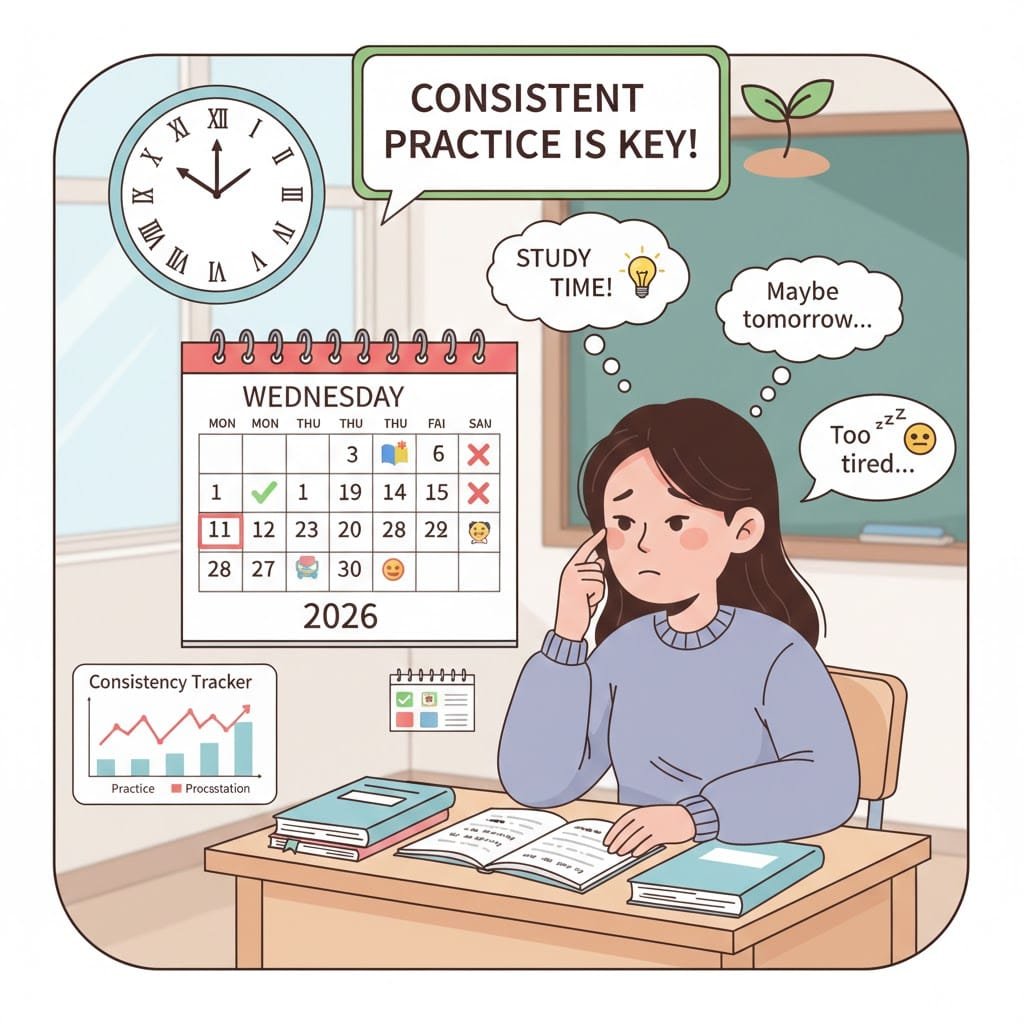
Mistake 13: Inconsistent Practice
Studying once a week is not enough. English needs regular exposure.
Better habit:
- 20–30 minutes daily
- Mix listening, speaking, reading, and writing
- Use English in daily life
Small daily effort leads to strong results.
Conclusion
Learning English becomes much easier when you avoid common mistakes. Focus on communication, not perfection. Practice daily, listen actively, and speak with confidence. English is not about being perfect—it is about being understood.
By correcting these mistakes step by step, you will see real progress and enjoy the learning journey more.
Frequently Asked Questions
What are the most common English learning mistakes to avoid?
The most common English learning mistakes to avoid include translating word by word, focusing too much on grammar, ignoring pronunciation, avoiding speaking practice, and learning vocabulary without context. These mistakes slow fluency and reduce confidence. Learning English works best when communication, listening, and daily practice are balanced.
Why do English learners keep making the same mistakes?
English learners repeat the same mistakes because they rely on their native language, fear making errors, and study English in an unnatural way. Many learners focus on rules instead of real usage. Without regular speaking and listening practice, mistakes become habits and are harder to correct.
Is translating from my native language a bad way to learn English?
Yes, translating directly from your native language is one of the biggest English learning mistakes to avoid. English sentence structure and expressions are different. Word-by-word translation causes unnatural sentences and slow speaking. Learning phrases and thinking in English helps improve fluency and accuracy.
Why is focusing too much on grammar a problem for English learners?
Focusing too much on grammar can stop learners from speaking naturally. Many learners pause often because they think about rules while talking. English should be used for communication first. Grammar improves naturally through reading, listening, and speaking regularly in real-life situations.
How does poor pronunciation affect English communication?
Poor pronunciation makes English difficult to understand, even if grammar is correct. English relies on stress and clear sounds. Mispronounced words can confuse listeners. Improving pronunciation through listening and repetition helps learners speak more clearly and builds confidence in conversations.
Why is speaking practice important when learning English?
Speaking practice is essential because English is a communication skill. Avoiding speaking is a common English learning mistake. Regular speaking helps learners think faster in English, correct mistakes naturally, and gain confidence. Even short daily speaking practice improves fluency over time.
How can limited vocabulary slow English learning?
Using a small range of words makes English sound repetitive and unclear. Limited vocabulary prevents learners from expressing ideas properly. Learning words in context, not lists, helps learners use vocabulary correctly in speaking and writing, which improves overall English communication.
Why is consistency important in learning English correctly?
Inconsistent practice is a major English learning mistake to avoid. Studying once in a while does not build fluency. Short daily practice helps the brain remember patterns, improve listening skills, and gain confidence. Consistency is more effective than long but rare study sessions.
Explore More