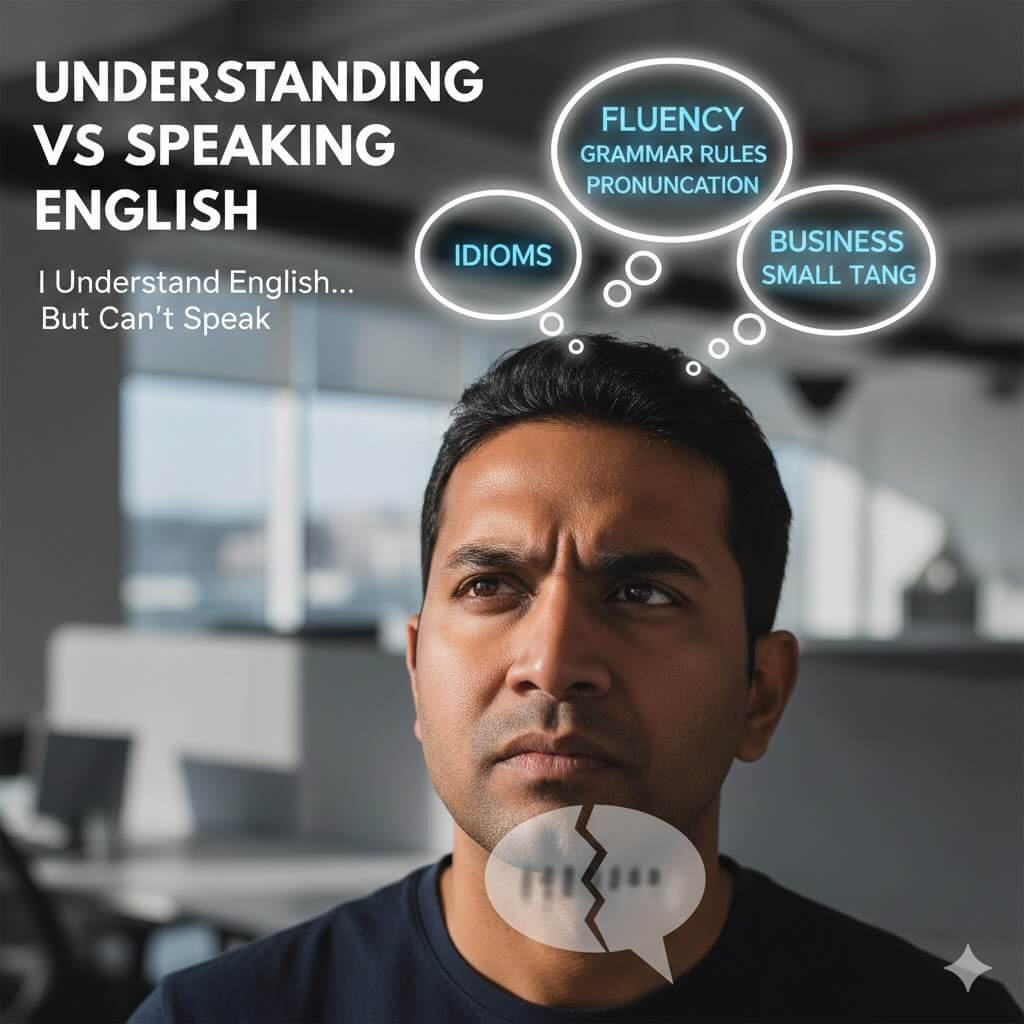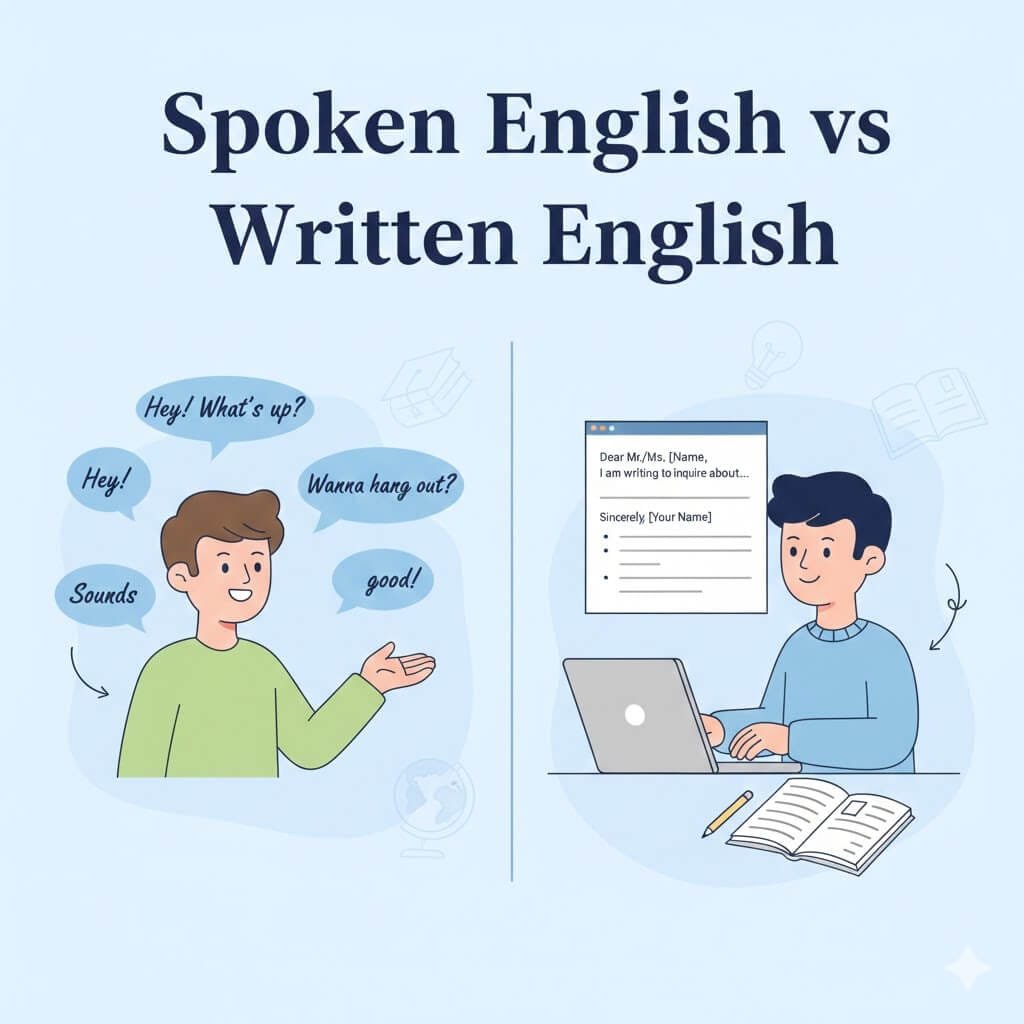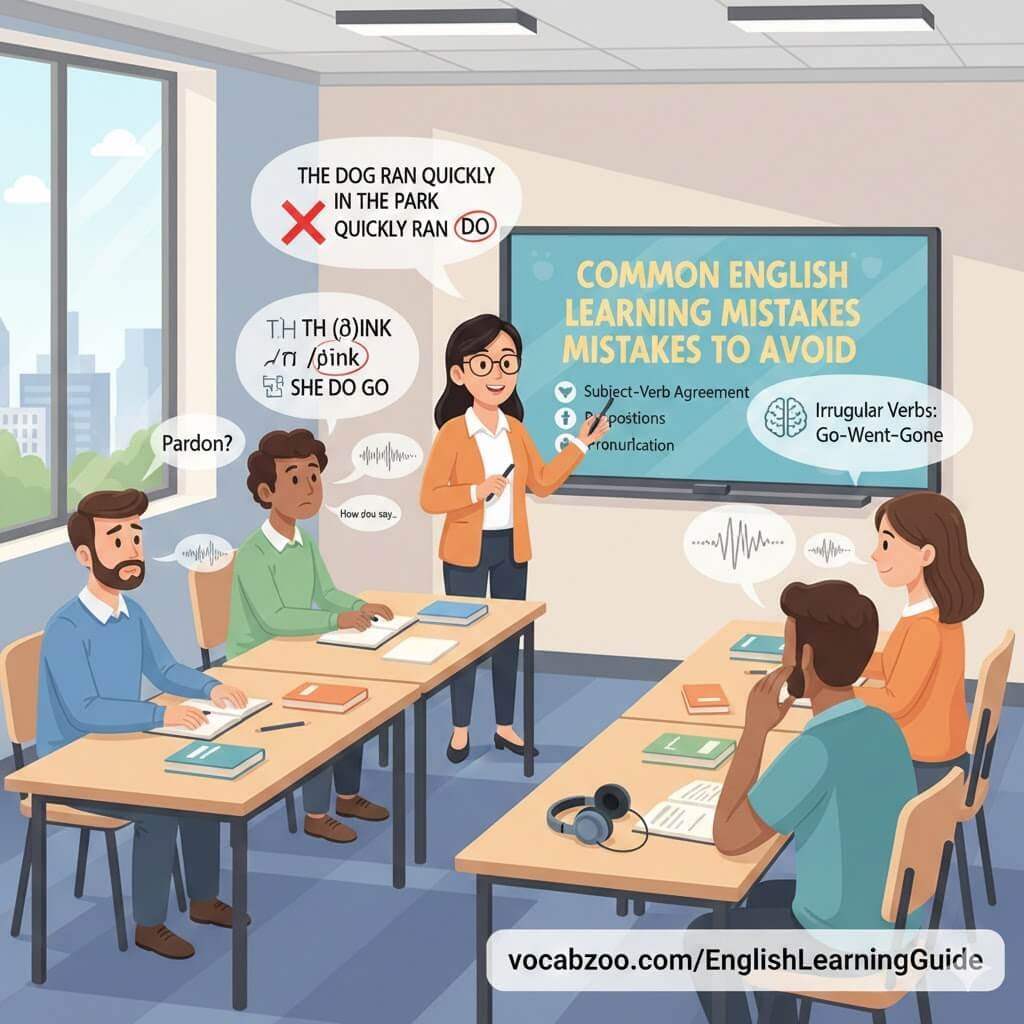
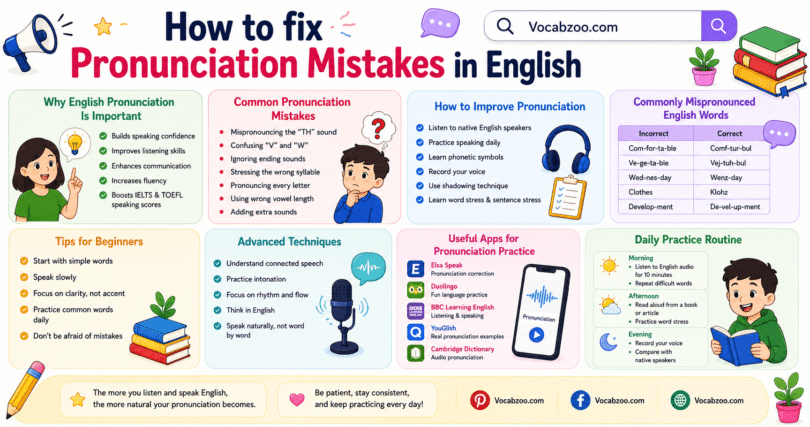

English pronunciation is one of the most important parts of speaking clearly and confidently. Many English learners understand grammar and vocabulary well, but they still make pronunciation mistakes while speaking. These mistakes can sometimes create confusion and make communication difficult. The good thing is that pronunciation can improve with regular practice and the right techniques. In this article, you will learn about common English pronunciation mistakes, why they happen, and simple ways to fix them easily for better speaking, listening, and overall communication skills.
Why English Pronunciation Is Important
Pronunciation is the way words are spoken. Good pronunciation helps listeners understand your message clearly.
Correct pronunciation improves:
- Speaking confidence
- Listening skills
- Communication
- Fluency
- IELTS and TOEFL speaking scores
Even if your grammar is perfect, unclear pronunciation can make conversations difficult.
Why ESL Learners Make Pronunciation Mistakes
There are several reasons why learners pronounce English words incorrectly.
Influence of Native Language
Many learners pronounce English words using the sound rules of their first language.
Example
A student may pronounce:
- “School” as “Ischool”
- “Very” as “Wery”
This happens because some English sounds may not exist in their native language.
Silent Letters in English
English contains many silent letters that confuse learners.
Examples
| Word | Correct Pronunciation |
|---|---|
| Knife | naif |
| Honest | on-est |
| Comb | koom |
Silent letters are common in English and require practice and listening.
Different Spellings and Sounds
English spelling is not always phonetic. The same letters may produce different sounds.
Example
| Word | Sound |
|---|---|
| Food | oo sound |
| Flood | uh sound |
| Good | u sound |
This inconsistency creates pronunciation problems for learners.
Common Pronunciation Mistakes in English
Mispronouncing the “TH” Sound
The “th” sound is difficult for many learners.
Common Mistakes
| Incorrect | Correct |
|---|---|
| Tink | Think |
| Dis | This |
| Tank you | Thank you |
How to Fix It
Place your tongue gently between your teeth and push air out softly.
Practice words like:
- Think
- Thank
- Three
- This
- Those
Repeat slowly until your tongue becomes comfortable with the sound.
Confusing “V” and “W”
Many learners mix these two sounds.
Common Examples
| Incorrect | Correct |
|---|---|
| Wery | Very |
| Vine | Wine |
Difference Between the Sounds
- V sound: Teeth touch the lower lip
- W sound: Lips form a small round shape
Practice Words
| V Words | W Words |
|---|---|
| Voice | Water |
| Visit | Window |
| Village | Wonderful |
Incorrect Pronunciation of Ending Sounds
Learners often ignore ending sounds in English words.
Example
| Incorrect | Correct |
|---|---|
| Wor | World |
| Frien | Friend |
| Nigh | Night |
Missing final sounds makes speech unclear.
How to Improve
- Speak slowly
- Focus on the last letter
- Record your voice
- Repeat difficult words daily
Stressing the Wrong Syllable
English words have stressed syllables. Stress means saying one part of the word more strongly.
Example
| Word | Correct Stress |
|---|---|
| PREsent (noun) | First syllable |
| preSENT (verb) | Second syllable |
Wrong stress can completely change meaning.
Pronouncing Every Letter
Many English letters are silent.
Common Silent Letters
| Word | Silent Letter |
|---|---|
| Write | W |
| Half | L |
| Listen | T |
Improvement Tip
Listen carefully to native speakers instead of depending only on spelling.
Problems With Short and Long Vowel Sounds
English vowel sounds are very important.
Example
| Short Vowel | Long Vowel |
|---|---|
| Ship | Sheep |
| Full | Fool |
| Bit | Beat |
Incorrect vowel length may change the meaning of words.
Adding Extra Sounds
Some learners add extra vowels while speaking.
Example
| Incorrect | Correct |
|---|---|
| Eschool | School |
| Estudent | Student |
This usually happens because some languages do not allow certain consonant combinations.
Fix
Practice difficult consonant clusters slowly:
- School
- Strong
- Street
- Smile
How to Improve English Pronunciation
Listen to Native English Speakers
Listening is one of the fastest ways to improve pronunciation.
Best Listening Sources
- English podcasts
- YouTube lessons
- English movies
- Audiobooks
- BBC Learning English
Pay attention to:
- Sound
- Stress
- Intonation
- Word connection
Practice Speaking Daily
Speaking regularly trains your mouth muscles and improves fluency.
Easy Speaking Practice
- Read aloud
- Speak in front of a mirror
- Talk to yourself in English
- Repeat sentences from videos
Daily practice creates noticeable improvement.
Learn Phonetic Symbols
Phonetic symbols show the correct pronunciation of words.
Example
| Word | Phonetic Form |
|---|---|
| Cat | /kæt/ |
| Book | /bʊk/ |
| Teacher | /ˈtiː.tʃər/ |
Most dictionaries include phonetic pronunciation.
Record Your Voice
Recording helps learners hear their mistakes clearly.
Benefits
- Improves self-awareness
- Builds confidence
- Helps compare with native pronunciation
Try reading a paragraph and listening carefully.
Use Shadowing Technique
Shadowing means copying native speakers immediately after hearing them.
How to Practice
- Play a short sentence
- Pause the audio
- Repeat exactly
- Copy pronunciation and rhythm
This technique improves accent and fluency naturally.
Learn Word Stress and Sentence Stress
English rhythm depends heavily on stress patterns.
Example Sentence
- “I WANT to LEARN English.”
Important words are stressed more strongly.
Understanding stress improves natural speaking.
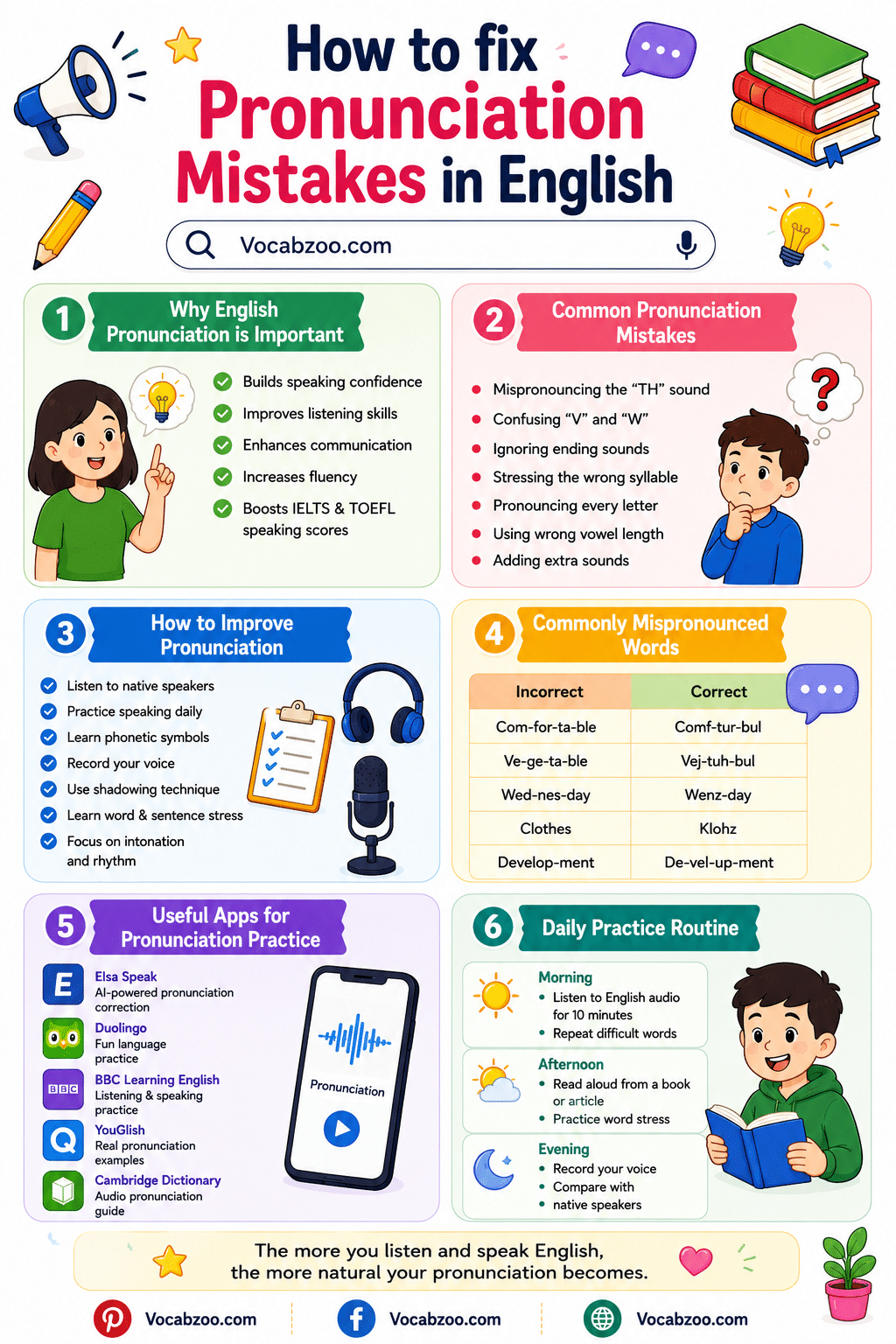
Commonly Mispronounced English Words
Everyday Words Learners Often Say Incorrectly
| Incorrect Pronunciation | Correct Pronunciation |
|---|---|
| Com-for-ta-ble | Comf-tur-bul |
| Ve-ge-ta-ble | Vej-tuh-bul |
| Wed-nes-day | Wenz-day |
| Clothes | Klohz |
| Develop-ment | De-vel-up-ment |
Practice these words repeatedly.
Commonly Mispronounced English Words
Pronunciation Tips for Beginners
Start With Simple Words
Do not begin with difficult academic vocabulary.
Focus first on:
- Daily conversation words
- Common verbs
- Basic nouns
- Useful phrases
Speak Slowly
Fast speaking increases mistakes.
Slow and clear speech is better than fast unclear speech.
Focus on Clarity, Not Accent
You do not need a perfect British or American accent.
The main goal is clear communication.
Advanced Pronunciation Techniques
Understand Connected Speech
Native speakers often connect words together.
Example
- “Want to” becomes “Wanna”
- “Going to” becomes “Gonna”
Understanding connected speech improves listening and speaking fluency.
Practice Intonation
Intonation is the rise and fall of the voice.
Example
Questions usually rise at the end:
- “Are you coming?”
Statements usually fall:
- “I am ready.”
Good intonation makes speech sound natural.
Best Apps and Tools for Pronunciation Practice
| Tool | Purpose |
|---|---|
| Elsa Speak | Pronunciation correction |
| BBC Learning English | Listening and speaking |
| YouGlish | Real pronunciation examples |
| Google Translate Voice | Basic pronunciation help |
| Cambridge Dictionary | Audio pronunciation |
These tools help learners practice independently.
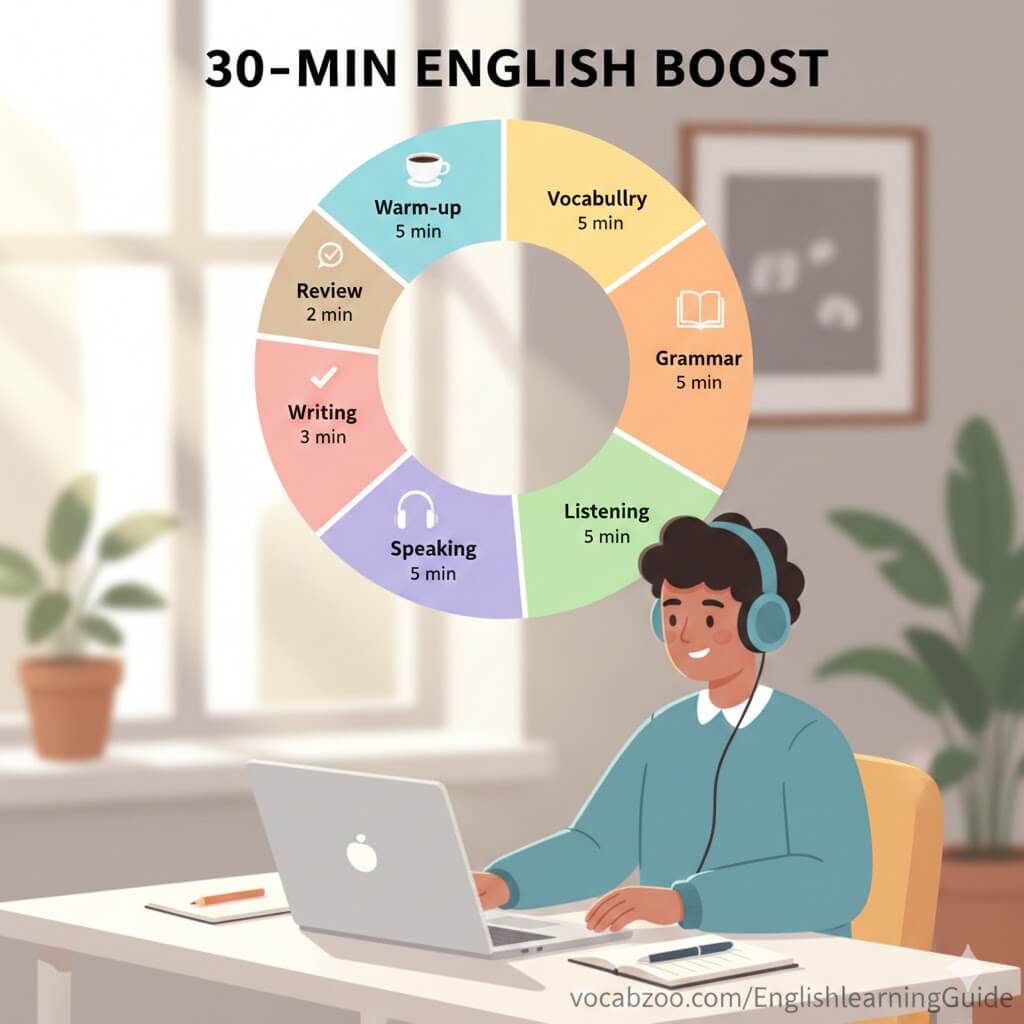
Daily Pronunciation Practice Routine
Morning
- Listen to English audio for 10 minutes
- Repeat difficult words
Afternoon
- Read aloud from a book or article
- Practice word stress
Evening
- Record your voice
- Compare with native speakers
Consistency is more important than long study hours.
Mistakes to Avoid While Improving Pronunciation
Being Afraid of Speaking
Many learners avoid speaking because they fear mistakes.
Mistakes are a normal part of learning.
Ignoring Listening Practice
Good pronunciation starts with careful listening.
Memorizing Without Speaking
Pronunciation improves only through active speaking practice.