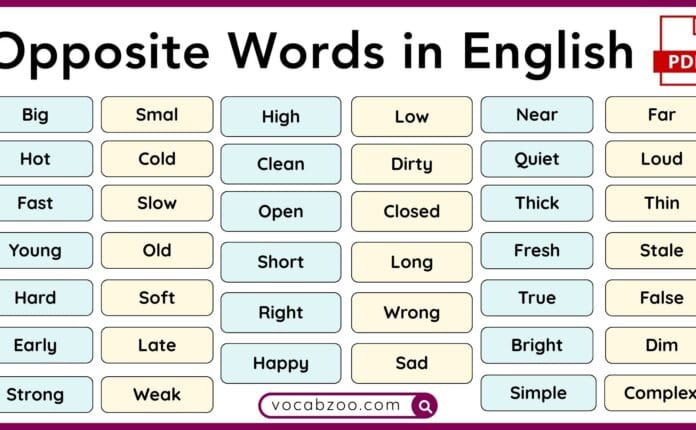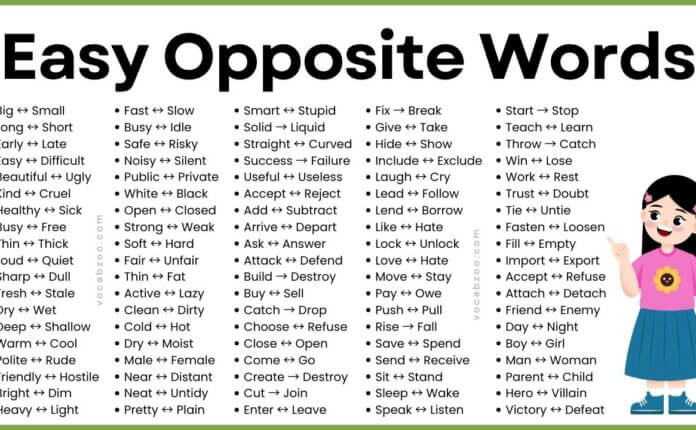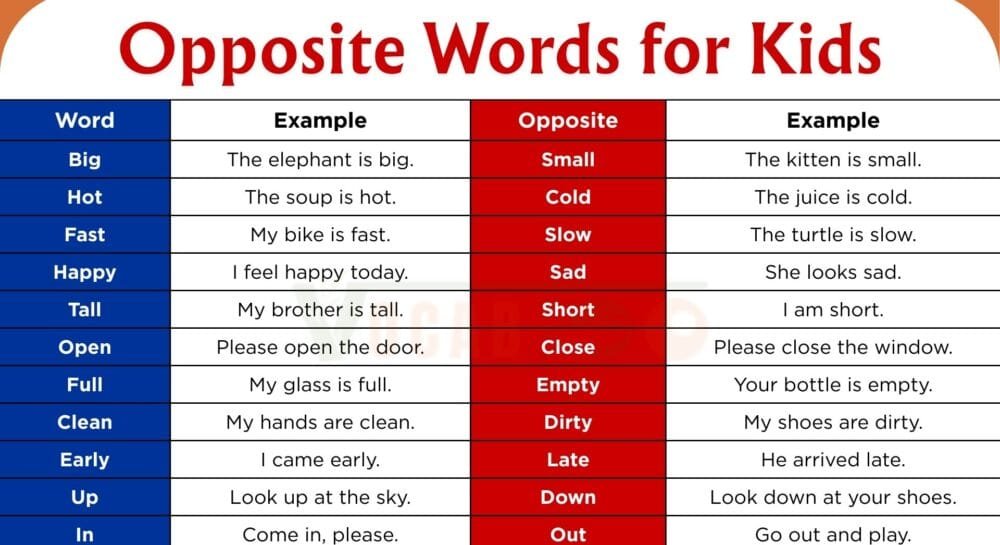
Opposite words are words that have completely different meanings, like big and small or happy and sad. Learning opposite words helps children understand meaning more deeply and use English more accurately. When kids learn these word pairs, they can speak with better ideas, read with stronger comprehension, write better sentences, and listen more carefully. In this blog post, you will learn 100 opposite words for kids in English that are useful in daily life and school. By practicing these pairs, you can improve your vocabulary and build confidence step by step.
What Are Opposite Words?
Opposite words (also called antonyms) are words that have completely different meanings.
For example:
- Hot means having a high temperature.
- Cold means having a low temperature.
These two words are opposites because their meanings are very different.
100 Opposite Words for Kids
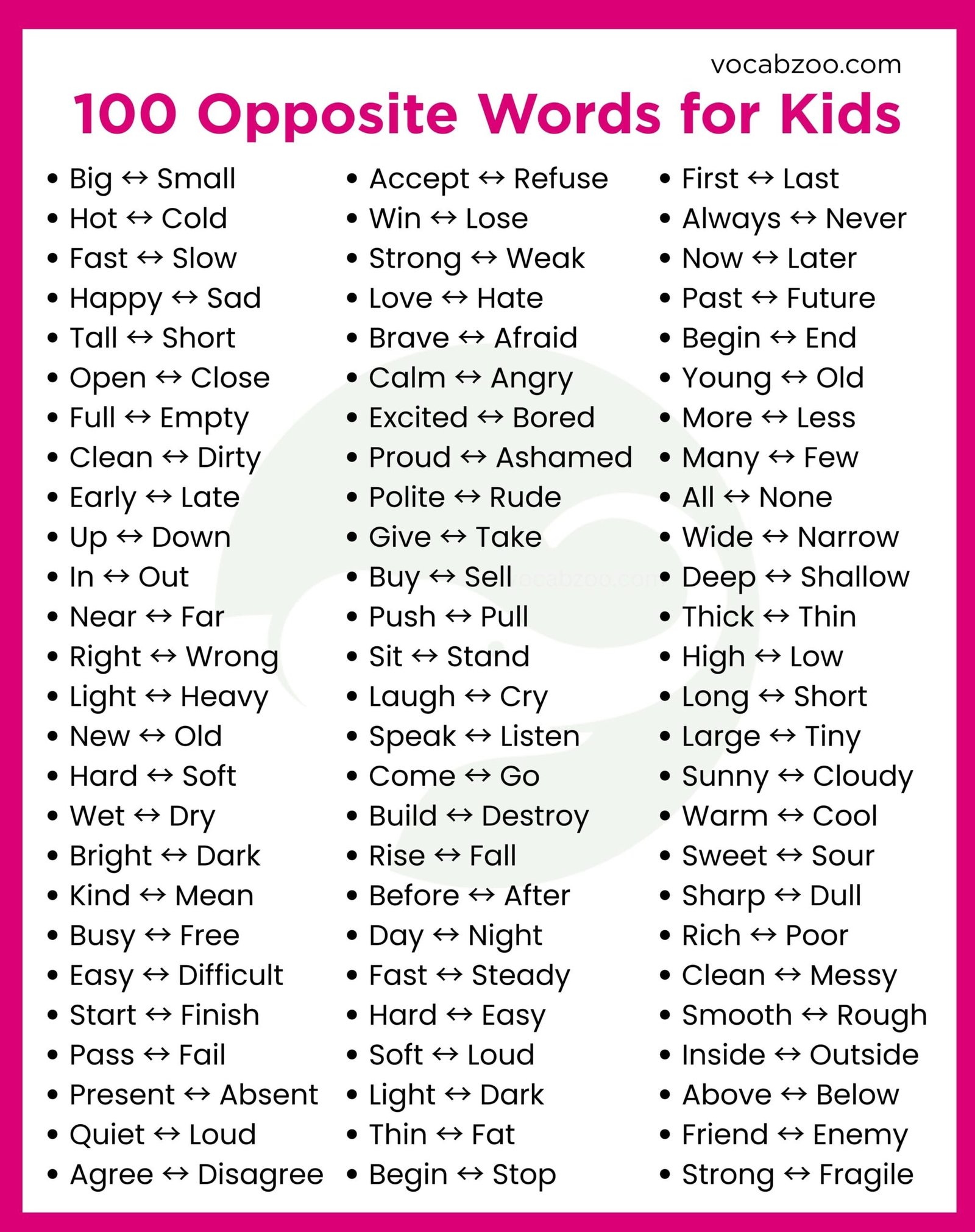
Here’s the list of 100 opposite-meaning words for kids along with their use in everyday sentences:
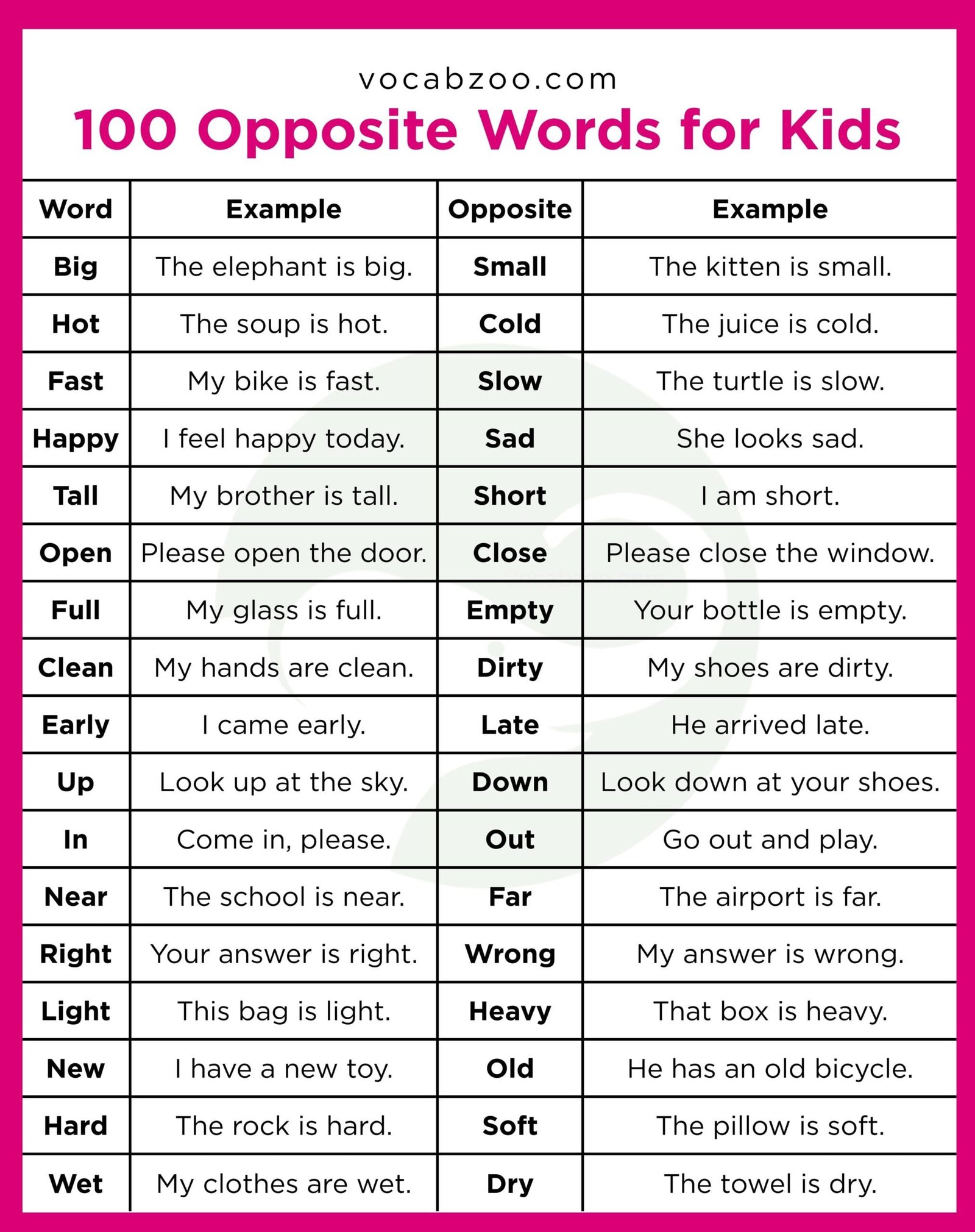
1. Big ↔ Small:
- The elephant is big.
- The kitten is small.
2. Hot ↔ Cold:
- The soup is hot.
- The milk is cold.
3. Fast ↔ Slow:
- My bike is fast.
- The turtle is slow.
4. Happy ↔ Sad:
- I feel happy today.
- She looks sad.
5. Tall ↔ Short:
- My brother is tall.
- I am short.
6. Open ↔ Close:
- Please open the door.
- Please close the window.
7. Full ↔ Empty:
- My glass is full.
- Your bottle is empty.
8. Clean ↔ Dirty:
- My hands are clean.
- My shoes are dirty.
9. Early ↔ Late:
- I came early.
- He arrived late.
10. Up ↔ Down:
- Look up at the sky.
- Look down at your shoes.
11. In ↔ Out:
- Come in, please.
- Go out and play.
12. Near ↔ Far:
- The school is near.
- The airport is far.
13. Right ↔ Wrong:
- Your answer is right.
- My answer is wrong.
14. Light ↔ Heavy:
- This bag is light.
- That box is heavy.
15. New ↔ Old:
- I have a new toy.
- He has an old bicycle.
16. Hard ↔ Soft:
- The rock is hard.
- The pillow is soft.
17. Wet ↔ Dry:
- My clothes are wet.
- The towel is dry.
18. Bright ↔ Dark:
- The room is bright.
- The night is dark.
19. Kind ↔ Mean:
- She is kind to everyone.
- He is mean to others.
20. Busy ↔ Free:
- I am busy now.
- I am free after school.
21. Easy ↔ Difficult:
- This question is easy.
- That puzzle is difficult.
22. Start ↔ Finish:
- Let’s start the game.
- We will finish soon.
23. Pass ↔ Fail:
- I hope I pass the test.
- He may fail the exam.
24. Present ↔ Absent:
- Ali is present today.
- Sara is absent.
25. Quiet ↔ Loud:
- Please be quiet.
- The music is loud.
26. Agree ↔ Disagree:
- I agree with you.
- I disagree with him.
27. Accept ↔ Refuse:
- She will accept the gift.
- He will refuse it.
28. Win ↔ Lose:
- We will win the match.
- They may lose the game.
29. Strong ↔ Weak:
- The lion is strong.
- The kitten is weak.
30. Careful ↔ Careless:
- Be careful on the road.
- Don’t be careless.
31. Love ↔ Hate:
- I love my family.
- I hate bad behavior.
32. Brave ↔ Afraid:
- The soldier is brave.
- The child feels afraid.
33. Calm ↔ Angry:
- Stay calm in class.
- Don’t get angry.
34. Excited ↔ Bored:
- I am excited for the trip.
- He feels bored at home.
35. Proud ↔ Ashamed:
- I feel proud of my work.
- He felt ashamed of his mistake.
36. Friendly ↔ Unfriendly:
- Our neighbor is friendly.
- The dog seems unfriendly.
37. Polite ↔ Rude:
- Be polite to elders.
- Don’t be rude.
38. Patient ↔ Impatient:
- The teacher is patient.
- The boy is impatient.
39. Confident ↔ Nervous:
- She feels confident.
- He feels nervous.
40. Hopeful ↔ Hopeless:
- We are hopeful today.
- He felt hopeless before help came.
41. Give ↔ Take:
- Please give me a pen.
- Please take this book.
42. Buy ↔ Sell:
- We buy fruits here.
- They sell vegetables there.
43. Push ↔ Pull:
- Push the door.
- Pull the rope.
44. Sit ↔ Stand:
- Sit on the chair.
- Stand in a line.
45. Laugh ↔ Cry:
- The baby will laugh.
- The baby may cry.
46. Speak ↔ Listen:
- Speak clearly.
- Listen carefully.
47. Come ↔ Go:
- Come here quickly.
- Go there slowly.
48. Build ↔ Destroy:
- Workers build houses.
- Storms destroy trees.
49. Rise ↔ Fall:
- The sun will rise soon.
- Leaves fall in autumn.
50. Before ↔ After:
- Wash hands before eating.
- Play after homework.
List of Opposite Words with Sentences
51. Day ↔ Night:
- We play in the day.
- We sleep at night.
52. Today ↔ Tomorrow:
- We study today.
- We rest tomorrow.
53. First ↔ Last:
- She came first.
- He came last.
54. Always ↔ Never:
- Always tell the truth.
- Never tell a lie.
55. Now ↔ Later:
- Do it now.
- Finish it later.
56. Past ↔ Future:
- The past is gone.
- The future is bright.
57. Begin ↔ End:
- The movie will begin soon.
- The movie will end soon.
58. Young ↔ Old:
- The boy is young.
- The man is old.
59. More ↔ Less:
- I want more juice.
- I need less sugar.
60. Many ↔ Few:
- Many students came.
- Few students left early.
61. All ↔ None:
- All children smiled.
- None were sad.
62. Wide ↔ Narrow:
- The road is wide.
- The street is narrow.
63. Deep ↔ Shallow:
- The river is deep.
- The pond is shallow.
64. Thick ↔ Thin:
- The book is thick.
- The paper is thin.
65. High ↔ Low:
- The mountain is high.
- The valley is low.
66. Long ↔ Short:
- The rope is long.
- The stick is short.
67. Large ↔ Tiny:
- The house is large.
- The ant is tiny.
68. Sunny ↔ Cloudy:
- Today is sunny.
- Yesterday was cloudy.
69. Warm ↔ Cool:
- The weather is warm.
- The wind feels cool.
70. Safe ↔ Dangerous:
- This place is safe.
- That road is dangerous.
71. Sweet ↔ Sour:
- This mango is sweet.
- This lemon is sour.
72. Sharp ↔ Dull:
- The knife is sharp.
- The pencil is dull.
73. Rich ↔ Poor:
- The man is rich.
- The farmer is poor.
74. Clean ↔ Messy:
- My room is clean.
- Your room is messy.
75. Smooth ↔ Rough:
- The stone is smooth.
- The road is rough.
76. Inside ↔ Outside:
- Stay inside the house.
- Play outside in the park.
77. Above ↔ Below:
- The fan is above me.
- My shoes are below the bed.
78. Friend ↔ Enemy:
- He is my friend.
- He is not my enemy.
79. Give ↔ Receive:
- I will give you a gift.
- I will receive a prize.
80. Open ↔ Closed:
- The shop is open.
- The shop is closed.
81. Strong ↔ Fragile:
- This table is strong.
- The glass is fragile.
82. Empty ↔ Filled:
- The box is empty.
- The basket is filled.
83. Clean ↔ Polluted:
- The air is clean.
- The river is polluted.
84. Bright ↔ Dull:
- The star is bright.
- The sky looks dull.
85. Fast ↔ Steady:
- The car is fast.
- The turtle is steady.
86. Hard ↔ Easy:
- This test is hard.
- That game is easy.
87. Soft ↔ Loud:
- Her voice is soft.
- The drum is loud.
88. Light ↔ Dark:
- The sky is light.
- The room is dark.
89. Thin ↔ Fat:
- The cat is thin.
- The dog is fat.
90. Strong ↔ Weak:
- He feels strong today.
- He feels weak today.
91. Early ↔ Late:
- I arrived early.
- She arrived late.
92. Laugh ↔ Weep:
- We laugh at jokes.
- She may weep when sad.
93. Clean ↔ Unclean:
- My hands are clean.
- His shoes are unclean.
94. Thick ↔ Slim:
- The book is thick.
- The notebook is slim.
95. Big ↔ Tiny:
- The house is big.
- The bug is tiny.
96. Strong ↔ Soft:
- The wind is strong.
- The breeze is soft.
97. Heavy ↔ Light:
- My bag is heavy.
- This feather is light.
98. Day ↔ Evening:
- We play in the day.
- We rest in the evening.
99. Begin ↔ Stop:
- Let’s begin the game.
- Please stop now.
100. Near ↔ Distant:
- My school is near.
- The mountains look distant.
How to Practice Opposite Words
To remember opposite words easily:
- Learn words in pairs.
- Use them in short sentences.
- Practice with matching exercises.
- Play vocabulary games.
- Read simple English stories.
Regular practice helps children use opposite words naturally in speaking and writing.
Learning 100 opposite words for kids in English is an excellent way to build strong vocabulary. Opposites improve understanding, help with reading comprehension, and make communication clearer.
By practicing these common opposite word pairs, students can expand their vocabulary step by step and use English more confidently in daily life and school.
Read More