

Speaking and writing in English require different skills, and knowing the differences helps you communicate more effectively. In this blog post, you will learn the Spoken English vs Written English Differences to understand how to use English appropriately in different situations. Spoken English focuses on fluency and conversation, while written English emphasizes grammar, structure, and clarity. When you practice both forms, your speaking, writing, reading, and listening skills improve together. Keep reading to learn the key differences that will help you master English in all forms of communication.
Spoken English vs Written English
What is Spoken English?
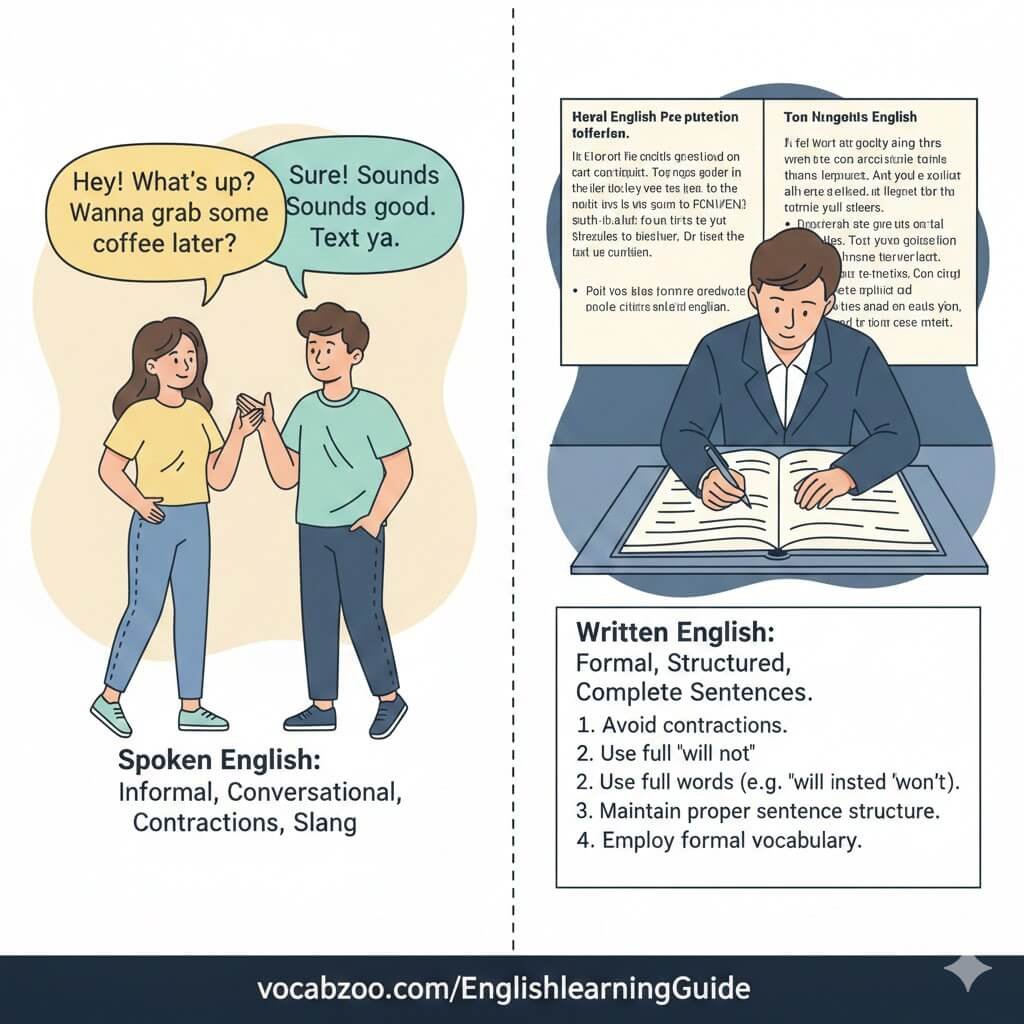
Spoken English is the form of English we use when we talk to people directly. It is used in daily conversations, phone calls, meetings, interviews, and classroom discussions.
Spoken English is:
- Natural and flexible
- Fast and interactive
- Often informal
When we speak, we focus more on sharing ideas quickly than on perfect grammar. Just like a comfortable living room, spoken English is designed for ease and connection, not perfection.

Key Features of Spoken English
- Short and simple sentences
- Use of contractions (I’m, don’t, can’t)
- Fillers like well, um, you know
- Repetition to make ideas clear
- Depends on voice, tone, and body language
Example (Spoken):
“Can you send it today?”
“That’s fine, no problem.”
What is Written English?
Written English is used when we write for readers, such as in emails, books, articles, exams, reports, and websites.
Written English is:
- Planned and organized
- More formal
- Clear and structured
Think of written English like a well-designed kitchen. Everything has its place, and nothing is added without purpose. The reader cannot ask questions, so the writing must explain everything clearly.

Key Features of Written English
- Complete and well-structured sentences
- Correct grammar and punctuation
- Clear paragraph flow
- Less repetition
- No fillers or pauses
Example (Written):
“Please send the document by the end of the day.”
Differences Between Spoken and Written English
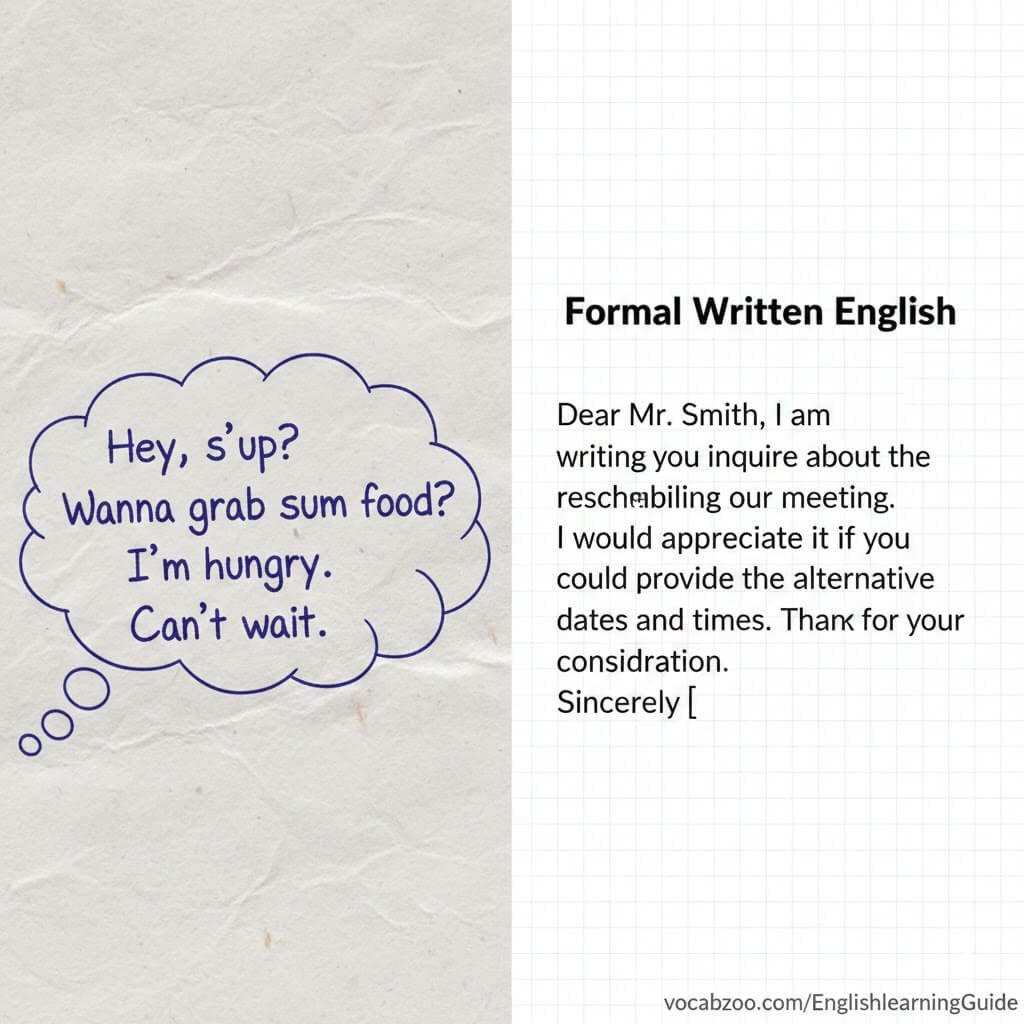
1. Grammar Use
Spoken English:
- Grammar rules are often relaxed
- Incomplete sentences are common
Written English:
- Grammar rules are important
- Sentences should be complete and correct
Example:
Spoken: “Coming tomorrow?”
Written: “Are you coming tomorrow?”
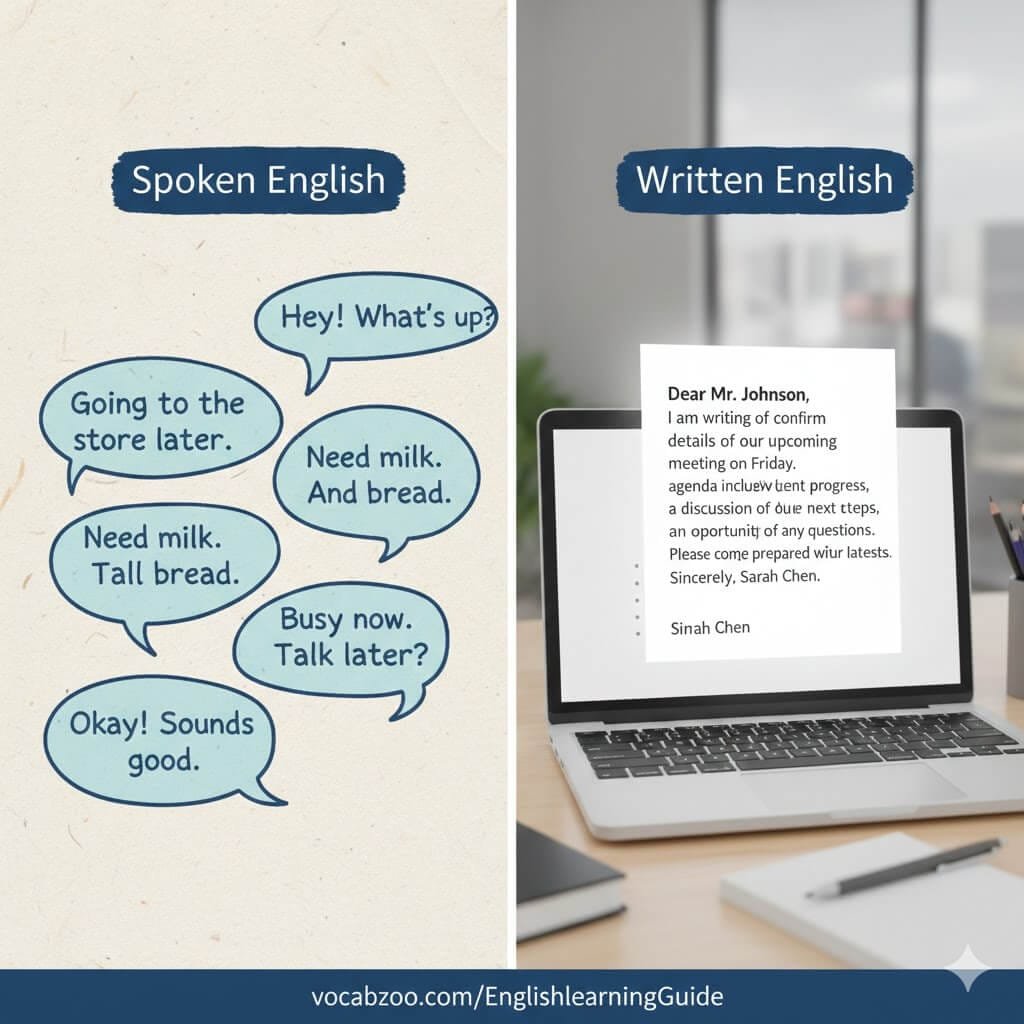
2. Sentence Structure
Spoken English:
- Short and broken sentences
- Ideas change while speaking
Written English:
- Longer and well-connected sentences
- Ideas are organized before writing
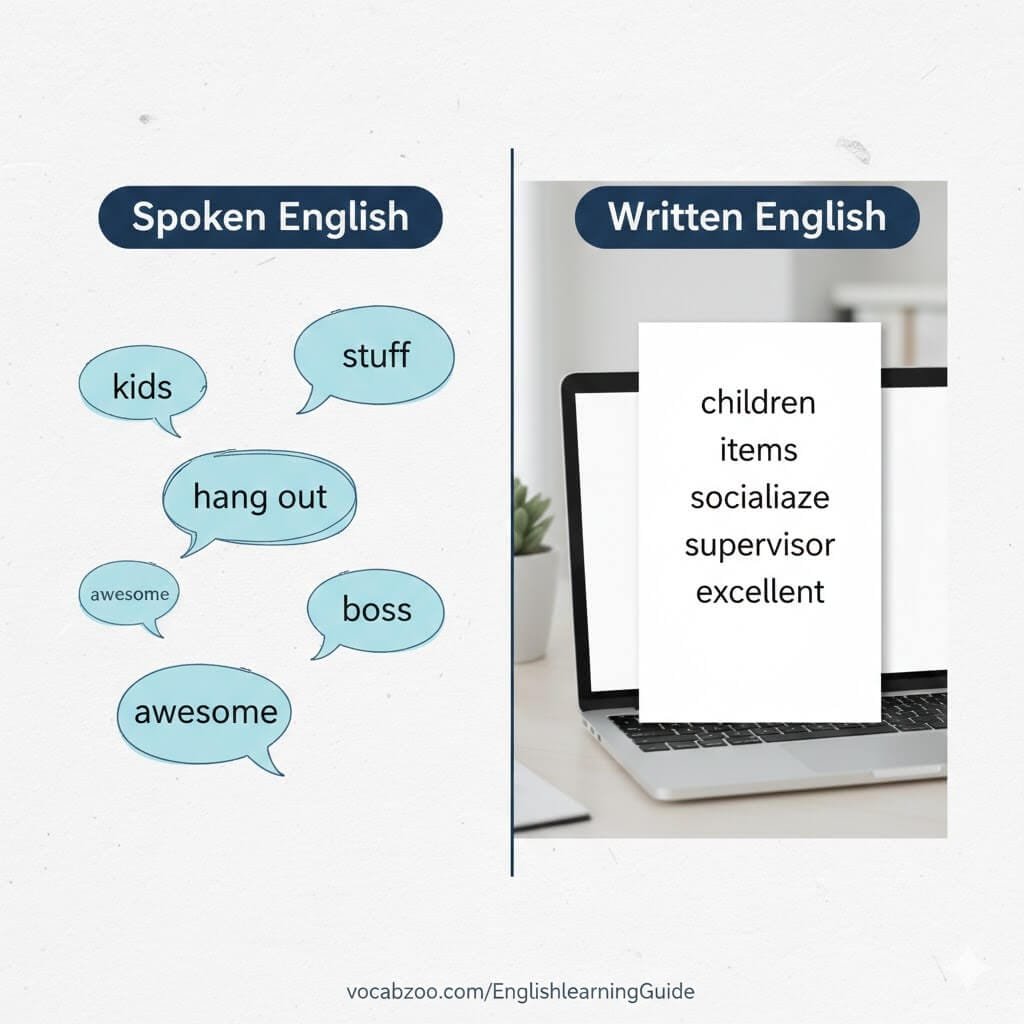
3. Vocabulary Choice
Spoken English:
- Uses simple and everyday words
- Informal language is common
Written English:
- Uses clear and precise words
- Formal words are often preferred
Example:
Spoken: “Kids love this place.”
Written: “Children enjoy this place.”
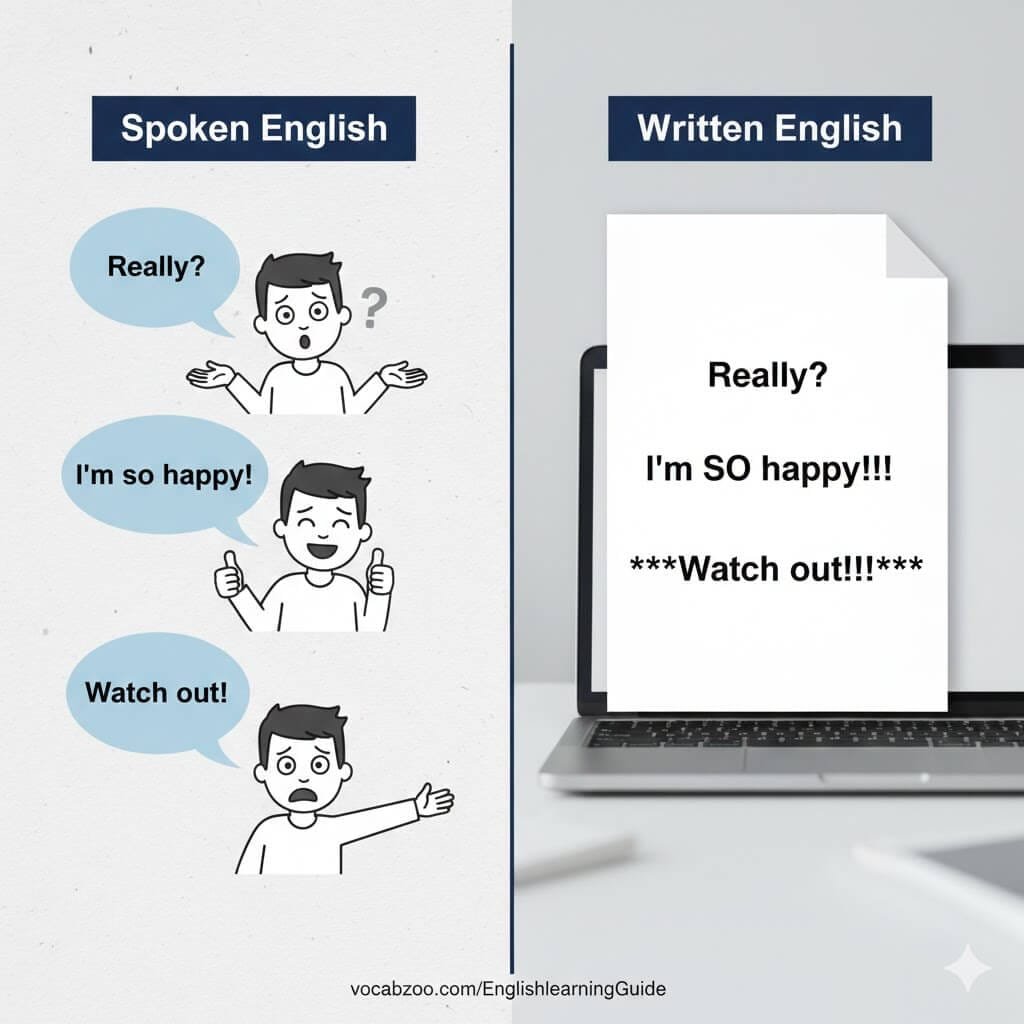
4. Tone and Expression
Spoken English:
- Uses voice, stress, and facial expressions
- Meaning can change with tone
Written English:
- Uses punctuation and word choice
- Tone must be clear through text
5. Speed and Planning
Spoken English:
- Fast and spontaneous
- Mistakes are natural and corrected instantly
Written English:
- Slower and planned
- Mistakes remain unless edited
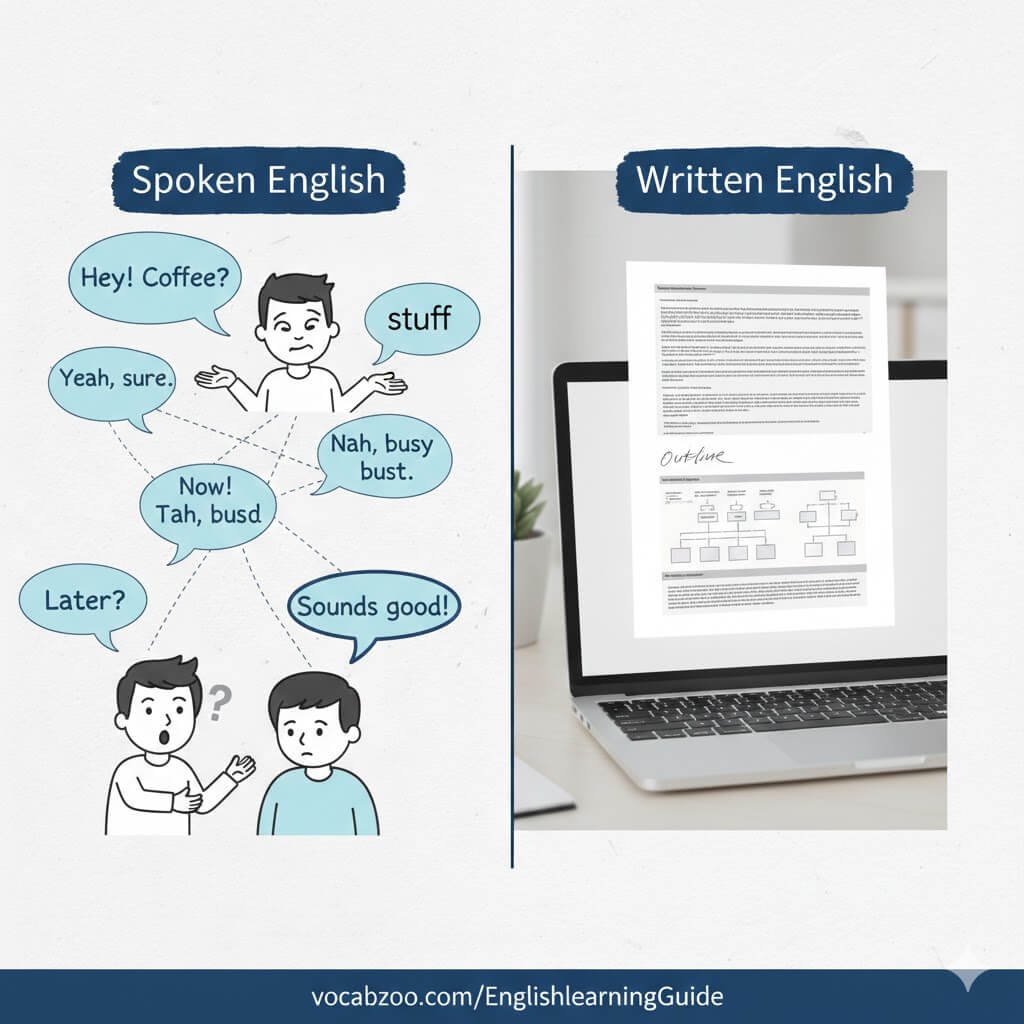
Why These Differences Matter for Learners
Many English learners mix spoken and written English, which can cause confusion.
Common mistakes include:
- Writing exactly how you speak
- Speaking too formally in casual situations
- Using slang in professional writing
Understanding the difference helps you:
- Speak more naturally
- Write more clearly
- Communicate with confidence
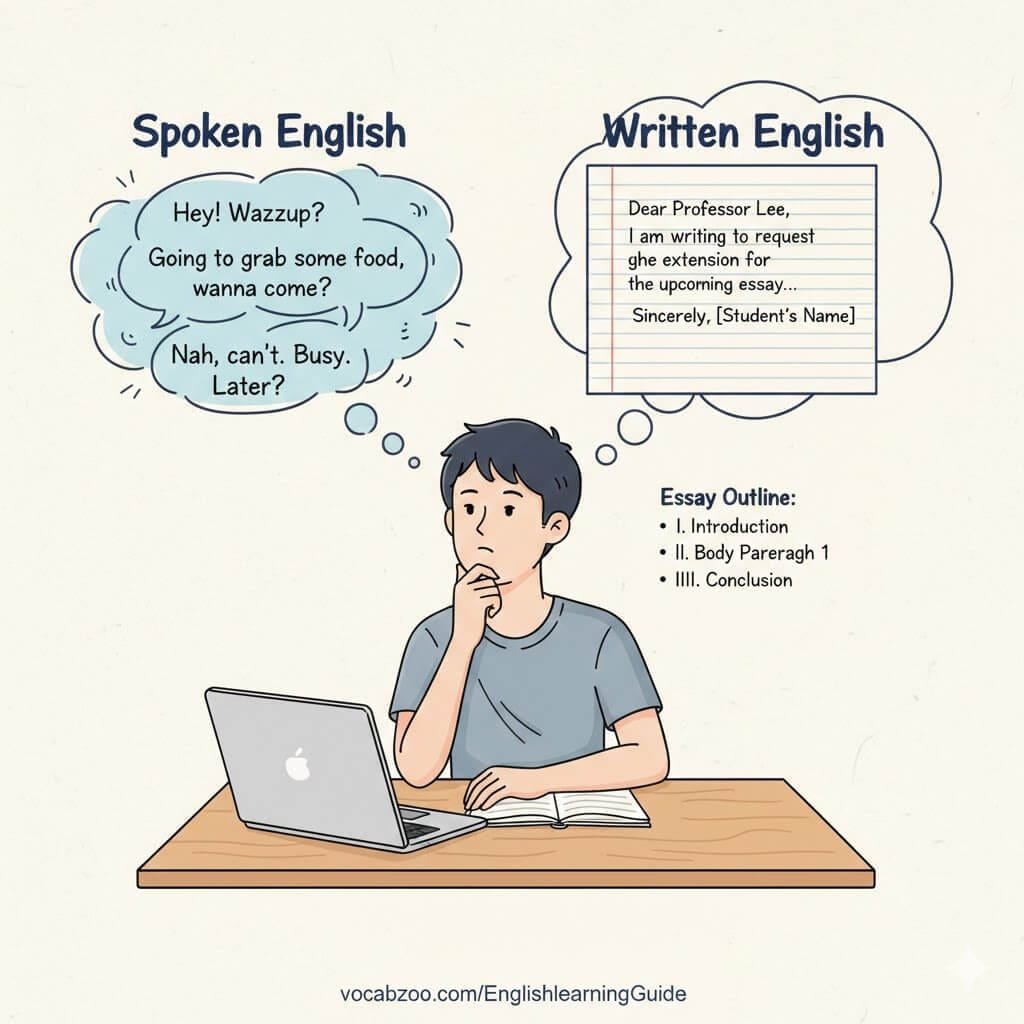
Tips to Improve Spoken English
- Practice daily conversations
- Listen to real-life English (videos, podcasts)
- Focus on clarity, not perfection
- Don’t fear small mistakes
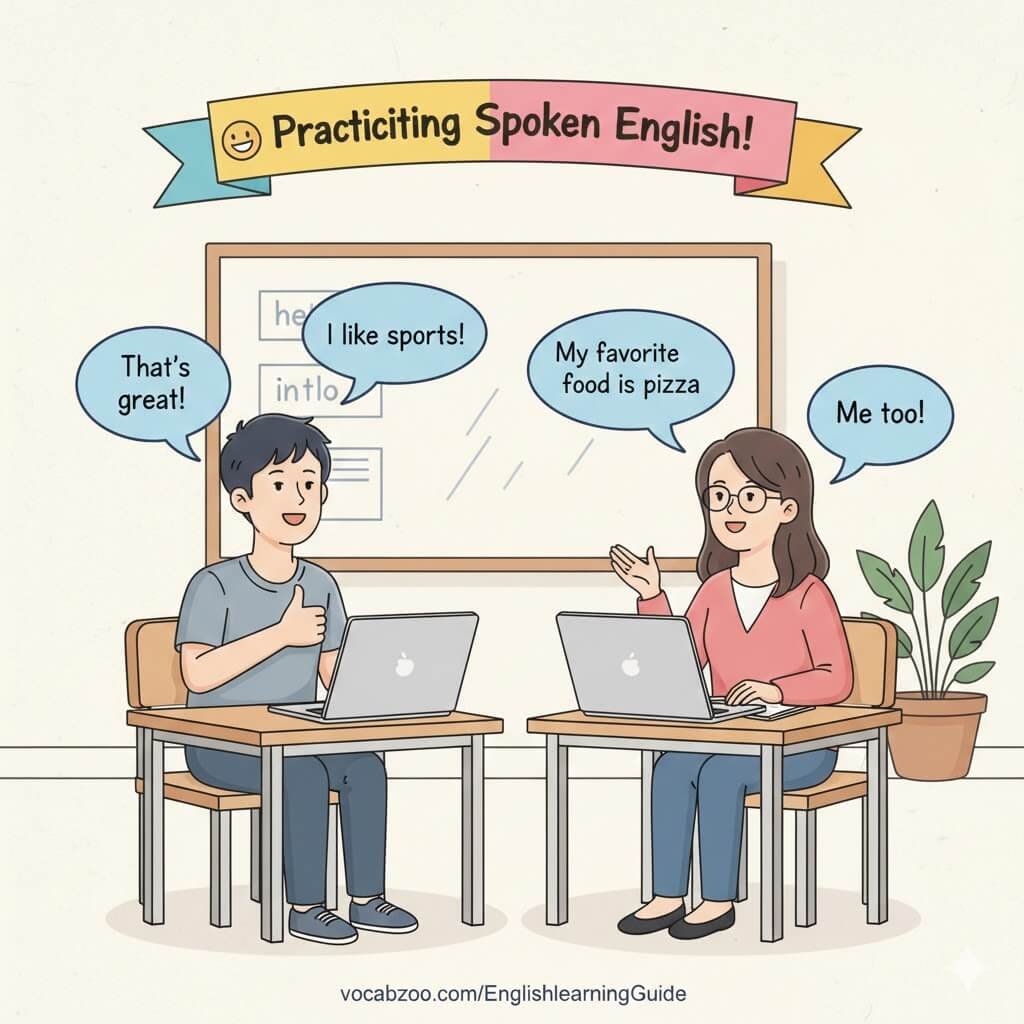
Tips to Improve Written English
- Read simple articles and blogs
- Practice writing short paragraphs
- Learn basic grammar rules
- Edit your writing before sharing

Spoken vs Written English: Quick Comparison Table
| Feature | Spoken English | Written English |
|---|---|---|
| Style | Informal | Formal |
| Speed | Fast | Slow |
| Grammar | Flexible | Strict |
| Sentences | Short | Structured |
| Errors | Accepted | Must be corrected |
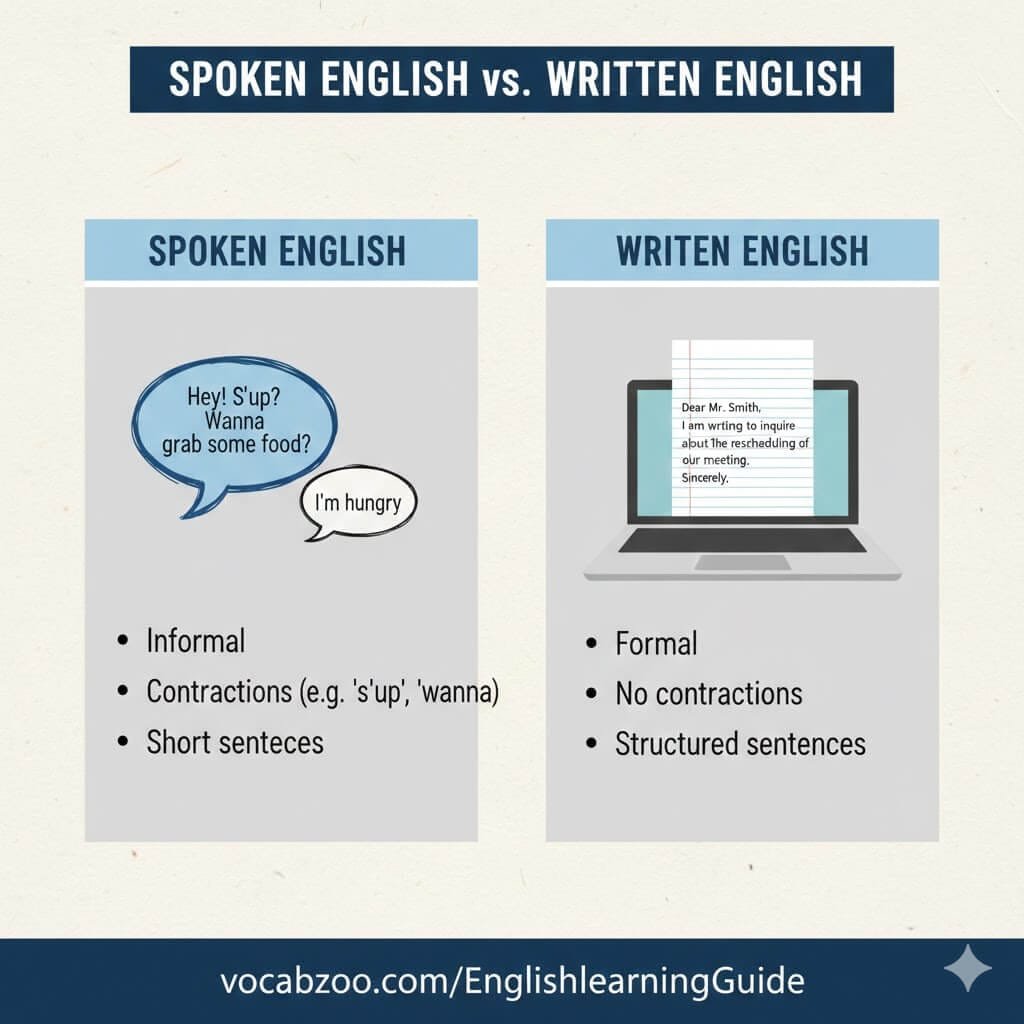
Conclusion
Spoken English and written English are like two rooms in the same house. Both are important, but each serves a different purpose. Spoken English helps you connect with people instantly, while written English helps you share clear and lasting messages.
When you understand when to speak freely and when to write carefully, your English becomes more natural, confident, and effective. Focus on balance, just like good design—simple, clear, and functional.
Frequently Asked Questions
What is the difference between speaking English and writing English?
Spoken English is used for talking and daily conversations. It is informal, fast, and flexible, often including fillers, contractions, and incomplete sentences. Written English is used for reading and formal communication, requiring correct grammar, clear structure, and precise vocabulary. Both forms share the same language but are used differently depending on purpose and context.
Why is spoken English different from written English?
Spoken English relies on tone, pronunciation, and gestures, while written English depends on punctuation, spelling, and sentence structure. Spoken English is often informal and flexible, while written English is formal, planned, and permanent. Understanding these differences helps learners communicate clearly in both speech and writing.
What is the hardest level of English?
The hardest level of English is generally C2, also called Mastery. At this level, learners understand complex texts, speak fluently, and write professionally without errors. It requires strong vocabulary, advanced grammar, and the ability to adapt language naturally for formal and informal situations.
What is A1, A2, B1, B2, C1, C2 in English?
These are levels of English proficiency in the CEFR framework. A1–A2 are beginner levels, B1–B2 are intermediate, and C1–C2 are advanced. Each level shows how well a learner can read, write, speak, and understand English, from simple communication to professional or academic fluency.
Why is my written English better than my spoken English?
Many learners write better than they speak because writing allows time to think, plan, and correct mistakes. Spoken English is spontaneous, relies on pronunciation and confidence, and cannot be revised while speaking. Practicing listening, speaking, and using natural phrases helps improve oral skills.
How can I improve my spoken English quickly?
To improve spoken English, practice daily conversations, listen to native speakers, and use simple sentences. Focus on pronunciation, stress, and natural expressions. Speaking regularly in real-life situations builds confidence and fluency faster than only studying grammar or vocabulary.
How can I improve my written English?
Improving written English requires regular reading, writing short paragraphs, and editing your work. Focus on grammar, sentence structure, and clear vocabulary. Writing for emails, notes, or articles helps learners practice and gradually write accurately, formally, and confidently.
Is it normal to speak English differently than you write it?
Yes, it is normal. Spoken English is casual, with informal expressions and shortcuts, while written English is formal, precise, and structured. Recognizing this difference helps learners adjust their language depending on whether they are talking or writing.
Explore More