
Learning the forms of verbs is key to using English correctly in speaking and writing. In this blog post, you will explore a 50 Regular Verbs List V1 V2 V3 with pictures and a helpful PDF to practice anytime. These regular verbs show how actions change in past and past participle forms, making your sentences accurate and clear. When you understand and use them correctly, your speaking becomes more confident, your writing stronger, and your reading and listening skills improve. Keep reading to learn essential verbs that will help you master English grammar step by step.
What Are Regular Verbs in English?
Regular verbs are verbs that form their past tense (V2) and past participle (V3) by adding -ed or -d to the base form (V1).
Simple rule:
V1 + ed = V2 and V3
Examples:
• Play → Played → Played
• Work → Worked → Worked
This makes regular verbs easier than irregular verbs.
How V1, V2, and V3 Forms Work
- V1 = Base form (present)
- V2 = Past simple
- V3 = Past participle
These forms are used in different tenses:
- I play football.
- I played football yesterday.
- I have played football many times.
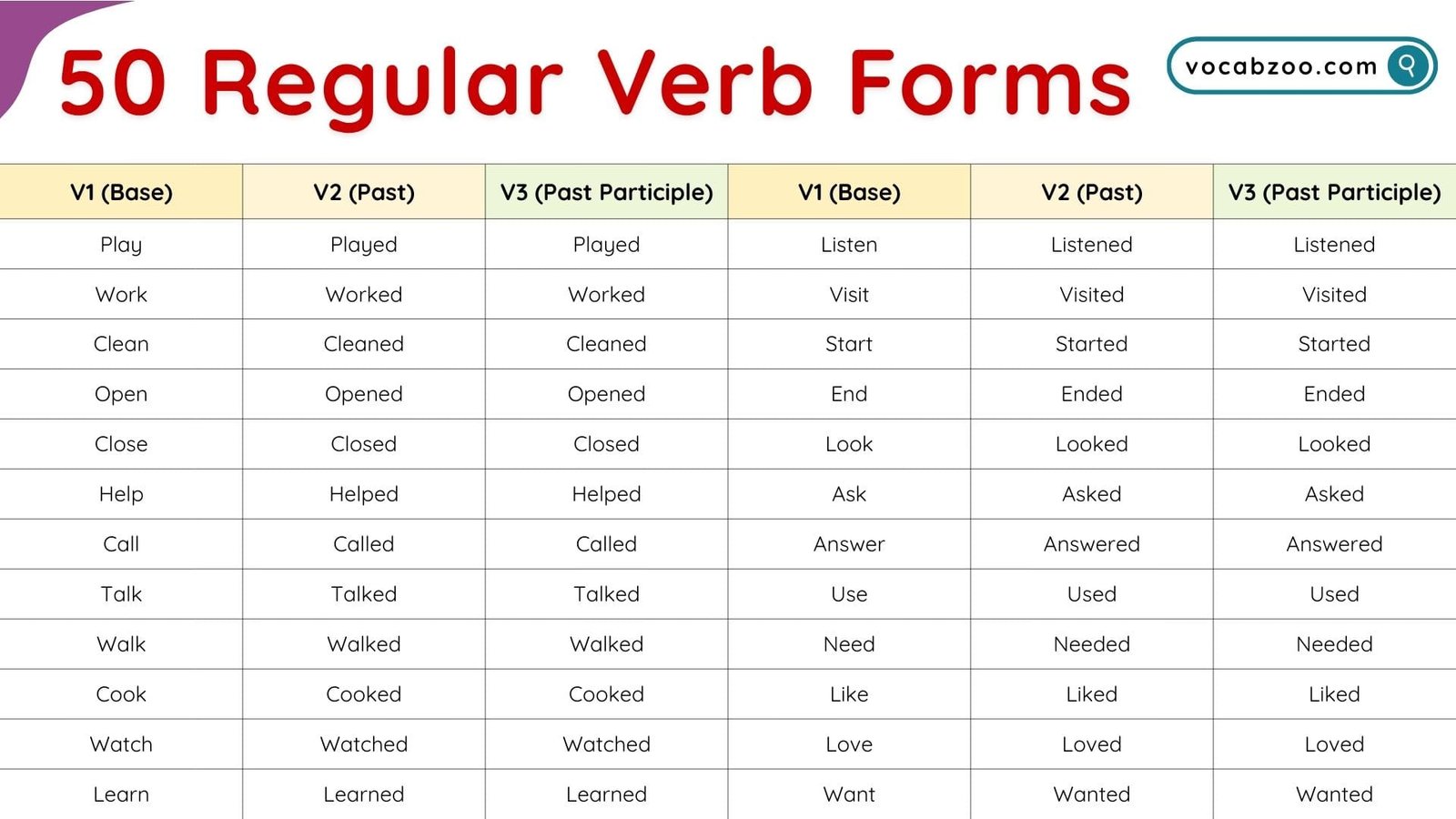
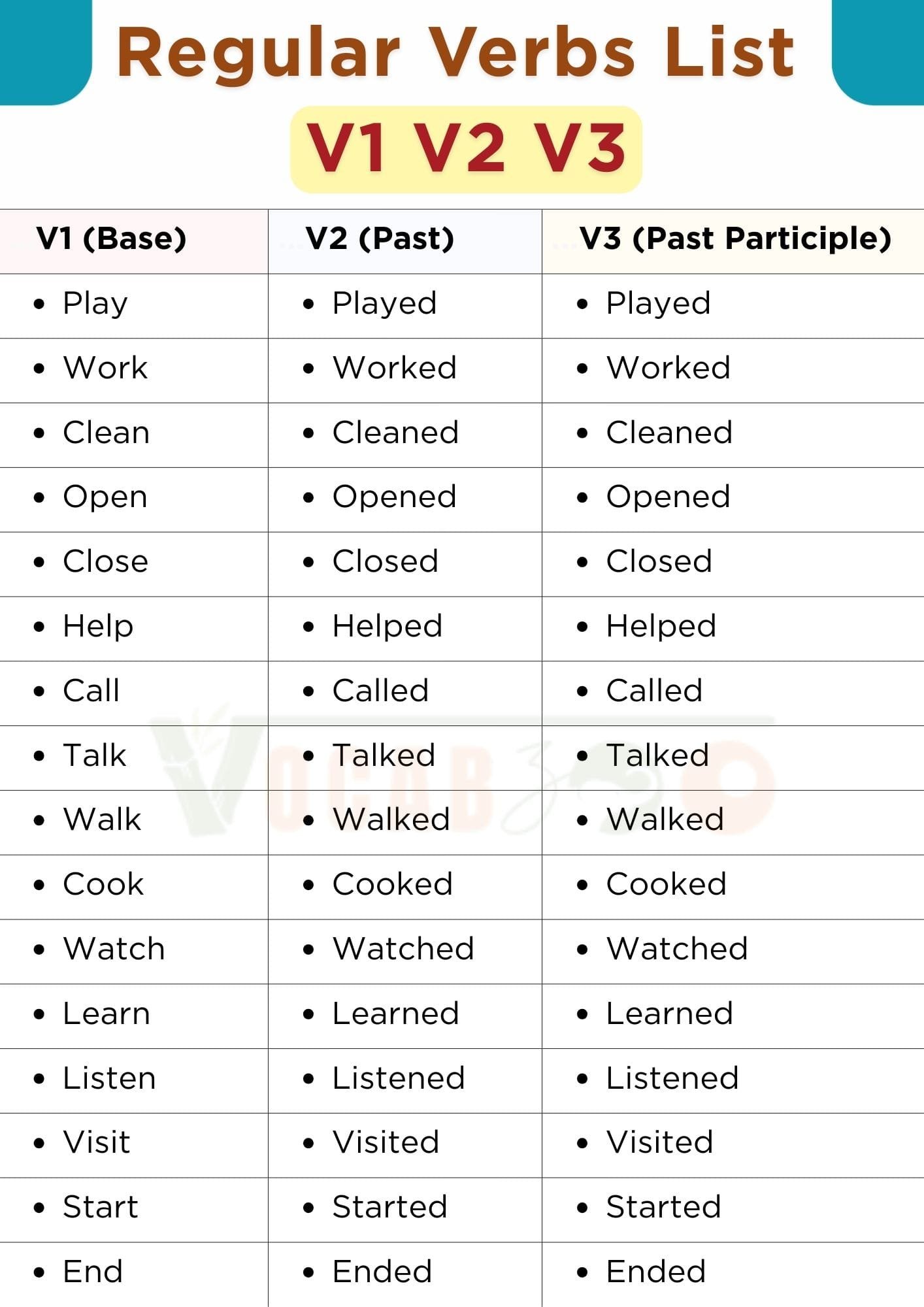
50 Regular Verbs List V1 V2 V3
These verbs are used in daily life, school, work, and conversation. Each one is easy to remember and useful for learners.
| V1 (Base) | V2 (Past) | V3 (Past Participle) |
|---|---|---|
| Play | Played | Played |
| Work | Worked | Worked |
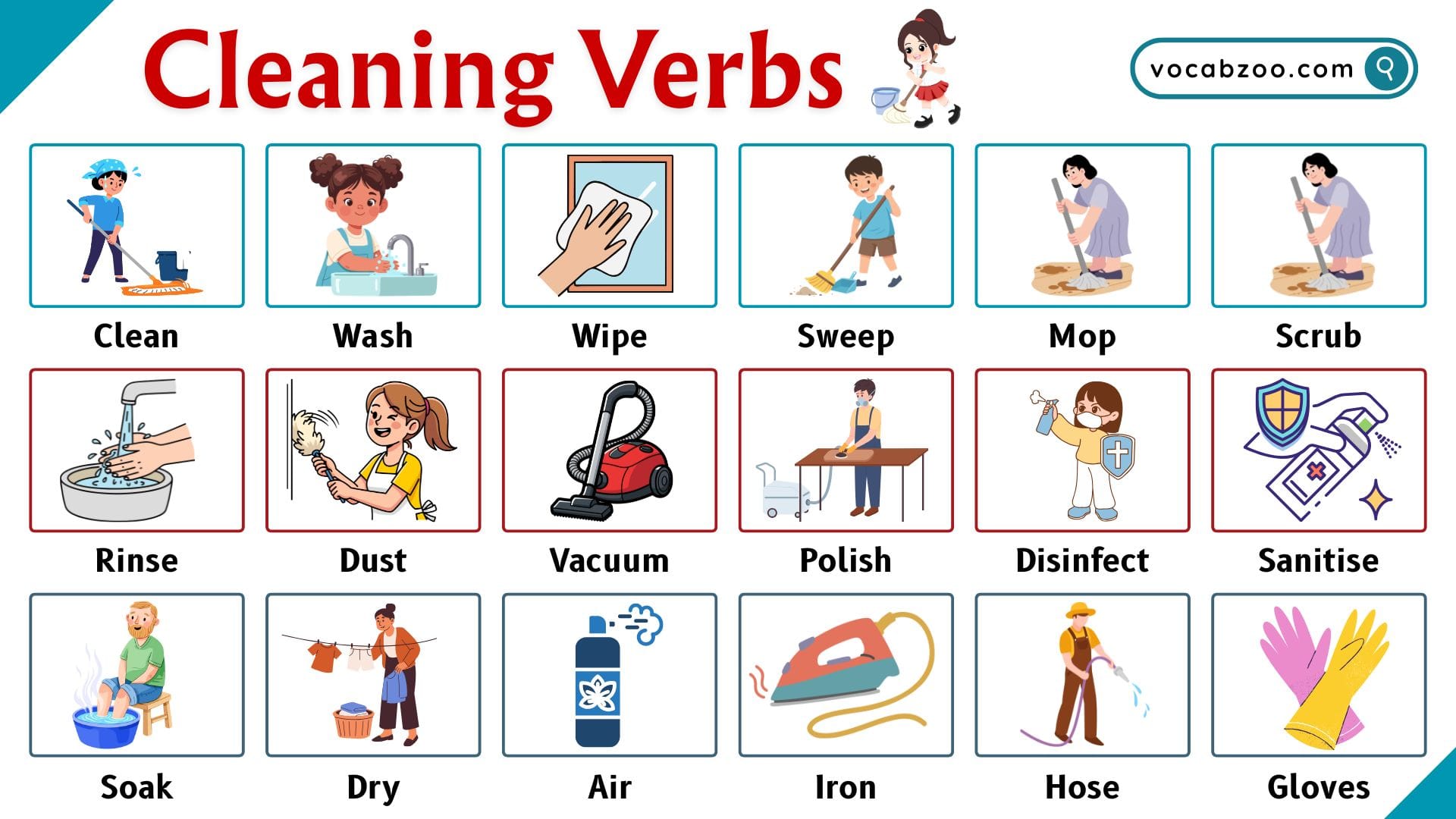
| Clean | Cleaned | Cleaned |
| Open | Opened | Opened |
| Close | Closed | Closed |
| Help | Helped | Helped |
| Call | Called | Called |
| Talk | Talked | Talked |
| Walk | Walked | Walked |
| Cook | Cooked | Cooked |
| Watch | Watched | Watched |
| Learn | Learned | Learned |
| Listen | Listened | Listened |
| Visit | Visited | Visited |
| Start | Started | Started |
| End | Ended | Ended |
| Look | Looked | Looked |
| Ask | Asked | Asked |
| Answer | Answered | Answered |
| Use | Used | Used |
| Need | Needed | Needed |
| Like | Liked | Liked |
| Love | Loved | Loved |
| Want | Wanted | Wanted |
| Try | Tried | Tried |
| Carry | Carried | Carried |
| Study | Studied | Studied |
| Plan | Planned | Planned |
| Stop | Stopped | Stopped |
| Shop | Shopped | Shopped |
| Stay | Stayed | Stayed |
| Move | Moved | Moved |
| Turn | Turned | Turned |
| Wait | Waited | Waited |
| Join | Joined | Joined |
| Travel | Travelled | Travelled |
| Wash | Washed | Washed |
| Paint | Painted | Painted |
| Dance | Danced | Danced |
| Smile | Smiled | Smiled |
| Rain | Rained | Rained |
| Change | Changed | Changed |
| Finish | Finished | Finished |
| Enter | Entered | Entered |
| Return | Returned | Returned |
| Improve | Improved | Improved |
| Agree | Agreed | Agreed |
| Decide | Decided | Decided |
Regular Verbs List V1 V2 V3 in English
Regular Verbs in Sentences
- I played football with my friends after school.
- She worked in a small shop last summer.
- We cleaned the classroom before going home.
- He opened the window to get some fresh air.
- They watched a movie on Saturday night.
- I learned a new English word today.
- She called her mother in the evening.
- We walked to the park after dinner.
- He has finished his homework already.
- They visited their grandparents last weekend.
- I cooked dinner for my family yesterday.
- She listened to music while studying.
- We talked about our plans for the holiday.
- He helped his younger brother with maths.
- They have agreed on the final decision.
Conclusion
The 50 Regular Verbs List V1 V2 V3 helps learners understand how English verbs change in different tenses. Regular verbs follow a clear pattern, so they are easy to remember and use. By practising these verbs in speaking and writing, you will improve your grammar, vocabulary, and confidence in everyday English.
FAQs
What are Regular Verbs in English?
Regular verbs in English are verbs that form their past tense (V2) and past participle (V3) by adding -ed or -d to the base form (V1). Examples include play → played → played and clean → cleaned → cleaned.
What are regular verbs with V1 V2 V3?
Regular verbs with V1, V2, and V3 are verbs that follow a simple pattern: the base form (V1) changes to the past tense (V2) and past participle (V3) by adding -ed. For example: work → worked → worked, call → called → called.
What are 20 examples of regular verbs V1 V2 and V3?
Here are 20 examples:
- Play → Played → Played
- Work → Worked → Worked
- Clean → Cleaned → Cleaned
- Open → Opened → Opened
- Close → Closed → Closed
- Help → Helped → Helped
- Call → Called → Called
- Talk → Talked → Talked
- Walk → Walked → Walked
- Cook → Cooked → Cooked
- Watch → Watched → Watched
- Learn → Learned → Learned
- Listen → Listened → Listened
- Visit → Visited → Visited
- Start → Started → Started
- End → Ended → Ended
- Look → Looked → Looked
- Ask → Asked → Asked
- Answer → Answered → Answered
- Use → Used → Used
How can I use regular verbs in sentences?
You can use regular verbs in present, past, and perfect tense. For example:
- Present: I play football.
- Past: I played football yesterday.
- Present perfect: I have played football many times.
What is the difference between V2 and V3 in regular verbs?
For regular verbs, the V2 (past) and V3 (past participle) are usually the same. For example, cook → cooked → cooked. V2 is used in simple past sentences, and V3 is used in perfect tense sentences.
Read More: