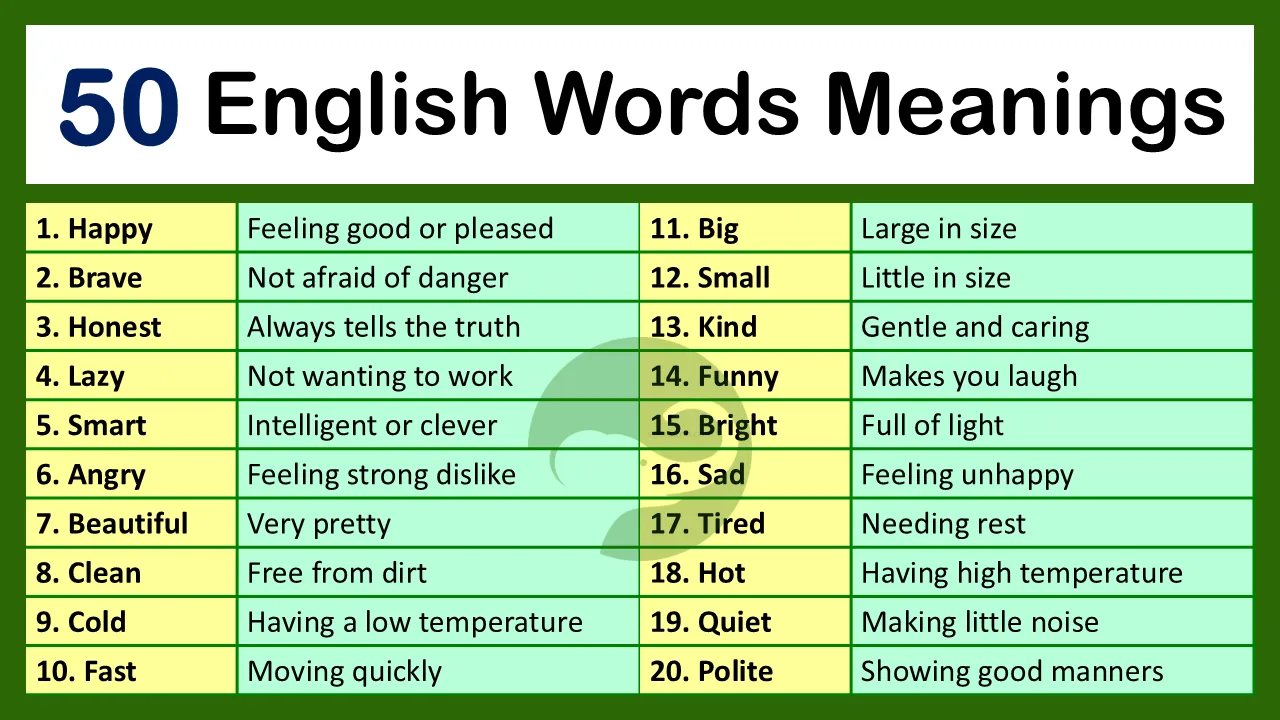

List of 50 Daily Used English Words
Below is a simple list of English words, meanings, and examples.
| Word | Meaning | Example Sentence |
|---|---|---|
| 1. Happy | Feeling good or pleased | She is happy with her new dress. |
| 2. Brave | Not afraid of danger | The brave boy saved the cat. |
| 3. Honest | Always tells the truth | He is an honest man. |
| 4. Lazy | Not wanting to work | Don’t be lazy in class. |
| 5. Smart | Intelligent or clever | She looks smart in her uniform. |
| 6. Angry | Feeling strong dislike | He was angry after the argument. |
| 7. Beautiful | Very pretty | The garden is beautiful. |
| 8. Clean | Free from dirt | Wash your hands to keep them clean. |
| 9. Cold | Having a low temperature | It’s cold outside, wear a jacket. |
| 10. Fast | Moving quickly | The car runs fast. |
| 11. Big | Large in size | They live in a big house. |
| 12. Small | Little in size | The baby has small hands. |
| 13. Kind | Gentle and caring | She is kind to everyone. |
| 14. Funny | Makes you laugh | The movie was really funny. |
| 15. Bright | Full of light | The sun is bright today. |
| 16. Sad | Feeling unhappy | He felt sad after the test. |
| 17. Tired | Needing rest | I am tired after work. |
| 18. Hot | Having high temperature | The soup is hot, be careful! |
| 19. Quiet | Making little noise | Please stay quiet in the library. |
| 20. Polite | Showing good manners | Always be polite to others. |
| 21. Strong | Having power | He is strong and healthy. |
| 22. Weak | Lacking power | She felt weak after illness. |
| 23. Rich | Having a lot of money | The man became rich from business. |
| 24. Poor | Having little money | The poor family needs help. |
| 25. Tall | High in height | The tree is very tall. |
| 26. Short | Not long or tall | He has short hair. |
| 27. Young | Not old | The young boy plays football. |
| 28. Old | Having many years | My old phone still works. |
| 29. Busy | Having a lot to do | She is busy with her studies. |
| 30. Early | Before the usual time | I woke up early today. |
| 31. Late | After the right time | He arrived late to school. |
| 32. Sweet | Tasting like sugar | The cake is sweet. |
| 33. Bitter | Not sweet in taste | This coffee is too bitter. |
| 34. Soft | Easy to press or touch | The pillow is soft. |
| 35. Hard | Not easy to break | Diamonds are hard. |
| 36. Warm | Slightly hot | I like warm tea in winter. |
| 37. Cool | Slightly cold | The wind feels cool. |
| 38. Quiet | Peaceful, silent | It was quiet in the park. |
| 39. Loud | Very noisy | The music is too loud. |
| 40. Clever | Smart and quick-minded | She gave a clever answer. |
| 41. Busy | Full of activity | The market was busy on Sunday. |
| 42. Lucky | Having good fortune | He is lucky to have good friends. |
| 43. Simple | Easy to understand | The question is simple. |
| 44. Difficult | Hard to do | Maths can be difficult. |
| 45. Safe | Free from danger | Always drive safe. |
| 46. Dangerous | Full of risk | The snake is dangerous. |
| 47. Empty | Nothing inside | The glass is empty. |
| 48. Full | Containing a lot | The bag is full of books. |
| 49. Cheap | Not expensive | This pen is very cheap. |
| 50. Expensive | Costs a lot of money | The watch is too expensive. |
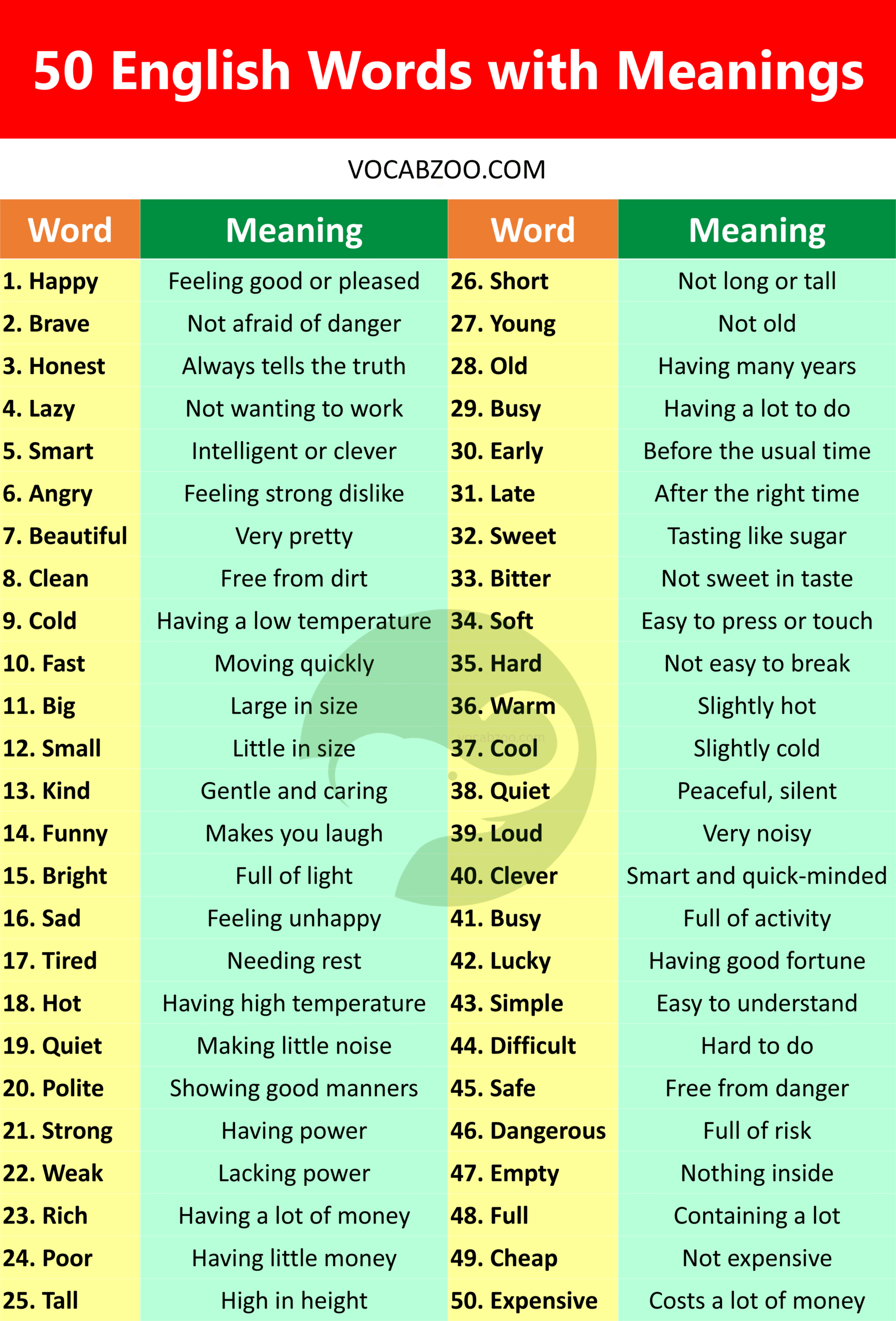
50 English Words with Meanings
Tips for Learning New Words
- Read daily: Try short stories or easy news.
- Use in sentences: Make your own examples.
- Listen and repeat: Helps with pronunciation.
- Revise often: Review words every few days.
Learning English words with meanings and examples is an easy and enjoyable way to improve vocabulary and fluency. Practice a few words every day, and soon you’ll see progress in your speaking, writing, and understanding. Keep learning and have fun with English!
FAQs about English Words Meanings
What are some easy English words with meanings?
Easy English words are simple to understand and use in daily life.
Some examples include:
➜ Happy (feeling good), Sad (unhappy), Hot (high temperature), Cold (low temperature), Kind (helpful), Brave (not afraid).
These are common words used in basic English conversations.
How can I remember English words easily?
To remember new words, try these steps:
➜ Use daily in speaking or writing.
➜ Make short sentences for each new word.
➜ Revise regularly and test yourself.
For example: The dog is brave, I am happy today, The tea is hot.
Practice helps you remember longer.
What are 10 of the most common English words?
Here are 10 common words people often ask about:
➜ Beautiful – very pretty
➜ Honest – tells the truth
➜ Simple – easy to understand
➜ Strong – full of power
➜ Polite – showing good manners
➜ Expensive – costs a lot
➜ Lucky – having good fortune
➜ Clever – smart or intelligent
➜ Quiet – not making noise
➜ Friendly – kind and nice to others
Why should I learn common English words?
Learning common English words helps you:
➜ Speak clearly and confidently.
➜ Understand books, signs, and movies easily.
➜ Build a strong foundation for advanced English.
Even short words like big, small, fast, and slow can help you express ideas correctly.
What is the best way to use these 50 words in daily life?
You can use these words in everyday sentences and simple talks:
➜ The weather is hot today.
➜ My mother is kind and helpful.
➜ I am busy with my homework.
Try using 5 new words every day in your sentences. This makes learning English fast, fun, and easy.
Read More