
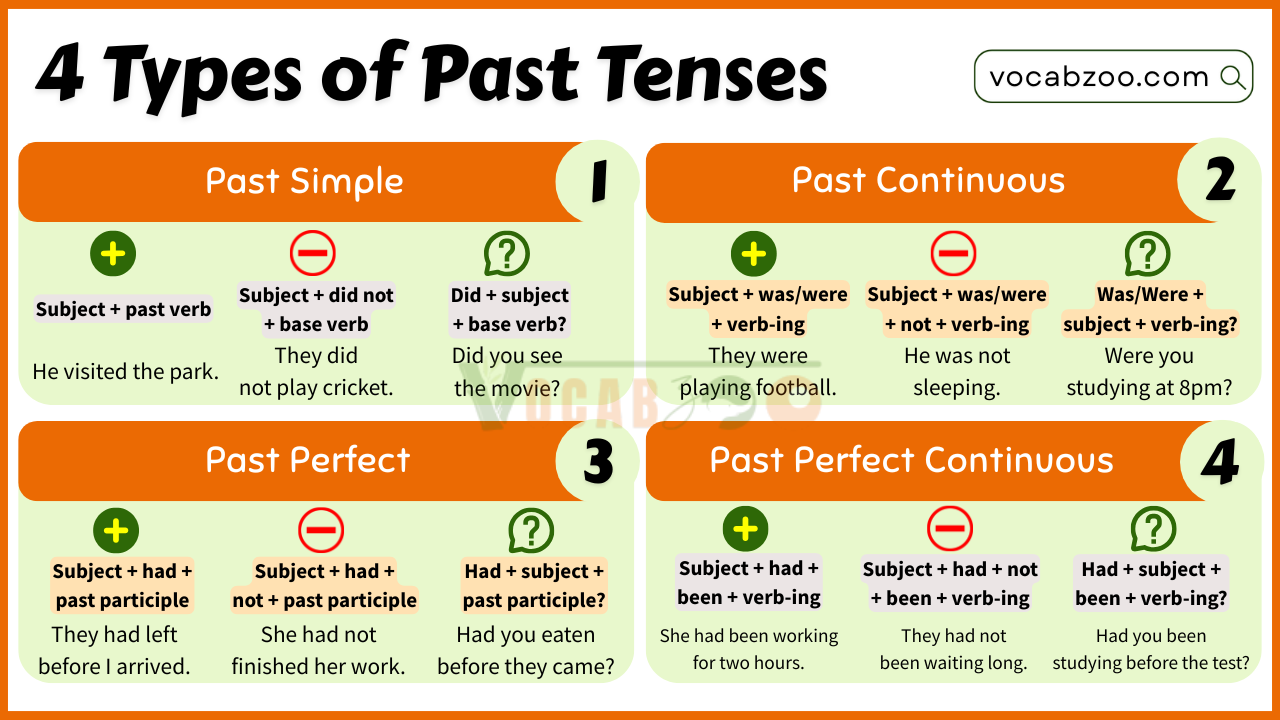

1. Simple Past Tense
Definition:
Used for actions completed in the past.
Structure:
- Positive: Subject + past verb
- Negative: Subject + did not + base verb
- Question: Did + subject + base verb?
Examples:
| Form | Example |
|---|---|
| Positive | He visited the park. |
| Negative | They did not play cricket. |
| Question | Did you see the movie? |
Usage:
- Finished past actions (I watched TV yesterday.)
- Past facts (She lived in Canada.)
2. Past Continuous Tense
Definition:
Used for actions happening at a certain time in the past.
Structure:
- Positive: Subject + was/were + verb-ing
- Negative: Subject + was/were + not + verb-ing
- Question: Was/Were + subject + verb-ing?
Examples:
| Form | Example |
|---|---|
| Positive | They were playing football. |
| Negative | He was not sleeping. |
| Question | Were you studying at 8pm? |
Usage:
- Past actions in progress (I was eating when you called.)
- Background actions (She was watching TV while I cooked.)
3. Past Perfect Tense
Definition:
Used for actions that happened before another past action.
Structure:
- Positive: Subject + had + past participle
- Negative: Subject + had + not + past participle
- Question: Had + subject + past participle?
Examples:
| Form | Example |
|---|---|
| Positive | They had left before I arrived. |
| Negative | She had not finished her work. |
| Question | Had you eaten before they came? |
Usage:
- Action before another past action (I had done my homework before dinner.)
4. Past Perfect Continuous Tense
Definition:
Used for actions that were ongoing in the past up to a certain point.
Structure:
- Positive: Subject + had + been + verb-ing
- Negative: Subject + had + not + been + verb-ing
- Question: Had + subject + been + verb-ing?
Examples:
| Form | Example |
|---|---|
| Positive | She had been working for two hours. |
| Negative | They had not been waiting long. |
| Question | Had you been studying before the test? |
Usage:
To show past continuous duration (I had been reading for an hour before she came.)
Interactive Verb Conjugation Table
| Person | Simple Past | Past Progressive | Past Perfect | Past Perfect Progressive |
|---|---|---|---|---|
| I | I played | I was playing | I had played | I had been playing |
| You | You worked | You were working | You had worked | You had been working |
| He/She/It | He ate | He was eating | He had eaten | He had been eating |
| We | We watched | We were watching | We had watched | We had been watching |
| They | They studied | They were studying | They had studied | They had been studying |
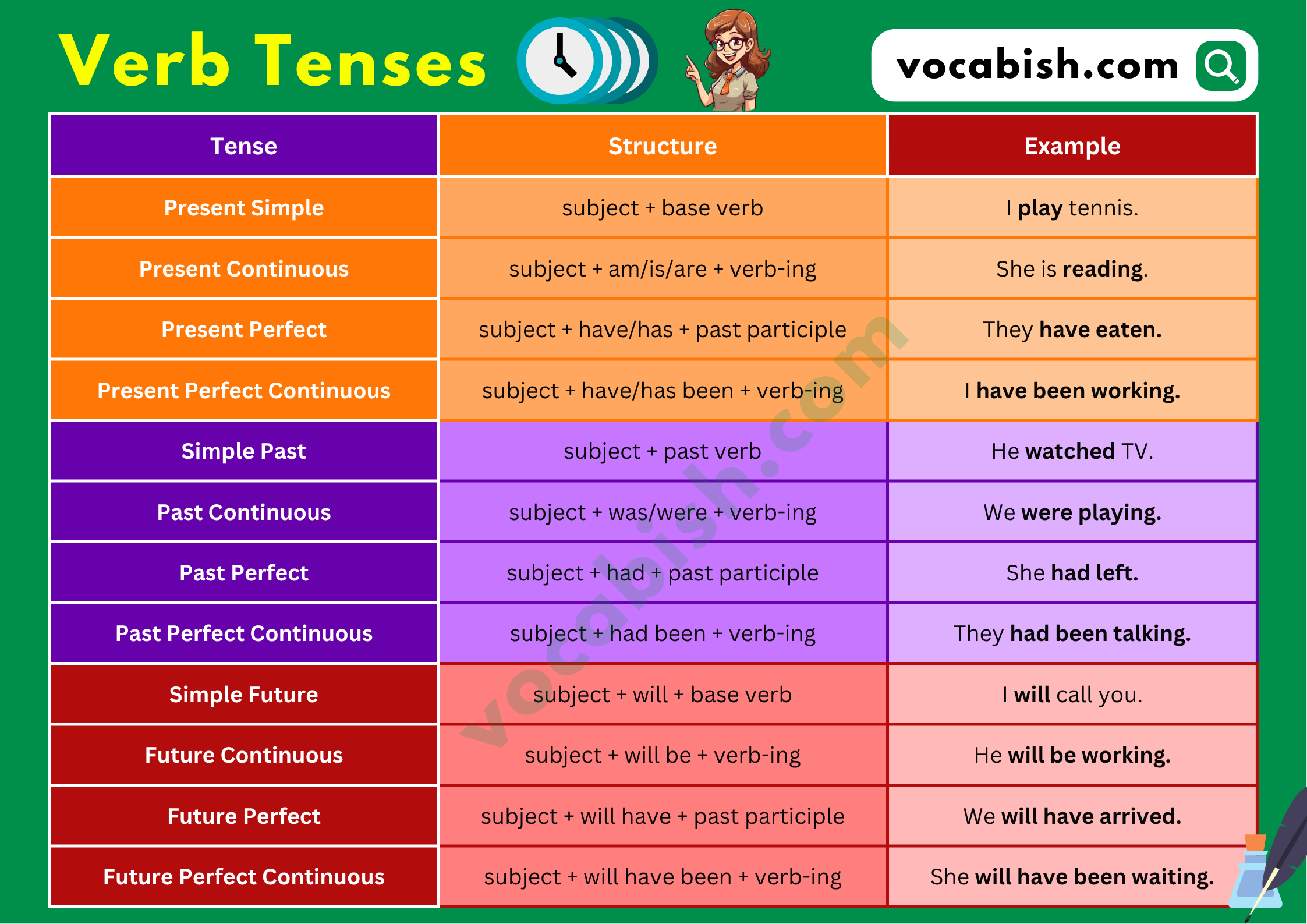
Table of All Past Tenses
| Tense | Usage | Example |
|---|---|---|
| Simple Past | finished action | I went to the market. |
| Past Continuous | action in progress in the past | She was reading a book. |
| Past Perfect | action before another past action | They had left before I arrived. |
| Past Perfect Continuous | ongoing action before a past point | He had been studying for hours. |
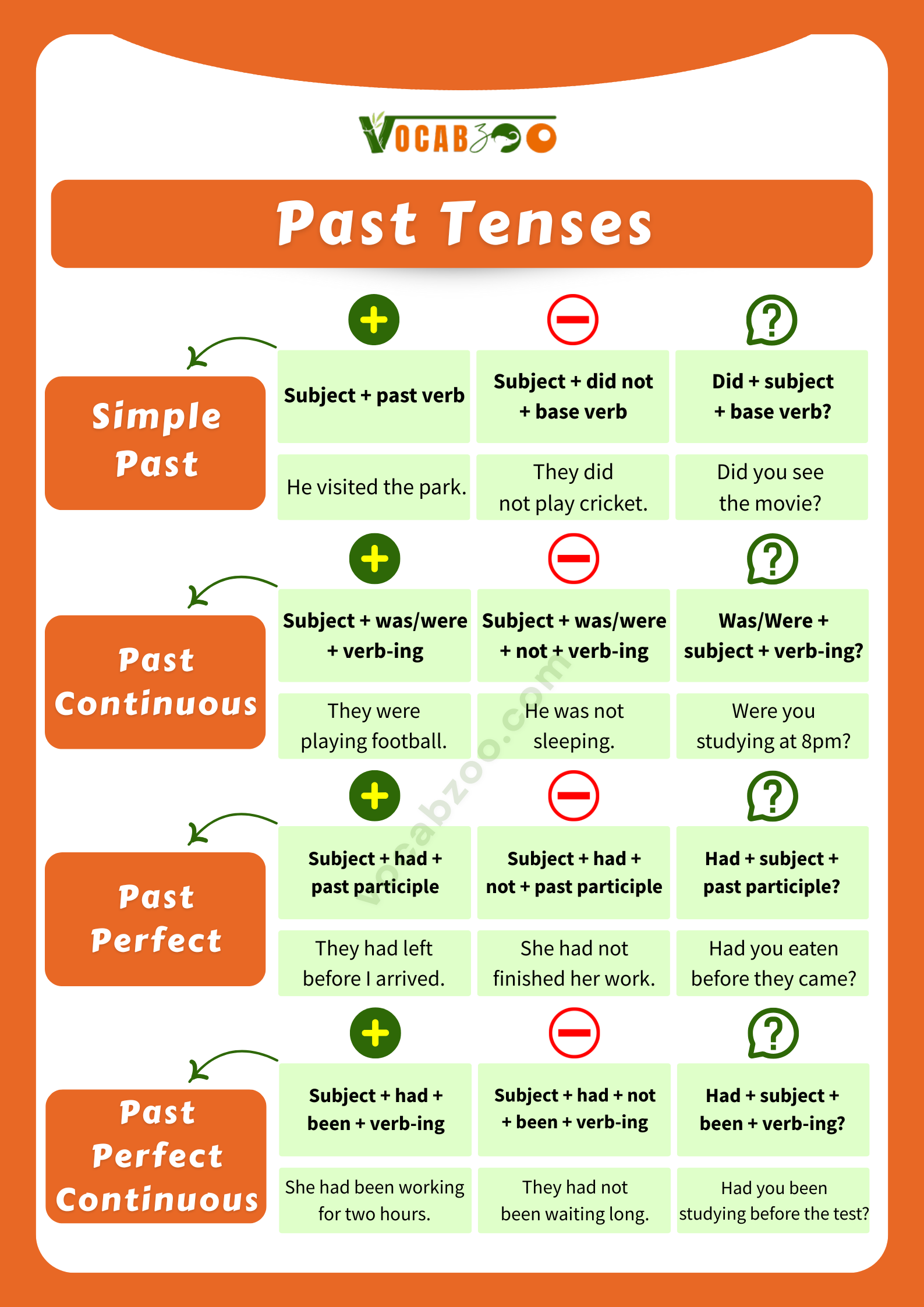
Past Tenses in English
Related:

This explanation of the four types of past tenses is so clear and easy to follow! The simple examples really help me understand how to use each tense correctly. Thanks for making English grammar less confusing with such a practical guide!