
What Are Opposite Words?
Opposite words, also called antonyms, are words that show completely different meanings. They help you compare ideas and make your message stronger. Opposites are useful in daily speaking, reading, and writing.
Why Opposites Matter
Opposite words help you:
- Make descriptions clear and simple
- Compare things easily
- Build a wider vocabulary
- Understand texts faster
Types of Opposite Words
Direct Opposites
These are words that are totally different in meaning.
Examples:
- Good → Bad
- Hot → Cold
- Big → Small
- Fast → Slow
Grade or Level Opposites
These opposites show degree, meaning they compare how strong or weak something is.
Examples:
- Happy → Unhappy
- Safe → Unsafe
- Useful → Useless
Context-Based Opposites
Some words change meaning depending on the situation. Their opposites also depend on context.
Examples:
- Light (weight) → Heavy
- Light (brightness) → Dark
- Right (correct) → Wrong
- Right (direction) → Left
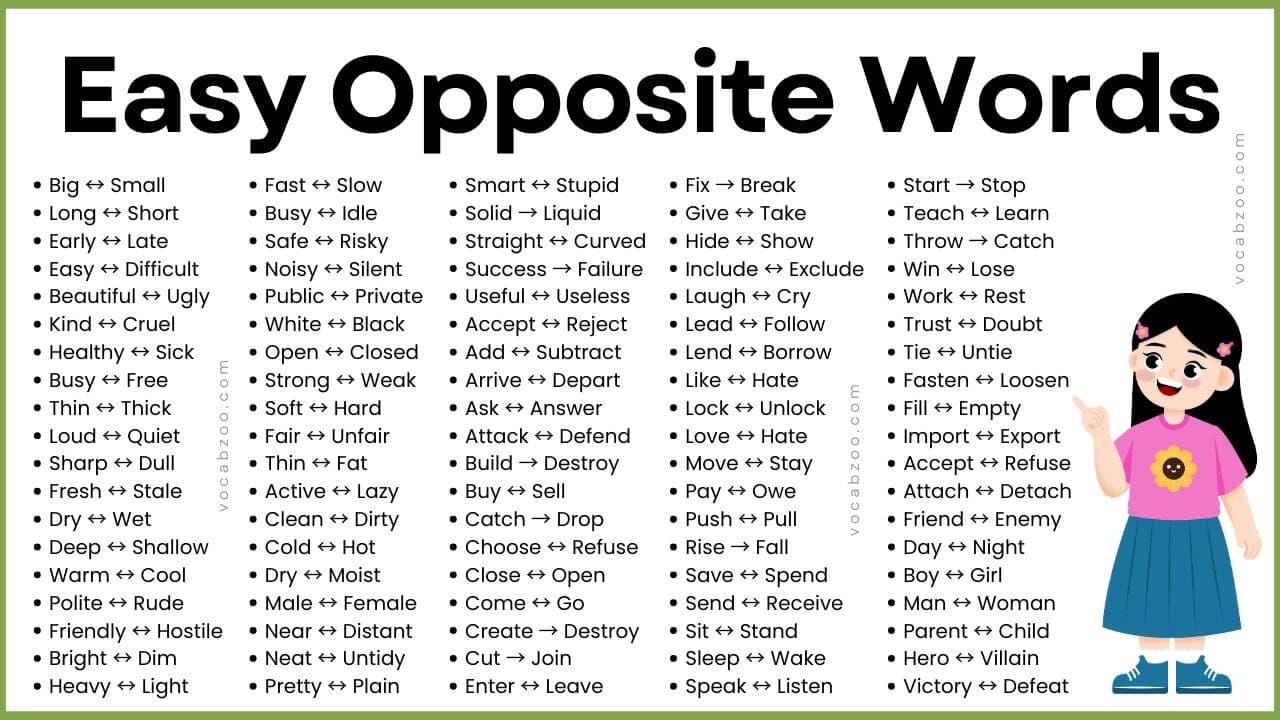
Common Opposite Words in English
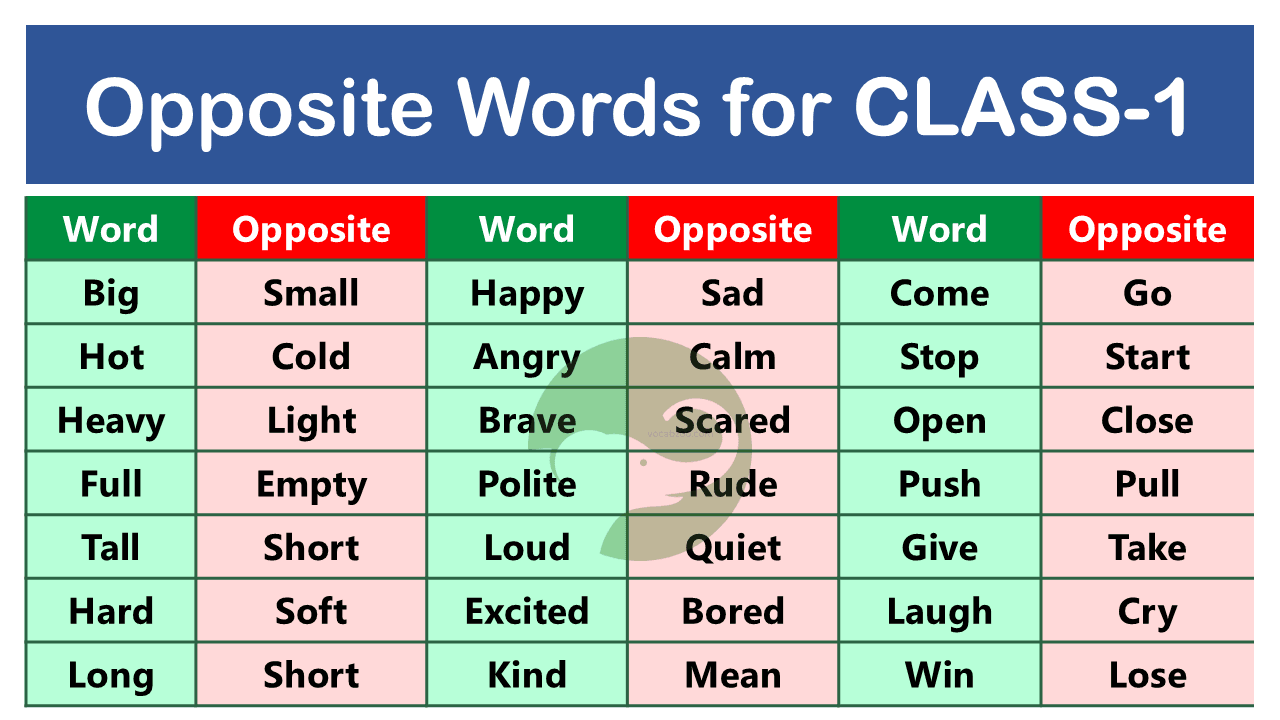
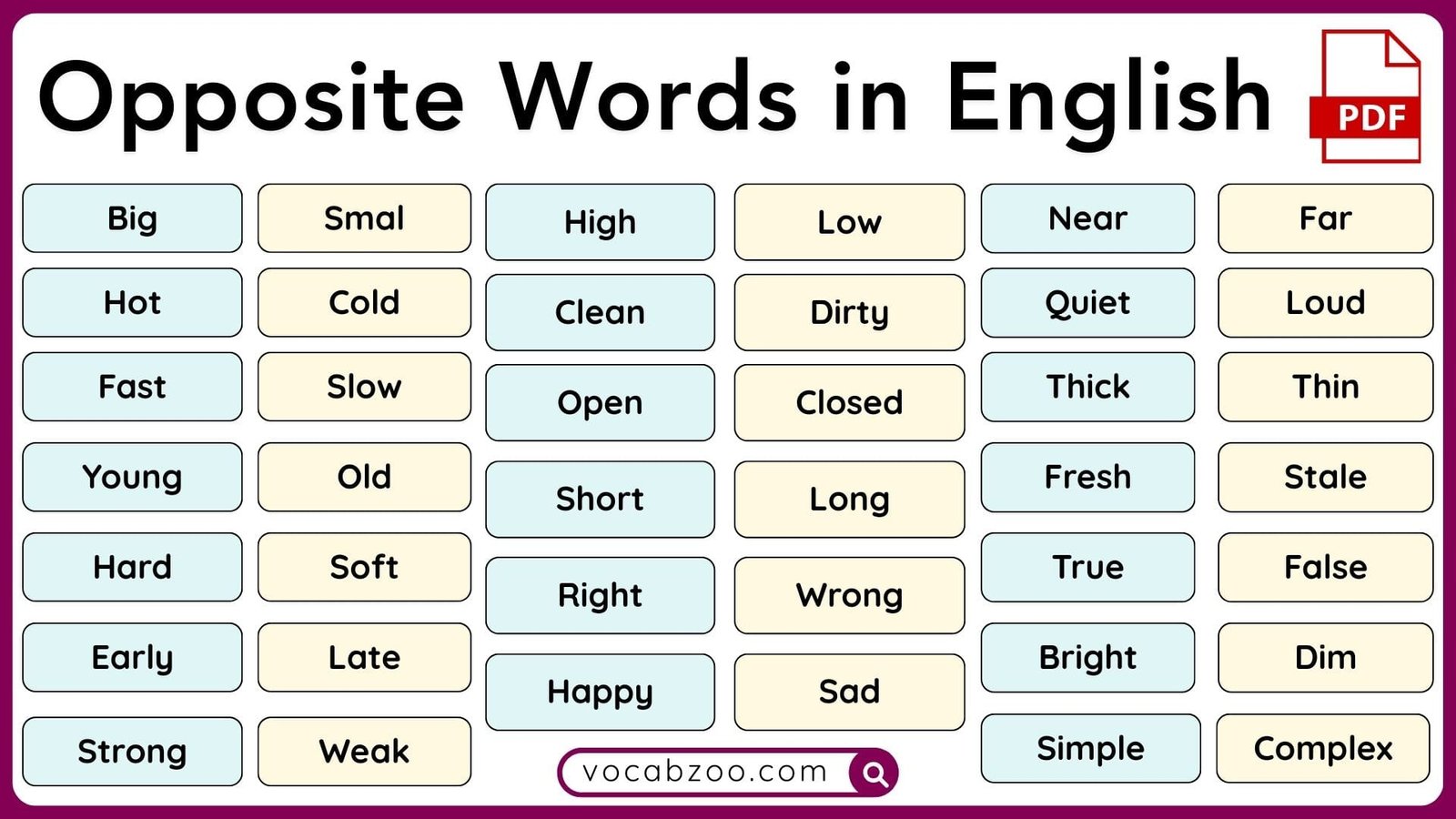
- Big → Small
- Hot → Cold
- Fast → Slow
- Young → Old
- Hard → Easy
- Early → Late
- Strong → Weak
- High → Low
- Clean → Dirty
- Open → Closed
- Short → Long
- Right → Wrong
- Happy → Sad
- Rich → Poor
- Light (weight) → Heavy
- Light (brightness) → Dark
- Near → Far
- Full → Empty
- Quiet → Loud
- Safe → Dangerous
List of 100 Opposite Words in English with Meanings
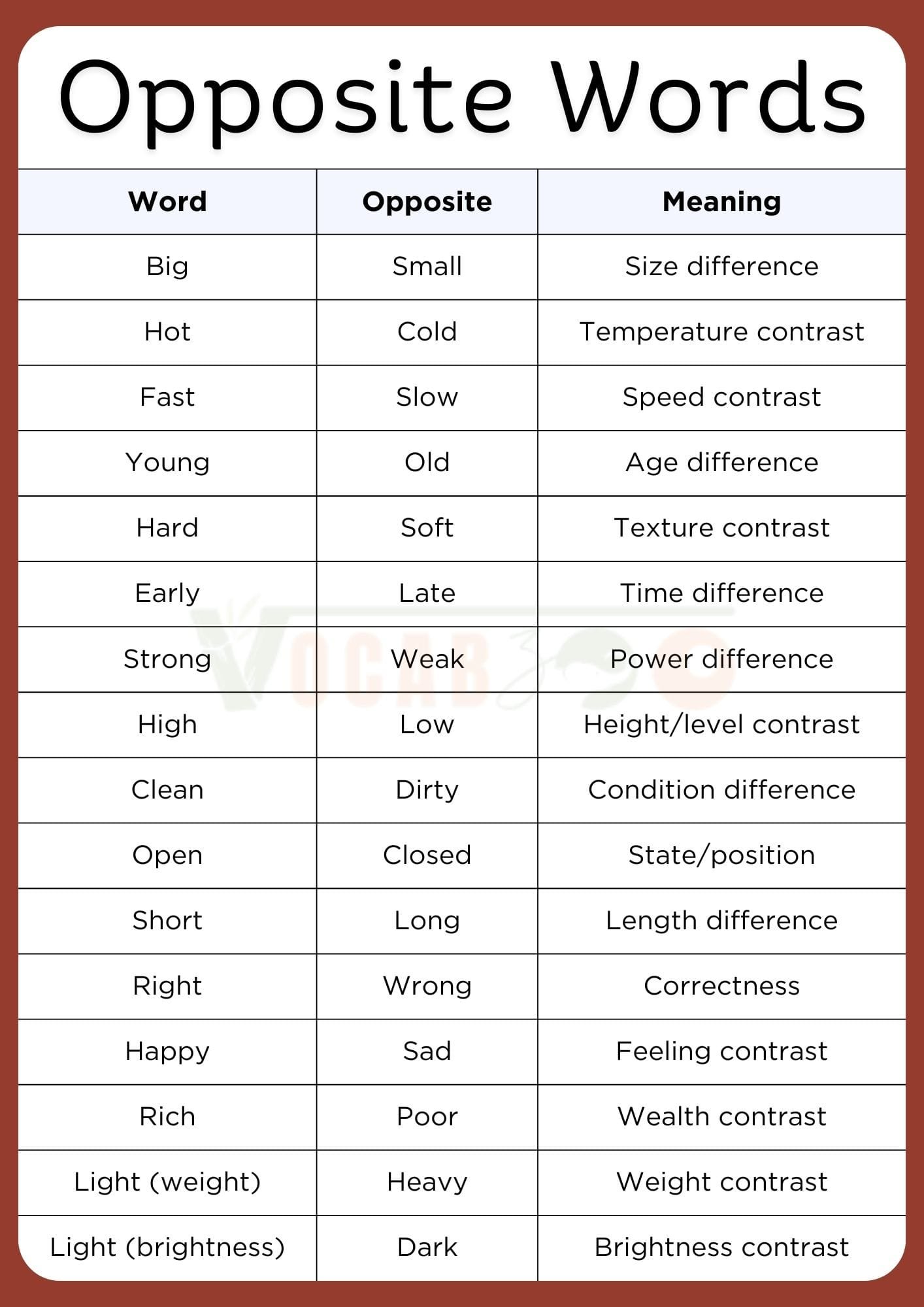
| Word | Opposite | Meaning |
| Big | Small | Size difference |
| Hot | Cold | Temperature contrast |
| Fast | Slow | Speed contrast |
| Young | Old | Age difference |
| Hard | Soft | Texture contrast |
| Early | Late | Time difference |
| Strong | Weak | Power difference |
| High | Low | Height/level contrast |
| Clean | Dirty | Condition difference |
| Open | Closed | State/position |
| Short | Long | Length difference |
| Right | Wrong | Correctness |
| Happy | Sad | Feeling contrast |
| Rich | Poor | Wealth contrast |
| Light (weight) | Heavy | Weight contrast |
| Light (brightness) | Dark | Brightness contrast |
| Near | Far | Distance difference |
| Full | Empty | Quantity contrast |
| Quiet | Loud | Sound level |
| Safe | Dangerous | Risk level |
| Wide | Narrow | Width contrast |
| Tall | Short | Height difference |
| Thick | Thin | Depth/size contrast |
| Fresh | Stale | Quality difference |
| DOĞRU | YANLIŞ | Accuracy |
| Bright | Dim | Light strength |
| Simple | Complex | Difficulty level |
| Smooth | Rough | Surface feel |
| Soft | Hard | Texture contrast |
| Inside | Outside | Position difference |
| Strong | Fragile | Durability |
| Polite | Rude | Behaviour |
| Brave | Scared | Courage level |
| Awake | Asleep | State of being |
| Sharp | Blunt | Edge quality |
| Deep | Shallow | Depth level |
| Heavy | Light | Weight difference |
| Dry | Wet | Moisture level |
| Wide | Tight | Space difference |
| Alive | Dead | Living state |
| Busy | Free | Activity level |
| Clever | Foolish | Intelligence |
| Clear | Cloudy | Visibility |
| Healthy | Sick | Physical condition |
| Bitter | Sweet | Taste difference |
| Loose | Tight | Fit/hold contrast |
| Warm | Cool | Temperature difference |
| Modern | Ancient | Time period |
| Natural | Artificial | Origin |
| Private | Public | Access level |
| DOĞRU | Untrue | Accuracy |
| Useful | Useless | Value difference |
| Wild | Tame | Behaviour of animals |
| Deep | High | Depth/height contrast |
| Honest | Dishonest | Truthfulness |
| Fair | Unfair | Justice |
| Strong | Feeble | Power weakness |
| Plain | Fancy | Style difference |
| Smooth | Bumpy | Surface texture |
| Busy | Idle | Activity contrast |
| Sharp | Dull | Edge quality |
| Kind | Cruel | Behaviour contrast |
| Wide | Slim | Width contrast |
| Urban | Rural | Living area |
| Polished | Dull | Surface shine |
| Rapid | Slow | Speed contrast |
| DOĞRU | Fake | Authenticity |
| Bright | Gloomy | Light/mood |
| Correct | Incorrect | Accuracy |
| Firm | Loose | Solidity |
| Deep | Low | Depth difference |
| Major | Minor | Importance |
| Frequent | Rare | Occurrence |
| Solid | Liquid | State of matter |
| Guilty | Innocent | Responsibility |
| Bold | Timid | Confidence |
| Straight | Curved | Shape |
| Active | Passive | Action level |
| Present | Absent | Availability |
| Strong | Brittle | Strength control |
| Fair | Biased | Neutrality |
| Mobile | Still | Movement |
| Huge | Tiny | Size difference |
| Cheap | Expensive | Cost contrast |
| Smooth | Jagged | Roughness |
| Equal | Unequal | Balance |
| Honest | Corrupt | Integrity |
| Thick | Slim | Width difference |
| Loyal | Disloyal | Trust level |
| Forward | Backward | Direction |
| Narrow | Broad | Width level |
| Calm | Nervous | Emotional state |
| Increase | Decrease | Quantity change |
| Win | Lose | Result contrast |
| Accept | Reject | Approval difference |
| Build | Destroy | Action contrast |
| Push | Pull | Opposite movements |
Opposite Words in English with Meanings
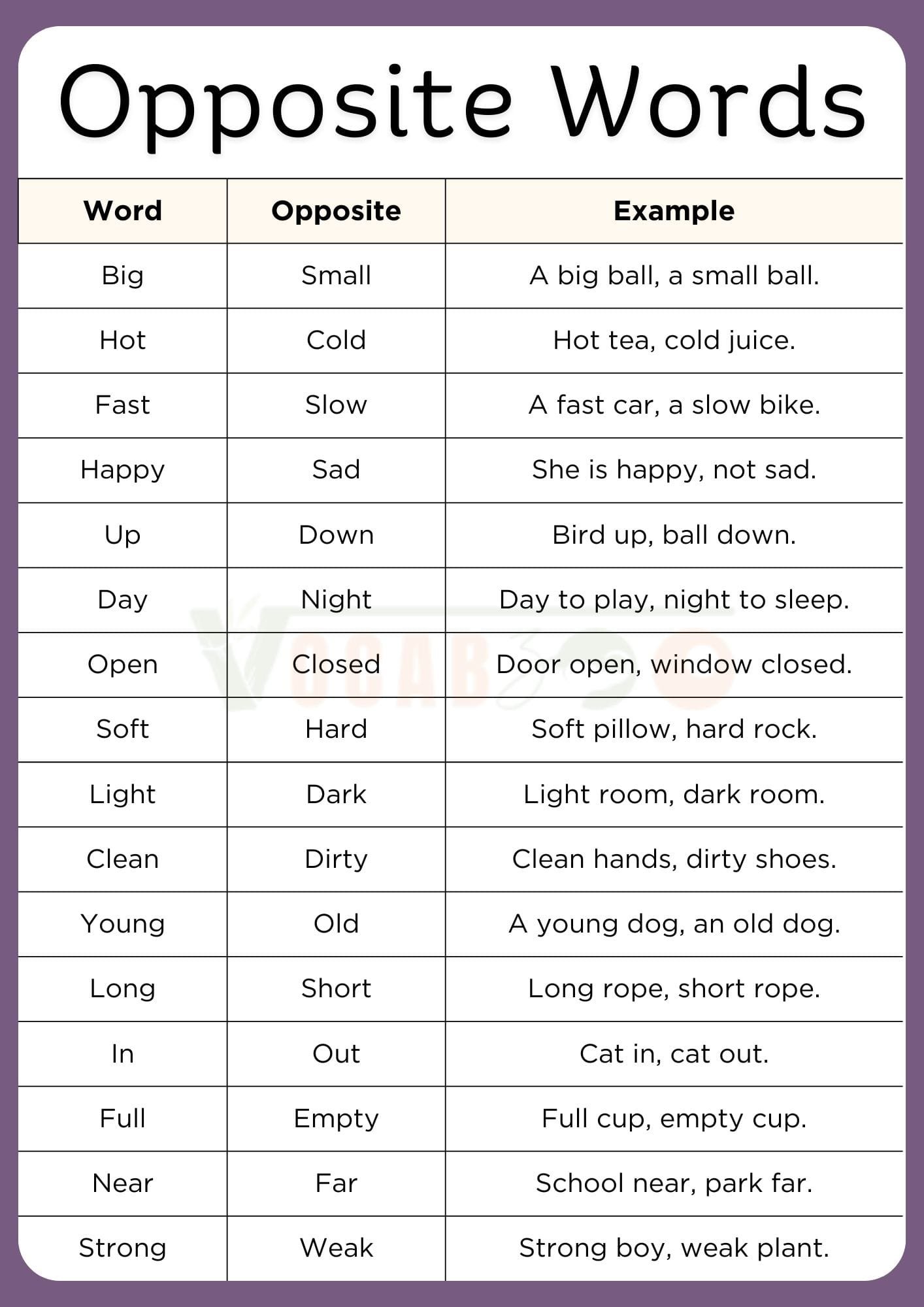
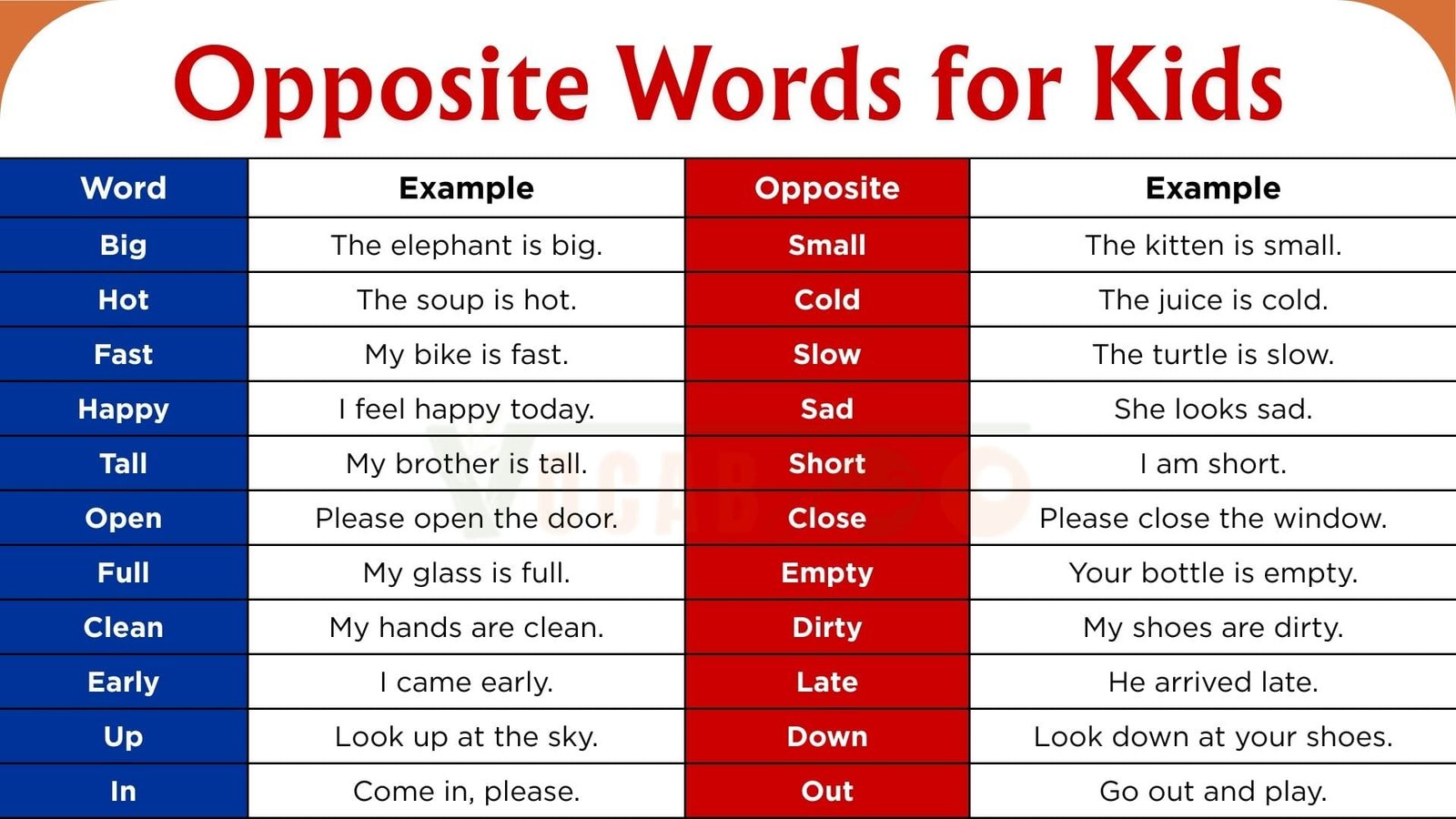
Opposite Words in English for Kids with Examples
| Word | Opposite | Example Sentence |
| Big | Small | The big ball is next to the small ball. |
| Hot | Cold | The tea is hot, but the juice is cold. |
| Fast | Slow | The rabbit is fast, and the turtle is slow. |
| Happy | Sad | She is happy today, not sad. |
| Up | Down | The bird flies up, then comes down. |
| Day | Night | We play in the day and sleep at night. |
| Open | Closed | The door is open, but the window is closed. |
| Soft | Hard | The pillow is soft, and the rock is hard. |
| Light | Dark | The room is light in the morning and dark at night. |
| Clean | Dirty | My shoes are clean, but my socks are dirty. |
| Young | Old | The young cat sits by the old cat. |
| Long | Short | He has a long pencil and a short eraser. |
| In | Out | The cat is in the box, then it jumps out. |
| Full | Empty | The bottle is full, but the cup is empty. |
| Near | Far | The school is near, but the park is far. |
| Strong | Weak | The strong wind moves the weak plant. |
| Wet | Dry | My hair is wet after the rain and dry later. |
| Loud | Quiet | The drum is loud, but the whisper is quiet. |
| Early | Late | She arrives early, not late. |
| Right | Left | Turn right at the tree, not left. |
Using Opposites in Sentences
Here are simple examples:
- Big → The box is big, but the bag is small.
- Clean → Your hands are clean, but the table is dirty.
- Short → The road is short, but the river is long.
- Strong → He is strong, but the rope is weak.
How Opposites Improve Communication
Stronger Description
Opposites help you show a clear contrast, making your message more impactful.
Examples:
- Slow → The bus is slow, but the train is fast.
- Big → The box is big, but the bag is small.
- Hot → The soup is hot, but the water is cold.
- Bright → The room is bright, but the hallway is dark.
Better Speaking and Writing
Using opposites makes your language richer and helps you explain ideas with confidence.
Examples:
- High → The wall is high, but the fence is low.
- Heavy → The suitcase is heavy, but the backpack is light.
- Easy → The first task is easy, but the second one is hard.
- Near → The shop is near, but the station is far.
The Bottom Line